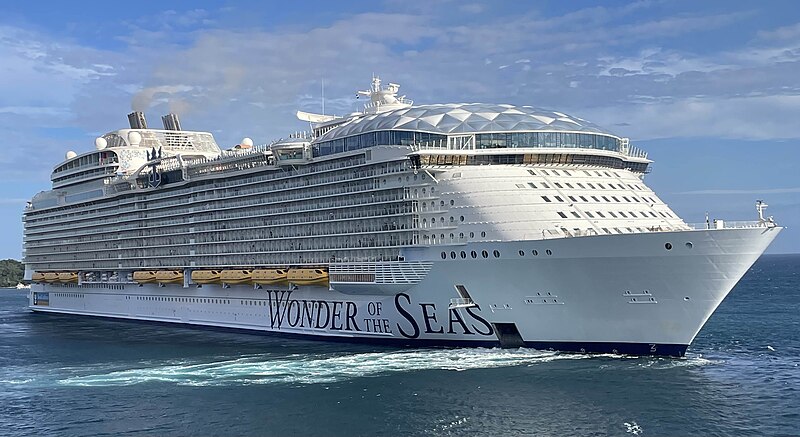
There is a number buried in Royal Caribbean's 2026 filings that tells you everything about why your cruise friends on different ships are about to have very different financial years.
The number is 60.
As in: 60 percent of Royal Caribbean's 2026 fuel needs are already locked in at prices the company paid for months ago, via hedging swaps. Carnival's comparable number is zero. Norwegian's is about 51. And that single line of treasury policy is about to decide whose guests pay a surprise fuel bill this year, and whose don't.
Here's the thing. Most people book a cruise assuming the price on the invoice is the price they'll pay. As of March 2026, two cruise lines have already proven that assumption wrong.
On March 20, 2026, Resorts World Cruises notified passengers that new fuel fees of up to $25 per guest, per day would be applied to sailings they had already paid for. Margaritaville at Sea Paradise did a similar thing at $15 per person per night, though its sister ship Islander was spared. A family of four on a seven-night cruise with that kind of surcharge walks to the gangway owing an unexpected $525 to $700, on a vacation they thought was fully paid.
That's the open loop. Which major cruise lines could legally do the same to you in 2026, and which ones have publicly confirmed they won't? The answer is printed in plain English in earnings calls and ticket contracts almost nobody reads.
What the contract actually allows
The cruise industry's ticket contracts are some of the most one-sided consumer documents in travel. The fuel supplement clause is the most aggressive paragraph in the stack.
Triggered when NYMEX crude oil exceeds $70 per barrel. Per person, per day, with no advance-notice requirement on guests already booked.
Carnival's language reserves the right to charge up to $9 per person per day whenever New York Mercantile Exchange crude closes above $70 per barrel. As of mid-April 2026, Brent is hovering around the low $90s and WTI is higher. The trigger has been tripped. Carnival has not activated the clause yet. The clause is still there.
Princess has a near-identical clause at $10 per day, same $70 trigger. MSC's cap runs up to $12 per day. Norwegian's policy allows a fuel supplement in its contract terms. Holland America eliminated theirs entirely in the last round of policy updates. That last one is the outlier, not the norm.
Now for the part nobody talks about. The reason most of these clauses haven't activated on booked passengers yet has almost nothing to do with generosity. It has to do with hedging.
The Royal Caribbean playbook
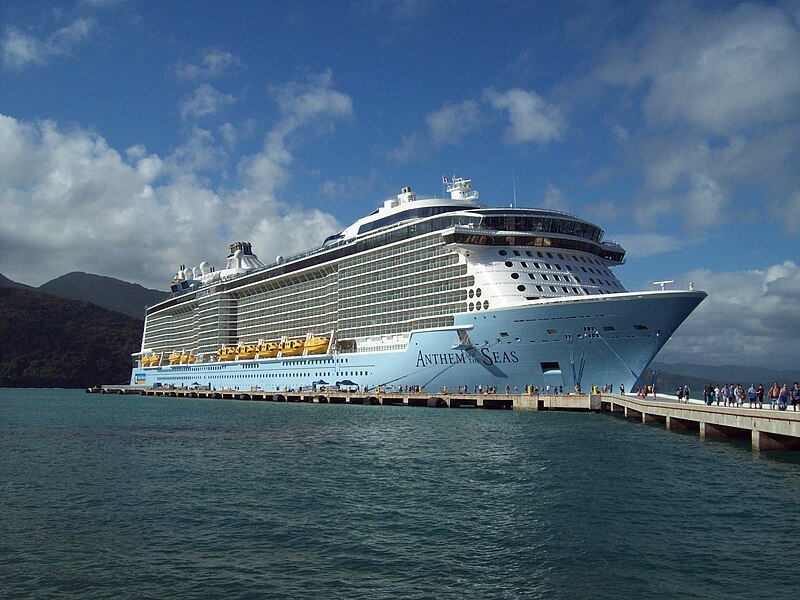
Royal Caribbean Group's Q4 2025 earnings release, issued in late January 2026, disclosed its 2026 fuel swap positions in a way that reads like a treasury textbook. Sixty percent of 2026 consumption hedged. Forty-seven percent of 2027. Twenty-six percent of 2028. The Q1 2026 number is even higher — 66 percent hedged against a forecast consumption of 436,000 metric tons.
What this means in practice is that Royal Caribbean pre-bought roughly three-fifths of this year's fuel at prices negotiated last summer, before the Iran conflict broke out on February 28, 2026, and before Brent spiked above $110. A 10 percent oil move costs Royal Caribbean's 2026 EPS about 1.1 percent. The same move costs Carnival 4.2 percent. That sensitivity gap is the entire ball game.
Royal Caribbean's Q1 2026 hedge coverage runs higher still at 66%. Norwegian sits at about 51%. Source: company disclosures.
Which is why Jason Liberty, Royal Caribbean's CEO, went public in April 2026 with a confirmation the cruise industry has not heard in years: no fuel surcharge on any Royal Caribbean, Celebrity, or Silversea sailing this year. He can afford to say that because he already bought the fuel.
Your booking, if you sail a hedged line
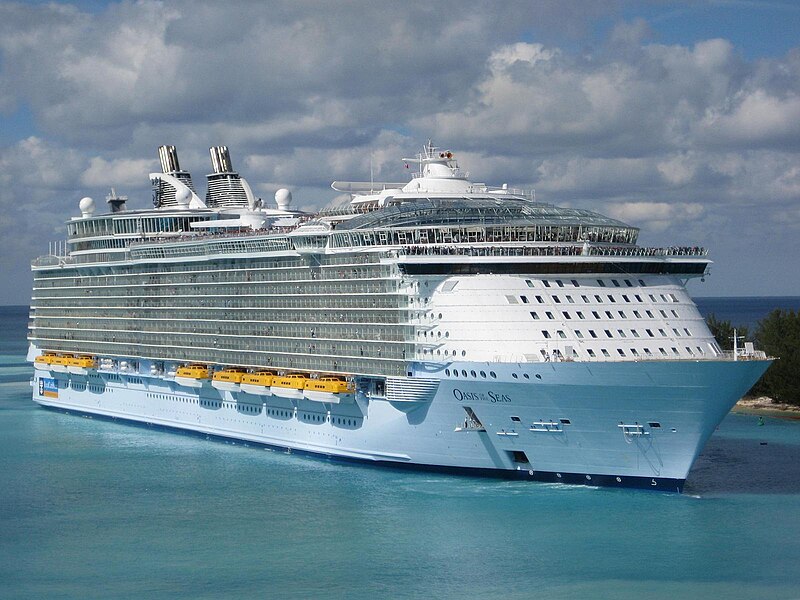
It's July. You're on the Oasis-class pool deck with a frozen drink and your phone is showing the oil price chart with Brent back above $100. The cruise director, in their evening address, thanks you for sailing with Royal Caribbean and moves on to bingo. That's it. No apology. No surcharge envelope under your cabin door. The price on your invoice in March is the price you paid in July. You don't think about it again until you see the Carnival guests at the same port complaining about a $63 line item at guest services.
The Carnival playbook
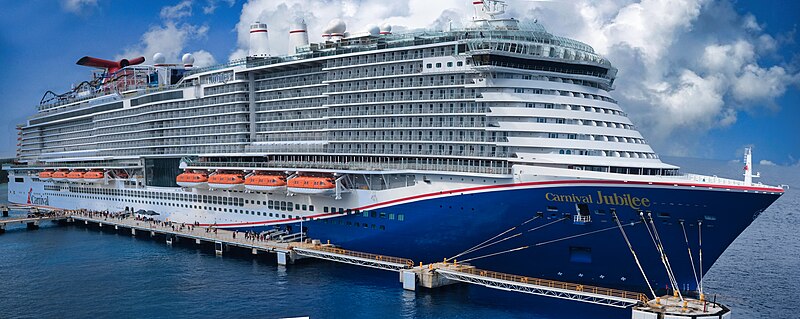
Carnival Corporation's policy has been the opposite for more than a decade. Arnold Donald said it. Josh Weinstein has repeated it. Carnival does not hedge fuel.
The reasoning, internally, is that a diversified fleet of 80-plus ships across nine brands produces enough natural revenue flexibility to absorb oil volatility, and that paying the hedging premium across that scale wastes money in calm oil years. It's a defensible argument when oil is flat. It's an expensive argument when oil goes from $65 to $112 in six weeks.
Reported on the Q1 2026 earnings call. Reduced EBITDA forecast and cut full-year EPS guidance from $2.48 to $2.21 per share — a $0.27 haircut almost entirely attributable to unhedged fuel.
On the Q1 2026 earnings call, Carnival's CFO David Bernstein laid out the math plainly. About $0.11 per share of operational improvements had been generated this year. Then fuel erased $0.38. The delta is what cut the guidance from $2.48 to $2.21. Carnival's stock dropped on the print despite beating Q1 expectations, because Wall Street can read a hedging policy as well as anyone.
Here's the part that matters for booked passengers. Carnival has not, as of mid-April, activated its fuel supplement clause. The company has so far chosen to absorb the $500 million hit through earnings rather than pass it to guests already on the books. Nearly 85 percent of 2026 inventory is already sold, much of it at the high fares booked before the Iran conflict. Triggering a surcharge now would be a public-relations disaster on top of an earnings disaster.
But the clause is still there. And if oil stays elevated into Q3, or if Q2 earnings come in weaker than expected, the calculus can flip. The same clause sits dormant in every Carnival, Princess, Holland America, Cunard, and Seabourn contract — every brand in the Carnival Corporation stable.
The Norwegian middle ground
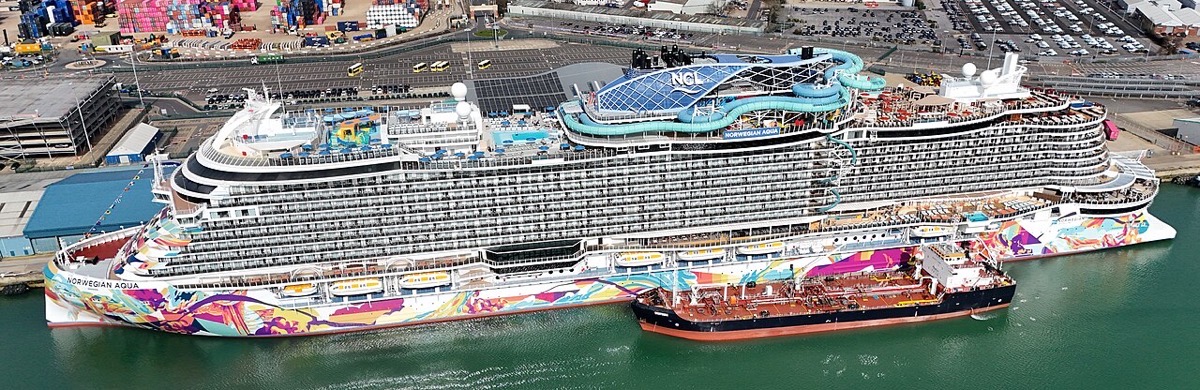
Norwegian Cruise Line Holdings confirmed on its January 16 2026 update that approximately 51 percent of 2026 fuel consumption was hedged, along with 27 percent of 2027. That's meaningfully below Royal Caribbean's 60 percent but substantively above Carnival's zero.
As of January 16, 2026. Covers Norwegian, Oceania, and Regent Seven Seas. NCL ship-contract language does allow a fuel supplement but none has been triggered as of mid-April.
If oil spikes another 20 percent from here, Norwegian has less insulation than Royal Caribbean but far more than Carnival. The practical read for a guest booking a 2026 Oceania or Regent sailing is that the surcharge probability is low but not trivial, and certainly not at Royal Caribbean's zero level.
What to actually do with this
The first step is to read the ticket contract before you click book — especially the clause titled something like "Fuel Supplement" or "Fuel Surcharge." Every major cruise line publishes it. The language tells you exactly what you could be on the hook for.
The second step is to weight the hedging exposure against the fare. If a Royal Caribbean Caribbean seven-night sailing prices within 8 percent of a comparable Carnival itinerary, Royal Caribbean is the safer dollar in 2026. If it's 20 percent more, the math gets harder and you're effectively paying a premium for hedging you could arguably self-insure by setting aside $200 for a possible surcharge. You can cross-reference fare and fuel-surcharge policy line by line at GoCruiseTravel.com before you commit.
2026 fuel hedging and surcharge exposure — major cruise lines
| Company | 2026 fuel hedged | Contract surcharge ceiling | Surcharge triggered in 2026? |
|---|---|---|---|
| Royal Caribbean Group | 60% (66% in Q1) | Not publicly disclosed | No — CEO confirmed no surcharge |
| Carnival Corporation (Carnival) | 0% | $9/day (Carnival), $10/day (Princess) | No, but clause active above $70 NYMEX |
| Norwegian Cruise Line Holdings | ~51% | Contract allows a fuel supplement | No as of mid-April |
| MSC Cruises | Not publicly disclosed | Up to $12/day | No as of mid-April |
| Holland America | 0% (parent: Carnival Corp) | Eliminated | No — clause removed |
| Resorts World Cruises | Not publicly disclosed | Up to $25/day | Yes — March 20, 2026 |
| Margaritaville at Sea Paradise | Not publicly disclosed | $15/person/night in practice | Yes — March 2026 (Islander exempt) |
For context on what the triggering surcharges looked like when they hit last month, our (https://www.gocruisetravel.com/en/guides/cruise-fuel-surcharges-2026) walks through the per-line math in more detail. This article is the companion piece on who's insulated and who isn't.
The obvious counter-argument
Hedging isn't free. The swaps cost something, and in years when oil falls instead of rises, Royal Caribbean pays more for fuel than Carnival does. 2019 was like that. 2015 was like that. Over a decade, the two strategies roughly wash.
But 2026 isn't a decade. It's one year. And in this one year, Royal Caribbean's treasury team spotted rising geopolitical risk in late 2025 and locked in prices. Carnival's treasury team did what it has always done and rode the market. One of those decisions looks right. One doesn't.
You can filter 2026 sailings by cruise line, cabin class, and included perks at GoCruiseTravel.com, and we've updated our cruise-line comparison pages to reference each operator's current fuel surcharge policy. That way the hedging decision doesn't stay buried in a 10-K and surface as a $525 line item on your final invoice.
The safer 2026 booking: Royal Caribbean, Celebrity, or Silversea
Royal Caribbean Group is the only major cruise operator that has both (a) hedged 60 percent of 2026 fuel consumption and (b) publicly and explicitly confirmed no fuel surcharge this year. Norwegian's 51 percent hedge is second best but still leaves real surcharge probability. Carnival Corporation's zero hedging policy combined with a live $9-per-day surcharge clause is the highest risk booking in the major-line field right now, even before you account for Q2 pricing pressure on 2027 sailings. If the fare gap is under 8 percent, book the hedged line.
The fuel will eventually come down. The hedging call already got made last summer.
The guests on booked 2026 sailings are about to find out who made the right one.

Royal Caribbean vs Norwegian: Real Family Cruise Cost in 2026
Norwegian advertises Free at Sea while Royal Caribbean charges upfront. We audited the family ledger on go-karts, dining, tips, and shows.