Every traveler eventually faces this question: should I book a cruise, or plan a traditional land vacation? The cruise industry would love you to believe the answer is always "cruise." Travel bloggers who have never set foot on a ship will tell you cruises are floating tourist traps. The truth, as usual, is more nuanced than either side admits.
This is an honest, side-by-side comparison. We are not here to sell you a cruise. We are here to help you figure out which type of vacation will actually make you happiest — given your budget, your travel style, your companions, and what you want to feel when you get home.
Most "cruise vs. land" arguments collapse into a single bad question: which is cheaper? That question has no clean answer, because the two formats hide their costs in opposite places and serve completely different jobs. We priced both honestly for a 7-night Caribbean trip, and the result reframes the whole debate.
A 7-night Caribbean cruise undercuts an equivalent land vacation on bundled cost. Flip the destination to Vietnam or Portugal and the math reverses entirely. The destination is the answer, not the format.
Round 1 of 3 · the money
Here is the one everyone wants to know first: which is cheaper?
The answer is genuinely complicated, because the two vacation types hide their costs in different places. A cruise advertises a low base fare and then adds charges for drinks, excursions, Wi-Fi, and specialty dining. A land vacation has no "base fare" — instead, you are assembling a puzzle of flights, hotels, meals, transportation, and activities that can add up quickly in ways you do not anticipate until you are standing at a car rental counter in Cancun.
For the Caribbean specifically, cruises tend to win on cost. The ship serves as your hotel, transportation, and primary restaurant — bundling expenses that are separate and often more expensive on land. A beachfront resort in Turks and Caicos or St. Barts will cost $400 to $800 per night before you eat a single meal. A cruise balcony cabin that visits those same islands costs a fraction of that. The full per-line cost breakdown lives in the receipts table at the bottom.
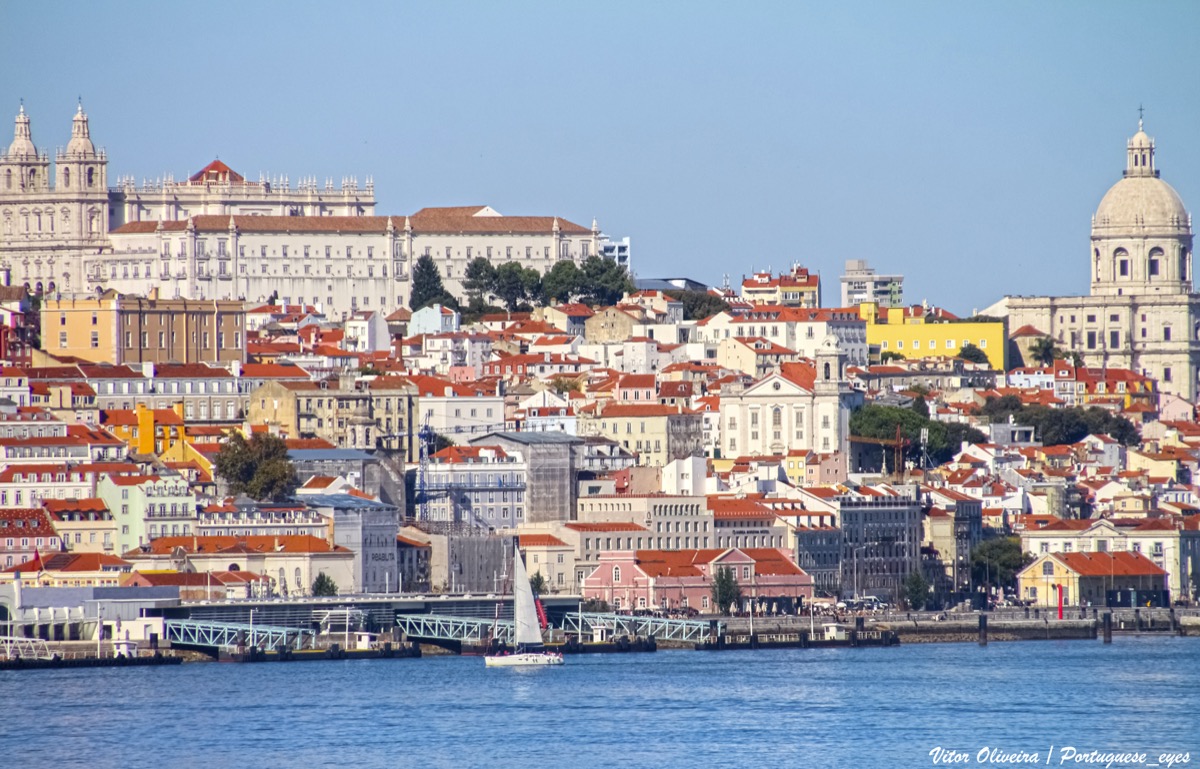
But this comparison flips in other contexts. A week in Portugal — flights, charming guesthouses, incredible restaurant meals, and local trains — can cost less than a Mediterranean cruise that stops in Lisbon for eight hours. A two-week trip through Southeast Asia, with domestic flights, boutique hotels, and street food, is dramatically cheaper than a comparable-length cruise in the region.
The hidden cost that catches land travelers off guard is meals. Three sit-down restaurant meals per day for two people, for seven days, adds up alarmingly fast — $700 to $1,400 depending on the destination. On a cruise, breakfast, lunch, and dinner in the main dining room and buffet are included. That single inclusion represents enormous value, especially for families.
The hidden cost that catches cruise travelers off guard is drinks. A beverage package on a mainstream cruise line runs $70 to $100 per person per day. For a couple on a 7-night sailing, that is $980 to $1,400 just for the privilege of not paying per drink. On land, you control when and what you drink, and a bottle of local wine at a restaurant in Greece or Spain costs $10 to $20.
The math: in bundled-expense regions (Caribbean, Alaska, Mediterranean), cruise wins by 25–40% per couple. In budget-travel regions (Southeast Asia, Eastern Europe, parts of Latin America), land wins by a wider margin. The destination decides; the format follows.
 Royal Caribbean's Wonder of the Seas at CocoCay — the Caribbean is where the bundled-expense math swings hardest in the cruise's favor. Photo: Tim Adams / Wikimedia, CC BY 2.0.
Round 2 of 3 · breadth vs depth
A 7-night Mediterranean cruise might visit Barcelona, Marseille, Florence (via Livorno), Rome (via Civitavecchia), Naples, and Dubrovnik. Six destinations in seven days. On paper that sounds extraordinary — and in many ways it is. You get a taste of each place, enough to decide which ones deserve a return trip, and the visual variety of waking up in a new port every morning is genuinely thrilling. You unpack once, the floating hotel moves with you, and the airport-to-train-to-hotel logistics that exhaust most multi-city land trips simply do not exist.
But "a taste" is the operative phrase. Six to ten hours in a port city is enough to see the highlights but not enough to discover the soul. You will walk through the Ramblas in Barcelona, but you will not find the tiny tapas bar three blocks from your hotel that a local friend recommends. You will see the Colosseum in Rome, but you will not wander the Trastevere neighborhood at dusk when the trattorias light up and the city shifts from tourist attraction to living place.
Land travel trades breadth for depth. Instead of six cities in a week, you might spend three nights in Barcelona and four in Rome. You eat where locals eat. You get lost on purpose. You return to a favorite cafe for the second morning in a row because the barista remembered your order and smiled. These small moments — the ones that happen when you have time and no schedule — are often what travelers remember most vividly years later.
Food sits inside the same trade-off. Cruise ships feed you constantly and competently — buffets, multi-course dinners, room service — and on a mainstream ship you will never go hungry. Specialty restaurants on lines like (https://www.gocruisetravel.com/en/guides/undefined) (GoCruiseTravel Perk Score: 72/100) and (https://www.gocruisetravel.com/en/guides/undefined) (Perk Score: 82/100) genuinely punch above expectation. But most included-venue cruise food is mass-produced institutional cuisine — competent, consistent, rarely memorable. Land travel is where the hole-in-the-wall ramen shop in Tokyo, the family-run trattoria in Sicily, and the $2 pad thai in Bangkok live, and those meals are often the most vivid memory anyone brings home.
The cruise schedule is also rigid. You arrive at a port at a fixed time and you must be back on board by a fixed time. If you fall in love with a place and want to stay another day, you cannot. The ship leaves, and so do you. Land travel offers the opposite trade-off: more logistical effort, but total flexibility — cancel a hotel, drive to the next town, follow a local's restaurant tip two valleys over.
Who wins this round: cruise wins for first-time-in-a-region surveying and minimum-logistics travel. Land wins when one place has been pulling at you for years and you want it on its own terms.
 Santorini caldera with cruise ships anchored below — six hours ashore is enough to see the postcard, not enough to find the village two ridges over. Photo: Norbert Nagel / Wikimedia, CC BY-SA 3.0.
Round 3 of 3 · the rhythm
The cost spreadsheet only tells you what a vacation costs. It does not tell you what a day actually feels like. That is where cruise and land travel diverge most sharply.
Sea days are among the most relaxing experiences in travel. No itinerary, no obligations, no logistics. Just open ocean, a lounge chair, a book, and the ship's quiet rhythm. For travelers who need genuine rest — not the "relaxation" of lying by a hotel pool while mentally tallying the cost — sea days deliver something rare: permission to do absolutely nothing in a setting where nothing is expected of you. Land travel rarely offers this. Even at a beach resort there is a subtle pressure to "make the most" of your vacation. The freedom of land creates a paradox: the more you can do, the more you feel you should do.
The social texture is also different. A cruise ship is inherently communal — shared dining, shared entertainment, poolside proximity — and many travelers form genuine friendships on board. It is especially valuable for solo travelers and anyone who finds it difficult to meet new people in everyday life. Land travel can be social, but it requires more effort and the encounters are more fleeting. If you are an introvert who recharges through solitude, land travel's independence is a gift. On a cruise, true solitude is harder to find — though not impossible, especially on smaller ships or in suite-class areas.
For families, cruises are hard to beat. Kids' clubs on major lines are free, supervised, and genuinely engaging — structured programs with age-appropriate activities, not glorified babysitting. Parents drop off, pick up, and get real adult time in between. The entertainment is built-in — water parks, rock climbing, mini-golf, pools — and there is no "what are we going to do today?" crisis on a rainy port day. Land vacations with children require more planning and more patience, but they also produce the kind of unstructured family memories — swimming in a Mexican cenote, biking through a Dutch village, spotting wildlife on safari — that a port call cannot replicate.
For couples, it is genuinely close. A cruise offers built-in romance — sunset balconies, formal nights, spa-for-two, standing at the rail together. Adults-only lines like (https://www.gocruisetravel.com/en/guides/undefined) (Perk Score: 85/100) and luxury operators like Silversea and Seabourn amplify it. Land travel offers a different romance: spontaneity, hidden courtyards, the bonding of figuring out a foreign train system together. If your idea of romance is being taken care of, cruise wins. If your idea of romance is shared problem-solving and discovery, land wins. Most couples, wisely, alternate.
Who wins this round: cruise wins on rest, families with kids 3–17, and effortless romance. Land wins on solitude, depth, and the kind of trip a couple wants to remember as something they did together rather than something that was done for them.
 Sea day on a Princess Cruises ship — the kind of unstructured rest most land vacations subtly punish you for taking. Photo: Princess Cruises / Wikimedia, CC BY-SA 4.0.
The footprint
This is the section the cruise industry would prefer we skip, but an honest comparison requires it.
Cruise ships have a significant environmental footprint. A large cruise ship produces approximately 250 to 400 kg of CO2 per passenger per day — a figure that includes propulsion, power generation for the ship's hotel-like operations, and waste processing. A 7-night cruise generates roughly 1,750 to 2,800 kg of CO2 per passenger. A comparable 7-night land vacation — including a round-trip transatlantic flight (roughly 500 to 1,000 kg per passenger), hotel stays, and local transportation — produces approximately 700 to 1,400 kg per passenger. The cruise generates roughly double the carbon footprint, plus wastewater, port-city air quality issues, and the ecological impact of thousands of tourists flooding small towns simultaneously.
The industry is making progress. Liquefied natural gas (LNG) reduces emissions by 20 to 25 percent compared to traditional heavy fuel oil. Shore power lets ships plug into port electrical grids instead of running engines while docked. Viking's forthcoming hydrogen-powered ships represent a potential breakthrough. But as of 2026, the gap between cruises and land travel on carbon emissions remains substantial.
If sustainability is a high priority for you, land travel is the lower-impact choice for most destinations. If you do cruise, choosing newer LNG-powered ships, lines with strong environmental commitments (Viking, Hurtigruten, Ponant), and itineraries with fewer sea days reduces your footprint meaningfully.
The honest read: factor sustainability into the decision the same way you factor cost and convenience — as one variable among many, not a moral verdict on either format.
 AIDAnova at port — one of the first LNG-powered cruise ships, representing the 20–25% emissions cut the industry is slowly rolling out. Photo: Eckhard Henkel / Wikimedia, CC BY-SA 3.0 DE.
Who land travel is actually for
Honesty requires saying this plainly: cruising is not for everyone, and the all-in cost win in the Caribbean does not generalize to every traveler or every destination.
The deep explorer. If your favorite vacation memory is the third morning of a five-day stay somewhere — when you finally know which cafe is yours and the neighborhood has stopped being a postcard — a cruise will feel surface-level no matter how nice the ship is. Six hours ashore is not enough time to know a place; it is enough time to confirm you want to come back.
The food obsessive. If half the reason you travel is to eat where locals eat, cruise dining will frustrate you. Even excellent ship restaurants are working at scale; the small kitchens, family recipes, and night-market improvisations that make travel food memorable do not exist on a 5,000-passenger vessel.
The budget-Asia or budget-Europe traveler. If your trip is to Vietnam, Thailand, Portugal, Croatia, or eastern Europe, a cruise is almost always more expensive than the equivalent land trip — sometimes by 50% or more. The cruise advantage is bundling, and bundling stops being an advantage when local prices are already low.
The total-flexibility traveler. If you want to wake up tomorrow and decide whether to stay another day, switch cities, or skip the next stop entirely, no cruise itinerary can give you that. Cruise ships leave on a schedule. The schedule is the product. If the schedule is the constraint you most want to escape, cruise is the wrong tool.
Who actually wins
Three outcome paths, depending on what you actually care about:
- If you want to sample a region with minimum logistics, travel with kids, or prioritize built-in rest → cruise. The Caribbean, Alaska, and Mediterranean are where the math is most lopsided in your favor; expect $230–$430 per person per night all-in for a couple in a balcony cabin.
- If you want to go deep on one place, eat at local restaurants, or visit a budget-friendly region → land. Southeast Asia, Eastern Europe, and Portugal especially — the cost gap reverses, and the vacation you remember is the one with hours unaccounted for, not the one with a port schedule.
- If you can afford the time, do both → the smartest move is hybrid. Use a cruise to survey a region, identify the places that captivated you, then return for a dedicated land trip to your favorites. A 7-night Mediterranean cruise might tell you exactly where to spend a future week of vacation. That intelligence alone is worth the fare.
The receipts
7-night Caribbean comparison, per couple, all-in. Cruise = balcony cabin on a mainstream line; land = comparable beachfront accommodation across the same region. Numbers verified against current fare sheets and booking aggregators as of May 2026.
| Expense | 7-Night Cruise | 7-Night Land Vacation |
|---|---|---|
| Transportation | Included (ship is transport) | $600–$1,200 (flights for 2) |
| Accommodation | $1,400–$3,000 (balcony cabin) | $1,400–$3,500 (hotel/resort, 7 nights) |
| Meals | Included (main dining + buffet) | $700–$1,400 (3 restaurants/day) |
| Drinks | $800–$1,200 (drink packages, 2 ppl) | $400–$800 (varies widely) |
| Activities / excursions | $400–$800 (shore excursions) | $400–$1,000 (tours, park entries) |
| Local transport | N/A (ship moves you) | $300–$700 (rental car or taxis) |
| Wi-Fi | $200–$350 | Usually free at hotel |
| Gratuities | $250–$350 | $200–$400 (restaurant + tour tips) |
| Port fees / resort taxes | $150–$300 | $100–$200 |
| Total (couple) | $3,200–$6,000 | $4,100–$9,300 |
| Per person per night | $230–$430 | $290–$665 |
GoCruiseTravel's Cruise vs. Land Travel Verdict
For multi-destination trips in the Caribbean, Alaska, and Mediterranean, cruises reliably beat comparable land vacations on total cost and logistical convenience — often by 25–40% per couple. For travelers who want to go deep on one destination, eat at local restaurants rather than ship dining rooms, or visit budget-friendly regions like Southeast Asia and Eastern Europe, land travel wins, often by a wider margin. The smartest play is the hybrid: use a cruise to survey a region, then return for a dedicated land trip to the destinations that resonated. For the cost-tier comparison one level up, see luxury vs. mainstream cruise line breakdown (https://www.gocruisetravel.com/en/guides/luxury-vs-mainstream-cruise-lines). For the format alternative one level over, see river vs. ocean cruise comparison (https://www.gocruisetravel.com/en/guides/river-vs-ocean-cruises).

Are Balcony Cabins Worth the Upgrade? The Price vs. Reality Math
Balcony cabins carry a $45 to $120 nightly premium over oceanviews. When the private veranda is worth every dollar, and when to skip it.