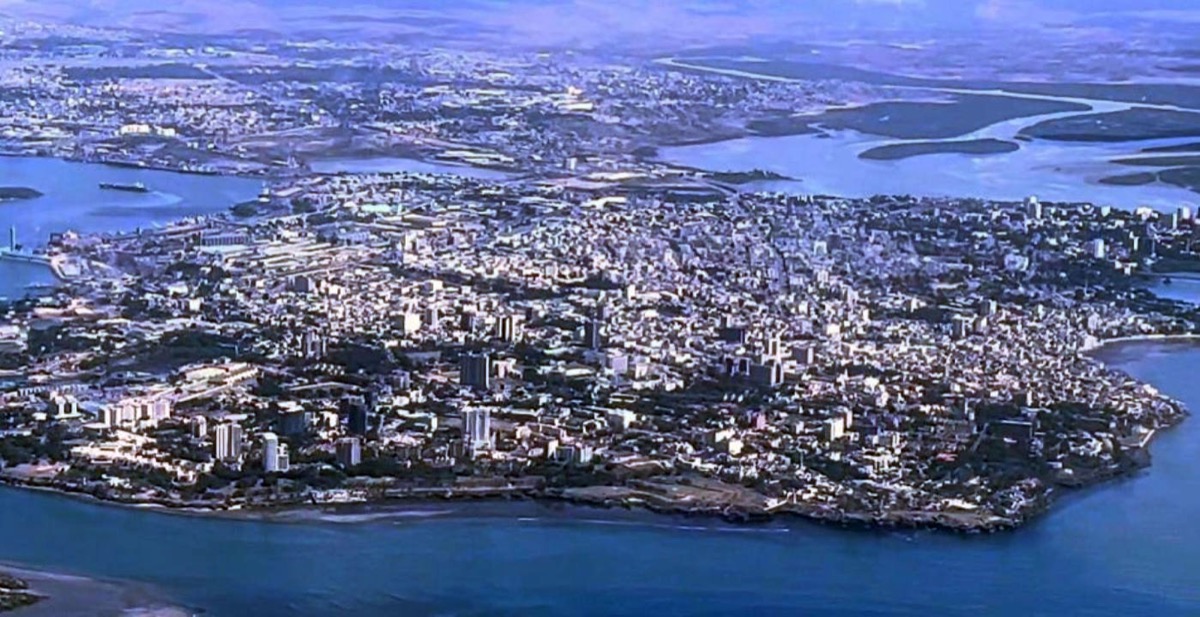
The WHO declared a Public Health Emergency on May 17, the US started enhanced re-entry screening the next day, and cruise ships kept calling Mombasa. The three facts are less connected than they look.
The WHO declared a Public Health Emergency of International Concern on May 17. The US announced enhanced re-entry screening the next day under a Title 42 order, with a separate CDC clinician advisory (HAN00530) following on May 19. Cruise ships kept calling Mombasa.
These three facts are less connected than they look.
The 2026 outbreak is Bundibugyo virus — a strain of Ebola with no licensed vaccine — in eastern Democratic Republic of the Congo and Uganda. As of the DRC Ministry of Health's May 23 update, the country had 904 suspected cases, 119 suspected deaths, 101 laboratory-confirmed cases, and 10 confirmed deaths, with confirmed cases across Ituri, North Kivu, and South Kivu provinces. Uganda reported seven confirmed cases and one death, with the cluster centered in Kampala, the capital. Two suspected cases tested in Lombardy this week, after a traveler returned from Uganda, came back negative.
This is the calibrated read for cruise travelers. What is actually happening, which itineraries genuinely intersect the risk, and the narrow set of questions the cruise lines are not yet answering.
generic illness referrals remain the published baseline
The geography problem
The outbreak in the DRC spans three eastern provinces — Ituri, North Kivu, and South Kivu. Uganda's confirmed cases are in Kampala, the capital, not the western border districts most readers might assume. The nearest international airport to the case clusters is Entebbe, serving Kampala. The nearest large cruise port is Mombasa, Kenya — roughly 950 km east of Kampala, separated by a national border and most of the Kenyan landmass.
comparable to Chicago to Atlanta
For scale: a Suez–Indian Ocean repositioning route that visits Mombasa is the same distance from the outbreak as Atlanta is from Chicago. The Western Mediterranean season — Barcelona, Marseille, Civitavecchia — is around 6,000 km away, in a different hemisphere of the same continent. The Caribbean and Alaska seasons are not on this map at all.
West Africa cruise itineraries — Senegal, Cape Verde, Ghana, Sierra Leone — operate on the opposite coast of the continent from the outbreak. Conflating West Africa with Central or East Africa is the most common reader mistake on this story. It is also the most expensive one, because cancelling a Cape Verde call punishes a country with zero Ebola cases and a tourism economy that depends on those calls.
Which 2026 itineraries actually intersect
Mombasa's 2025–2026 cruise season has included documented calls by Norwegian Dawn and Azamara Onward, with additional ships from MSC and other lines reported by Kenyan port and tourism press. Zanzibar appears on most of the same itineraries. None of these ships is currently flagged by any health authority. None has issued an Ebola-specific statement to passengers.
That is not the same as no risk. It is no acknowledged risk. The difference matters because Bundibugyo's incubation period runs up to 21 days, the strain has no licensed vaccine, and cross-border movement between DRC, Uganda, Rwanda, Kenya, and South Sudan is substantial — particularly through informal land crossings that no health authority screens.
| Region | Direct risk | Adjacency risk | What changes |
|---|---|---|---|
| Caribbean / Med / Alaska / Asia | None | None | Nothing |
| West Africa (Senegal, Cape Verde, Ghana) | None | None | Nothing — wrong coast |
| East Africa coastal (Mombasa, Zanzibar) | None at sea | Low; informal cross-border movement | Ask line about pre-boarding crew screening |
| Any cruise reached via Entebbe transit | Indirect — fly-in routing | Real — 21-day screening on US re-entry | Reroute fly-in to Nairobi or Addis Ababa |
You can see which 2026 itineraries call at East African ports, and which include safari extensions, in the destination filters at GoCruiseTravel.com.

The silence problem
Per the published health policies of Royal Caribbean, Carnival, and Norwegian, the current baseline is the post-COVID generic protocol: passengers showing symptoms at the terminal are referred for additional medical screening before boarding. None of these lines lists an Ebola-specific question on its pre-boarding health form as of May 26. Temperature checks are not part of the published terminal protocol.
This is the part the brochure does not say. Boarding screening today catches a febrile guest who declares it. It does not catch a 14-day-incubation asymptomatic carrier who routed through Entebbe.
The industry's institutional muscle on infectious disease was built during COVID and has been deliberately atrophied since 2023. Restoring it for a single strain in two countries, neither of which is on the manifest, is a call no Vice President of Risk has made yet. The vacuum is the story.
The US re-entry edge case
The cruise passenger most likely to encounter the new US policy is not someone on a Mediterranean sailing. It is someone who added a Uganda safari to a Mombasa-departing itinerary and is now flying home via Entebbe.
The CDC's May 18 Title 42 order applies to anyone who has been in DRC, Uganda, or South Sudan within 21 days of arrival in the United States. The status of the traveler determines the treatment: US citizens face enhanced screening on re-entry; lawful permanent residents and foreign nationals face entry restrictions in addition to screening. Routing matters either way. A passenger who connects through Entebbe will be flagged. A passenger who connects through Nairobi or Addis Ababa will not.
This is information the cruise line will not volunteer. Most safari add-ons are booked through third-party operators who route via Entebbe by default because it is cheaper. The fix is to specify Nairobi or Addis Ababa as the connection city when booking the air portion. If you are already booked through Entebbe, the screening can add meaningful time at the gate and creates a record on your file.
The crew question
Cruise lines do not disclose pre-boarding crew screening protocols in detail. They are not required to. The manning agencies that supply East African crew operate across multiple African countries, including Kenya, Rwanda, Madagascar, and South Africa. Rwanda borders both DRC and Uganda. Madagascar does not.
Whether a ship sourcing crew through a Rwanda-based agency is testing those crew members specifically for Bundibugyo before they board is not something any operator has answered publicly in May 2026. The question is reasonable; the silence is not.
If you are booked on an East Africa coastal itinerary in the next 60 days, this is the question worth asking in writing.
What to actually do
For 99 percent of booked cruise passengers, the answer is nothing. The outbreak is not on your itinerary, your air routing does not touch the screening countries, and your boarding terminal is somewhere like Civitavecchia or Port Canaveral.
For the narrow band of passengers booked on East Africa coastal calls, Suez–Indian Ocean repositioning sailings, or cruises bookended by Uganda safari add-ons, the three concrete moves are: confirm your air routing avoids Entebbe and re-books via Nairobi or Addis Ababa; ask your cruise line in writing what their current Ebola crew-screening protocol is; and do not cancel a West Africa or Mediterranean sailing because of an East African outbreak.
if you arrived here mixing this up with the MV Hondius hantavirus story, that is a different outbreak — different virus, different ship, different continent — see The Hantavirus Cruise Outbreak Has Left the Ship (https://www.gocruisetravel.com/en/guides/hantavirus-cruise-left-the-ship-2026)The honest read
The outbreak is real and serious; your cruise is almost certainly not part of it. The narrow exceptions are East Africa coastal calls, Entebbe air-routing on safari extensions, and the open question of crew screening on ships sourcing through East African manning agencies. The cruise lines have not addressed any of these publicly. You should ask. They should answer. Comparison filters for East Africa itineraries and safari add-ons are at GoCruiseTravel.com.
Sources
- World Health Organization, Disease Outbreak News and PHEIC declaration, May 17, 2026
- CDC Title 42 enhanced screening / entry order, May 18, 2026
- CDC Health Alert Network HAN00530 — Ebola Disease Outbreak in the DRC and Uganda, May 19, 2026
- DRC Ministry of Health situation update, May 23, 2026
- Euronews — Italy / Lombardy suspected cases tested negative, May 25, 2026

3 Dead From Hantavirus on the MV Hondius. Here's What's New.
Three dead from hantavirus on Oceanwide's MV Hondius after an Antarctica voyage. What expedition cruisers need to know now.