There is a friend everyone has who can quote the bathhouse scene in Spirited Away from memory, who once flew to Taiwan because they thought Jiufen was the real thing, and who owns at least one piece of clothing with Totoro on it. This article is for them. It is also the article you forward to them, because two of the things they believe about Studio Ghibli locations are wrong, and one of the things they have not yet realised is that three of the films are set in port cities a cruise ship will dock at.
We will get to the myth-debunking. First the good news.
Yokohama: From Up on Poppy Hill is set exactly where your ship docks
From Up on Poppy Hill is the 2011 film Goro Miyazaki directed from a screenplay co-written by his father Hayao Miyazaki and Keiko Niwa. It is set in Yokohama in 1963, the year before the Tokyo Olympics, in the city's Yamate district — the hill above the harbor where foreign residents lived during the Meiji and Taisho eras and where many of their wooden Western-style houses still stand.
The protagonist Umi raises signal flags every morning from her family's boarding house overlooking the port. The Latin Quarter clubhouse, the film's most beloved location, is a composite of several Yokohama university buildings and the kind of ramshackle wooden study halls that defined post-war student life.
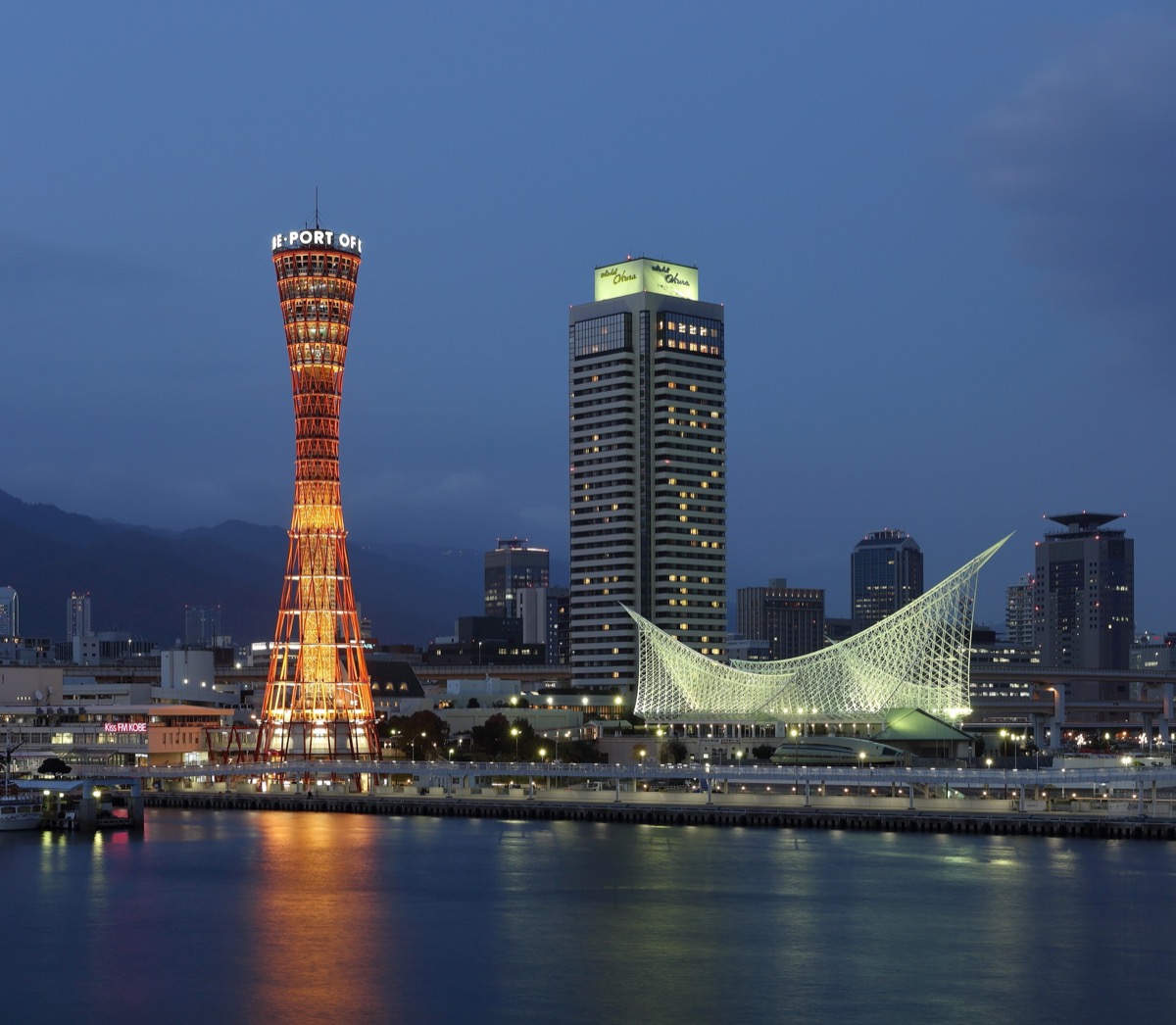
Here is the part that matters for cruise travelers. Osanbashi Pier, where most Japan-itinerary cruise ships dock in Yokohama, is at the foot of Yamate. From the terminal it is about a twenty-five minute walk uphill, past the Yokohama Foreign General Cemetery, into the streets the film draws. Yamate Italian Garden, the Yokohama Foreign Cemetery overlook, and the Bluff area are the visual references.
It's late afternoon and you've taken the long way out of the cruise terminal. You're walking up Yamate-cho with a melon soda from a vending machine, which is the Japanese cruise traveler's true secret weapon, and the harbor is laid out below you exactly as it is in the opening sequence — Minato Mirai's towers on one side, the working port on the other, container ships drifting past Daikoku Pier. The bay turns gold around five-thirty in October. This is the screenshot moment. The frame from the film, except you are inside it.
Kobe and Nishinomiya: Grave of the Fireflies is set where its author actually was
Isao Takahata's 1988 film is the one most people cannot rewatch. It is set in Kobe and Nishinomiya in 1945, during the firebombing campaigns at the end of the war. It is based on the semi-autobiographical short story by Akiyuki Nosaka, who lost his younger adoptive sister to malnutrition during the war and grew up in the Nada district of Kobe.
The specific locations the film references are real. The Mikage area where Seita and Setsuko shelter, the train stations along the Hanshin line, the abandoned bomb shelter near the pond — these are mapped to actual Kobe and Nishinomiya geography. Nishinomiya is also the city where Nosaka spent his childhood and where his sister died, which is why the film's emotional core lands so heavily on those particular streets.
When your ship docks in Kobe, you are walking distance from Sannomiya, the city's main station and shopping district. The Hanshin line from Sannomiya runs east toward Nishinomiya in about fifteen minutes. There is no Grave of the Fireflies tourist trail and we are not going to pretend there should be — this is not a film to make a theme park out of. But the geography is there, and standing in Sannomiya in 2026 with a coffee, looking up at the Rokko mountains the way Seita does, is its own kind of acknowledgement.
Sanyo Shinkansen to Fukuyama, then Tomotetsu bus, based on JR West and local timetables
Tomonoura: Ponyo's actual hometown, where Miyazaki spent two years
Ponyo is the 2008 Miyazaki film about the goldfish-girl who falls in love with a five-year-old. It is set in a small port town that the studio has confirmed is based on Tomonoura, a fishing harbor on the Seto Inland Sea about ninety minutes east of Hiroshima.
Miyazaki and several Ghibli staff made two extended stays in Tomonoura, in 2005 and again in 2006, while developing the film. The town's stone harbor, the Joyato lighthouse, the rocky coast where Sosuke's house sits in the film — all of it is recognisable. Tomonoura is also one of the few places in Japan that has retained a working Edo-period port, which is why it looks the way it looks.
Your ship docks in Hiroshima at the international terminal in Ujina. The straightforward way to Tomonoura is to take the Sanyo Shinkansen east to Fukuyama (about twenty-five minutes), then a Tomotetsu bus thirty minutes south to the harbor. It is a long shore day. If your itinerary overnights in Hiroshima or you have an early arrival, it is doable. If you have eight hours in port, you are choosing between Hiroshima Peace Memorial Park and Tomonoura — both worth it, but pick one.
You are sitting on the seawall by the Joyato lighthouse. It is built of stone, lit in the evening, and has stood there since 1859. The Seto Inland Sea is the kind of flat blue that looks too smooth to be real, the kind of water Sosuke's mother drives across in her tiny car in the film, and there are fishing boats coming back into harbor with their lights on. You bought a melon pan from the bakery on the main street thirty minutes ago. This is the moment the film opens with.
Honorable mention: Spirited Away was not filmed here, but the place that inspired it is
The single most over-traveled Ghibli misattribution is Jiufen, the Taiwanese mountain town that gets called "the real Spirited Away." Miyazaki has personally said this is wrong. He has cited the Edo-Tokyo Open Air Architectural Museum in Koganei, on the western edge of Tokyo, as the actual reference. He spent his lunch breaks there while making the film, and the museum's own signage now identifies the specific buildings — the Kodakara-yu bathhouse, the Takei Sanshodo stationery shop that became Kamaji's boiler room — that fed Spirited Away's spirit world. The bathhouse architecture, the storefronts in the spirit world's main street, and the general aesthetic of disused-Meiji-into-something-else are all directly traceable to that museum.
From Yokohama it is about ninety minutes by train. JR to Tokyo, Chuo Line to Musashi-Koganei, bus to the museum. As a Yokohama cruise day-trip it is fully doable if you skip everything else and do not mind two hours of trains for two hours of museum. The reward is that it is a real place, with a real connection to the film, and almost nobody from a cruise ship ends up there.
What Studio Ghibli is not, with receipts
This is the part you forward to your friend.
Otaru is not Kiki's Delivery Service. Kiki's town of Koriko is acknowledged by Miyazaki to be a composite of European port cities — Stockholm and the Swedish island of Gotland, particularly the medieval town of Visby, are the most-cited references in interviews and in the film's art books. Visby was Miyazaki's primary visual study trip; he traveled there in 1984 specifically for the film. Otaru, on Hokkaido's western coast, is a beautiful canal town with a strong Western-architecture heritage and excellent seafood, but it was retrofitted as a Kiki pilgrimage stop by Japanese tourism boards and fans, not by Studio Ghibli.
Jiufen is not Spirited Away. Miyazaki has stated this directly in interviews. The Edo-Tokyo Open Air Architectural Museum is the canonical source, and the museum's own production-diary signage maps specific buildings to specific scenes in the film. Jiufen is a wonderful old mining town and the lantern-lit streets are gorgeous at night — but the connection to the film exists in Taiwanese tourism marketing, not in the film's actual development history.
This matters because the entire pleasure of fandom travel is going to the real place. Going to Otaru thinking you are visiting Kiki's town is going to a different beautiful town and labelling it wrong. The actual Kiki town is a flight to Stockholm. The actual Spirited Away inspiration is forty kilometers from Yokohama Pier 1.
How to actually cruise this
Three tiers, no luxury. Anime fans in their forties are not the demographic Silversea is built for, and we are not going to pretend the overlap is there.
| Tier | Cruise line / ship | Hits Yokohama / Kobe / Hiroshima | Typical fare/night |
|---|---|---|---|
| Budget | Norwegian Spirit (NCL Japan), MSC Bellissima Asia | Spirit yes / Bellissima route-dependent | $120–180 |
| Mid (lead pick) | Diamond Princess — Japan Explorer / Spring Flowers | All three on one loop | $200–280 |
| Premium | Viking Ocean — Japan & Korea | Yokohama plus Kobe or Hiroshima, not always both | $450–650 |
Diamond Princess is the obvious pick for this article and we are saying so without hedging. It is Japan-homeported, the crew speaks Japanese natively, the food does not over-translate for a Western palate, and select Spring Flowers and Japan Explorer loops — the June 14, 2026 nine-night Japan Explorer is the cleanest example — call at all three confirmed Ghibli ports on a single trip. Not every sailing in those programs hits Kobe (some substitute Osaka), so check the specific itinerary before you book. The ship is older, the cabins are smaller, and the entertainment is gentler than what a Royal Caribbean megaship offers — none of which matters if you are here for shore days, not sea days.
Norwegian Spirit's Asia program out of Tokyo and Yokohama is the budget alternative. Coverage of Kobe and Hiroshima is uneven across NCL Spirit's many Asia itineraries — some loops hit both, others miss one or both — so the per-sailing port list is what matters, not the brochure. The ship is small by NCL standards, which works for Japan's smaller ports. MSC Bellissima rotates between Asia and Europe; check the route before you book — only some itineraries hit all three.
Viking is the premium answer if you want a quieter ship, no-children, and inclusive shore excursions. Their Japan loops are excellent on Yokohama and one of Kobe or Hiroshima, but you may have to pick. You can compare exact port lists and per-night pricing across all of these at GoCruiseTravel.com — the Japan-itinerary filter shows which sailings hit which ports without making you read fifteen brochure PDFs.
Best Cruise for the Confirmed Ghibli Trio
Diamond Princess Japan Explorer or Spring Flowers. It is the only mainstream loop that reliably calls at Yokohama, Kobe, and Hiroshima on the same trip, the homeporting means you avoid Tokyo flight chaos, and at $200–280 per person per night it sits in the sweet spot for the audience that actually watches Ghibli films repeatedly. Compare exact dates at GoCruiseTravel.com.
The screenshot moment
The friend who memorised the bathhouse scene does not need another themed cafe. They need to stand on Yamate hill at golden hour with the Yokohama harbor laid out below them, frame for frame, and realise the film was always pointing at a real place. They need to know that the actual bathhouse inspiration is a museum in suburban Tokyo, not a town in Taiwan. And they need to be told, gently, that the canal town in Hokkaido is not Kiki's home.
Forward this to them. The cruise dates are at GoCruiseTravel.com. The films are on streaming. The real places have always been here.

Filmed Here: The Korea Cruise for Squid Game, BTS, and K-Drama Fans
Only 12 cruises stop in Korea in 2026, all in October–November. Here's exactly what's reachable from Busan and Jeju in one shore day.