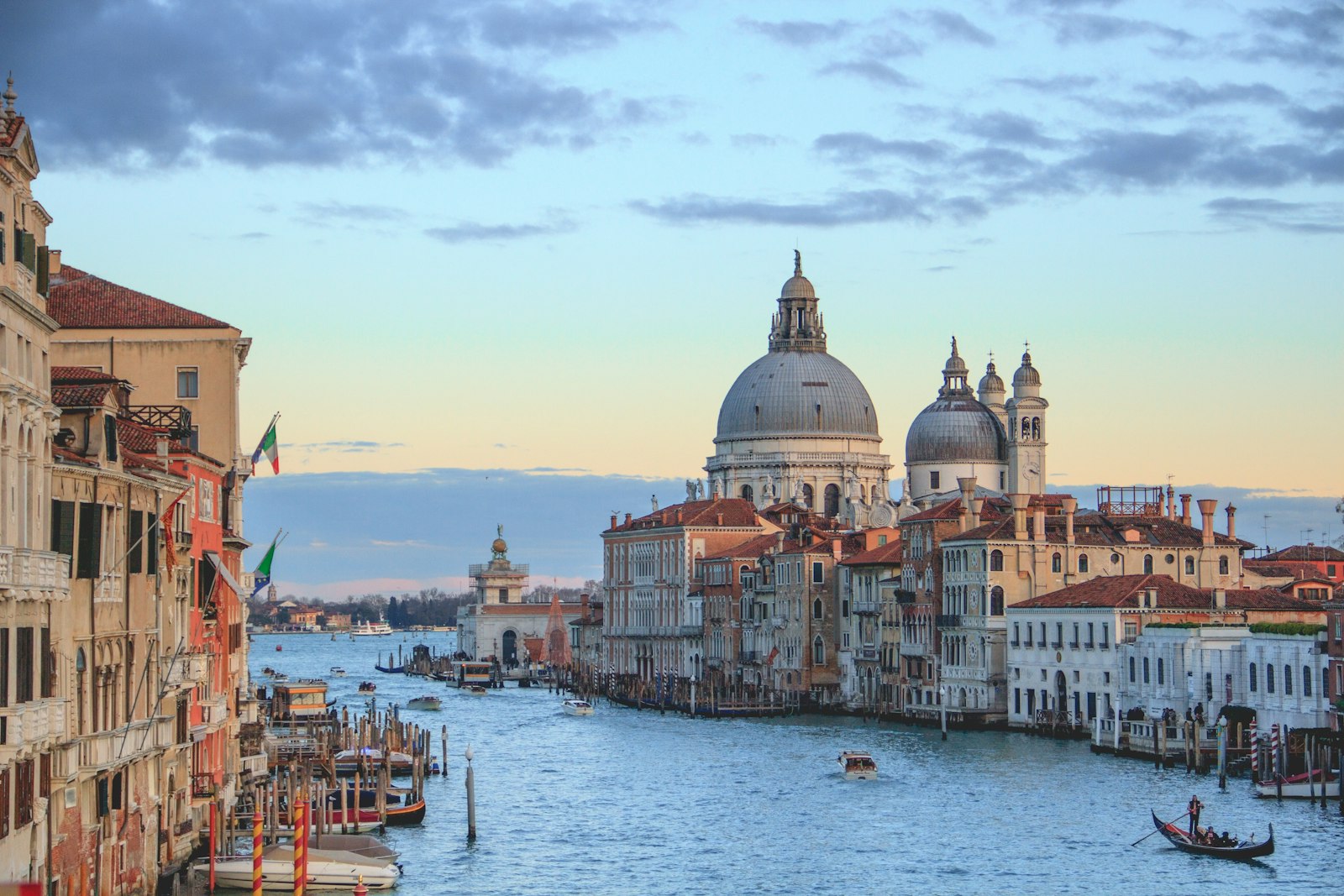
Venice's best lunch isn't the €22 canal-side pasta you queue for — it's cicchetti, small plates eaten standing at a marble counter two streets away, and the locals never sit down for it.
Somewhere near the Rialto Bridge right now, a cruise passenger is sitting down to a €22 plate of spaghetti, ordering it in English, reaching for a wallet before the fork is down. Two streets behind them, a Venetian is standing at a marble counter eating the lunch this city has eaten for five hundred years — small plates off a toothpick, a glass of wine the size of a shot, paid for one piece at a time — and not sitting down for any of it.
The tourist bought the view of the canal. The local bought the food. Only one of them will talk about lunch when they get home.
This is the cicchetti crawl, and it is the best thing you can do with a Venice port day if you care at all about eating. It costs less than the spaghetti, it runs through the oldest food district in the city, and it needs one thing the canal-side tourist doesn't have: the words.
Plainer plates start near €1.50; an ombra of house wine runs €1 to €3. Five plates and two ombre, standing, lands a full lunch under €20.
What a bacaro actually is
A bacaro is a Venetian wine bar built for standing. The plural is bacari, and on a good evening Venetians walk between several in a row — a giro d'ombre, a tour of shadows — the way other cities run a pub crawl, except the unit of progress is one small glass of wine and a snack or two.
The snacks are cicchetti (one is a cicchetto; the c's are hard, chee-KET-tee). They sit under glass on the counter: bread under whipped salt cod, fried meatballs, half a soft-boiled egg with an anchovy, marinated sardines, a square of fried mozzarella. There is no menu. You look, you point, you get a small plate or a paper napkin, and a running tab grows in someone's head.
The wine is an ombra. You order it by the ombra, not the glass, and the good ones come from a bottle the owner will not explain. You drink it standing, by the door or at the counter, and when it is gone you order another or walk to the next bacaro. Nobody comes to check on you. Nobody wants your table, because there is no table.
The whole system assumes you already know how it works. That assumption is what the guidebooks leave out, and what this guide hands you.
Why Venetians call a glass of wine a shadow
Ombra means shadow. Why it also means a glass of wine is the best story in Venetian drinking, and like most of the best stories, it may not be entirely true.
The popular version: centuries ago, wine sellers worked Piazza San Marco and kept their casks cool in the shade of the Campanile, the bell tower. As the sun moved, the shadow moved, and the sellers dragged their wine around the base of the tower to stay under it. To go for a drink was to go to the shadow — andar a l'ombra. The carts are long gone; the phrase outlived them.
Historians file this under folk etymology: neat, a little too literal, impossible to prove. Order one anyway. There are worse things to ask for in a language you don't speak than a shadow.

The crawl: four old bacari around the Rialto Market
Everything you want sits on the San Polo side of the Rialto Bridge, in the lanes around the Rialto Market — the fish-and-produce market that has fed Venice since the eleventh century. This is the oldest bacaro cluster in the city, and four of these counters have been pouring ombre long enough to have outlived a republic.
Start at All'Arco, a counter barely wider than its doorway a minute from the stalls, where the cicchetti are built from whatever the fish vendors landed that morning. Two minutes on is Cantina Do Mori, which claims a start date of 1462 and, by that claim, the title of oldest bacaro in Venice — a low room hung with copper pots where you eat stamp-sized sandwiches called francobolli, standing under the lamps. It is reliably closed on Sundays; Saturday hours are inconsistently reported across listings, so if your ship is in on a Sunday, make Cantina Do Spade — the one counter here open every day — your anchor, since All'Arco shuts Sundays too; check the map pin notes before you commit your feet. Around the corner, Cantina Do Spade has been a tavern since the 1400s and leans toward a plate you could call lunch. End at Osteria al Bancogiro, on the Grand Canal at Campo San Giacometto, where you can finally stop walking and take an ombra to the water's edge.
Order across them, not at one. The four plates worth crossing a city for:
| Order this | What it is |
|---|---|
| baccalà mantecato | salt cod whipped to a cloud, on bread or grilled polenta |
| sarde in saor | sardines marinated sweet-and-sour with onion, raisins, pine nuts |
| polpette | fried meatballs, eaten off a toothpick |
| mozzarella in carrozza | a mozzarella sandwich, breaded and fried |
By its own account the oldest continuously working bacaro in Venice — older than the stone Rialto Bridge it stands behind, finished in 1591.
Picture the middle of it. You are standing at a marble counter worn smooth by a few centuries of elbows, an ombra of cold white in one hand, a piece of baccalà mantecato on bread in the other. Behind you the market is loud — a vendor calling prices, a hand truck over stone, gulls working the fish stalls. There is no table. There is no waiter. There is no bill yet, because nobody has counted. You have been in Venice three hours, and this is the first moment that has felt like the city instead of the postcard.
If one of these is closed — they are small businesses with short, human hours, and they do close — the day is not lost, because the skill transfers. A real bacaro has locals standing at the counter, hand-labeled cicchetti under the glass, an ombra poured from a bottle with no story on it, and no laminated menu out front. The laminated menu in four languages is the tell. When you see it, keep walking until you don't.
- 0Open in MapsRialto vaporetto stopRialto, San MarcoStep off the Line 1 or 2 vaporetto here. The Rialto Market is two minutes north.
- 1Open in MapsRialto BridgePonte di Rialto, San PoloCross to the San Polo side. The bacaro lanes begin right behind it.
- 2Open in MapsRialto MarketMercato di Rialto, San PoloFish and produce since the 11th century. Your cicchetti come from these stalls.
- 3Open in MapsAll'ArcoCalle dell'Occhialer, San Polo 436Tiny counter by the stalls. Closes mid-afternoon; shut Sundays.
- 4Open in MapsCantina Do MoriCalle Do Mori, San Polo 429Reputedly the oldest bacaro, 1462. Copper pots, francobolli, no chairs. Closed Sundays; Saturday hours vary — confirm before visiting.
- 5Open in MapsCantina Do SpadeCalle delle Do Spade, San Polo 860A tavern since the 1400s. Order a plate you could call lunch.
- 6Open in MapsOsteria al BancogiroCampo San Giacometto, San Polo 122Last stop, on the Grand Canal. Closed Mondays. Then back to the vaporetto before all-aboard.
The map saves to your phone in one tap — Save all stops to Google Maps, or download the .kml for Apple Maps. Do it now, so you spend the day navigating Venice's lanes instead of reading GoCruiseTravel.com on a footbridge.

How to order, and the part nobody tells you
The etiquette is mostly the absence of etiquette. You don't wait to be seated, because you won't be. You don't open a card tab; you keep a rough count in your head and settle at the end, and cash makes everyone's afternoon easier. You don't linger once your ombra is gone, because the counter is the entire business and someone behind you wants your eighteen inches of it. One bacaro, a cicchetto or two, one ombra, then move — that pacing is the giro d'ombre, and it is how you taste four places in the time the canal-side tourist spends waiting for a check.
One logistical note, then back to lunch. Big ships no longer dock in Venice's historic centre — most berth at Marghera or nearby ports and run a transfer in — and on some 2026 dates the city charges day visitors a small access fee, so budget the time and check your date before you sail. for the same skip-the-tourist-trap approach to another river-and-sea port day — see Vienna Port-Day Coffeehouse Crawl (https://www.gocruisetravel.com/en/guides/vienna-port-day-coffeehouse) You can compare which ships still call here, and when, on the Venice port page at GoCruiseTravel.com.
Then forget all of it and order. The worst thing that happens is you point at something you can't name and it turns out to be delicious.
What you'll actually remember
Months from now, you will not remember the Bridge of Sighs. Everyone photographs the Bridge of Sighs; the photos are interchangeable; yours will look like the rest. What you will remember is the marble counter, the wine with no label, the salt cod you couldn't name and ate anyway, and the specific feeling of eating well in a city famous for feeding visitors badly — standing up, paid for two euros a plate.
The canal-side restaurant sells you a chair and a view you already had from the bridge. The bacaro sells you the thing you actually crossed the lagoon for, which was never the chair.
Skip the sit-down. Order the shadow. Stand up to eat.
Last fact-checked July 2026
Spot something we missed?
We update guides when readers tell us we got it wrong. A misnamed port, a wrong sailing date, a logistics detail — send it our way.

The €3 Drink That Saves Your Barcelona Port Day from Las Ramblas
A Barcelona port-day guide for cruisers who know Las Ramblas is a trap and want to eat on their feet before 2 PM.