A 27-million-view TikTok turned a fake pier-run into a national conversation about missing the ship. The actual rules are quieter, more expensive, and harder to fake.
In early March, an account called @weirdgirlgrwms posted a TikTok of a family appearing to chase the Carnival Freedom out of Nassau. Crying, running, dragging luggage — the full pier-runner cinematic.
It has since passed 27 million views.
posted March 2, 2026 by @weirdgirlgrwms — passenger Stephanie filmed multiple takes from the Carnival Freedom and posted the debunk
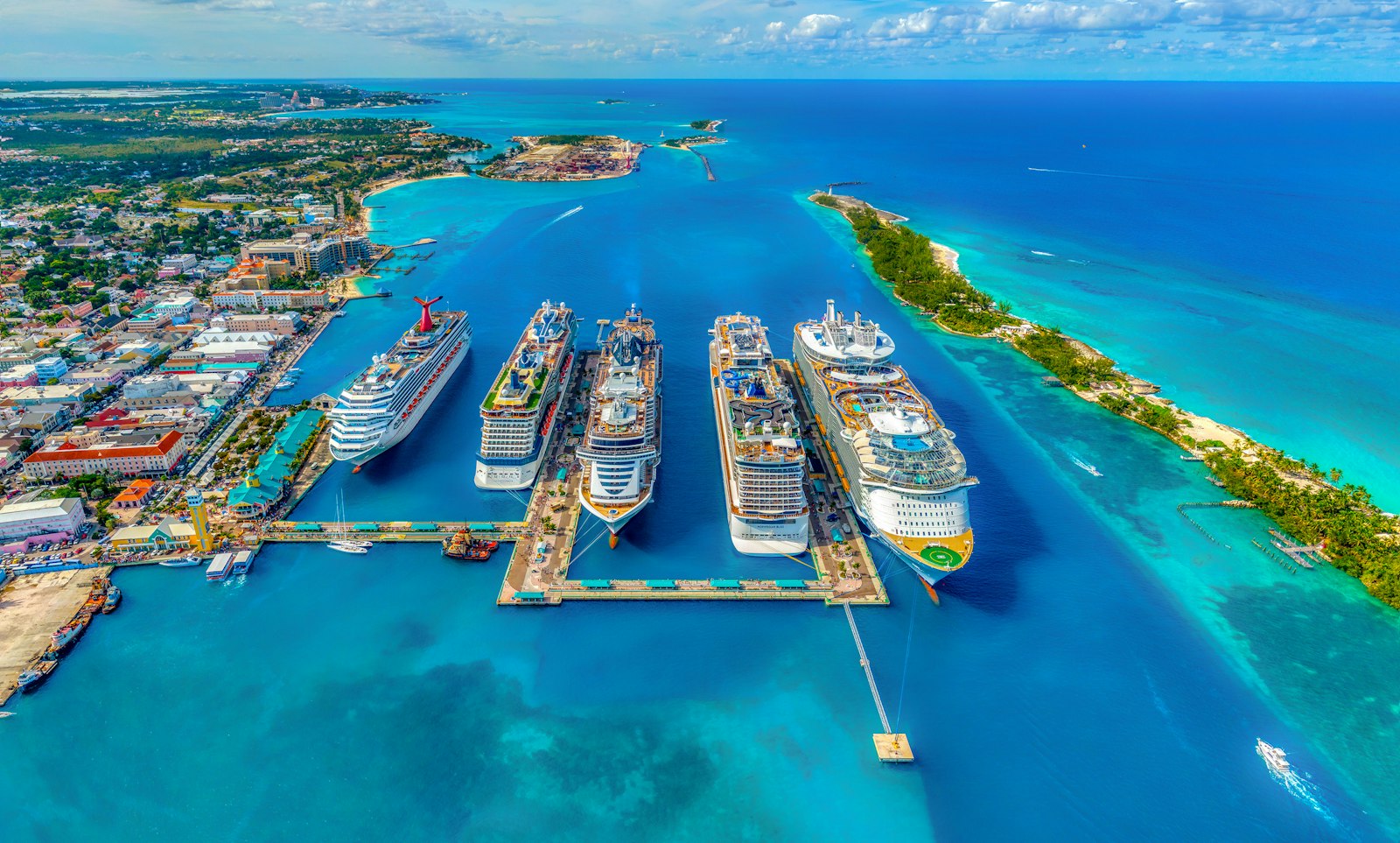
It is also entirely staged. A passenger filming from the Carnival Freedom captured the same family doing multiple takes — different combinations of relatives, reviewing the footage between runs. The actual ship the family was sailing was MSC Seashore, docked one berth over. The Carnival Freedom was a backdrop.
Good. Now we can talk about what actually happens.
At a port of call: nobody waits
Cruise tickets are contracts of carriage. The published "all aboard" time — usually 30 minutes before departure — is the line in the contract, not a suggestion.
A ship will, occasionally, wait for late passengers. Always for the same reason: those passengers were on a ship-sponsored shore excursion. If you booked the snorkel trip through the cruise line and the bus blows a tyre, the ship waits. If you booked the same snorkel trip through TripAdvisor, the ship sails.
The line owes you nothing if you miss it. Not a flight, not a hotel, not a phone call. Carnival's own help page is unambiguous: guests who miss the ship are responsible for all costs of catching up.
At a U.S. homeport: meet the PVSA
This is the part the TikTok didn't get to.
If you miss the ship at a U.S. homeport — say you were embarking out of Miami and your flight got delayed — you cannot simply fly to the next U.S. port (San Juan, Cozumel, Galveston) and rejoin. Not for free, anyway.
It's not the Jones Act. The Jones Act covers cargo. The law that controls passenger movement is the Passenger Vessel Services Act of 1886 — the PVSA — and it forbids foreign-flagged ships (which is essentially every cruise ship) from carrying passengers between two U.S. ports without a stop in a "distant foreign" port.
The practical penalty: Carnival's PVSA help page currently lists the per-passenger fine at $996. The line is allowed to pass that fine through to whoever triggered it. So a missed embarkation at a U.S. port often means flying to the first foreign port — Nassau, Cozumel, San Juan in the U.S. Virgin Islands case-by-case — and paying for that flight, plus visa and hotel, yourself.
the older $798 figure circulated widely is out of date — the fine is indexed for inflation
What travel insurance actually does — and doesn't
Standard travel insurance has a benefit called "Missed Connection." On paper it pays your catch-up flight, hotel and meals. In practice it has a long list of conditions.
It typically pays out for covered delays — weather, common-carrier mechanical, a documented airline cancellation of three or more hours. It typically does not pay out for the things that actually cause people to miss the ship: oversleeping, traffic, lingering too long at a beach bar, a late independent excursion. Limits are usually somewhere between $250 and $1,000.
The brutal way to summarise it: Missed Connection covers "the airline's fault" almost always, and "your fault" almost never.
The honest stats
There is no published industry statistic for how often passengers miss the ship. The Cruise Lines International Association doesn't publish it. The U.S. Coast Guard doesn't track it that way. Anything you read claiming "X% of passengers per sailing miss the ship" is somebody guessing.
What is real, and easy to find on YouTube and TikTok, is the catalogue of pier-runner videos going back over a decade — Norwegian Sky in Nassau, Norwegian Breakaway in Bermuda, Princess in Naples. Most end with the ramp going up and the ship pulling away. Some end with a heroic gangway swing back down. None of them are the cruise line being merciful for the camera; they are the captain making a call about tide, schedule, and the next pilot booking.
The bottom line
The @weirdgirlgrwms TikTok worked because the actual rules around missing a cruise ship are weirder, sadder, and more expensive than most viewers realise. The cruise line's job is to leave on time. Your job is to be back on board. The U.S. government's job, via the PVSA, is to make sure you can't take the lazy shortcut to fix it.
What to actually do
Fly in the day before. Book your shore excursions through the cruise line if your itinerary is tight. Buy travel insurance that explicitly lists "missed cruise departure" as a covered event — most basic policies don't. And when you see the next viral pier-runner video, assume it's staged until proven otherwise.
GoCruiseTravel.com lets you compare cruise lines on what's actually included in the fare — including which excursions are operator-run versus third-party — at GoCruiseTravel.com.
for which Missed Connection clauses to look for before you book — see The Complete Guide to Cruise Travel Insurance (https://www.gocruisetravel.com/en/guides/cruise-travel-insurance-guide)
Cruise Smoking Rules: The $500 Balcony Fine and Casino Divide
Lighting a cigarette or vape on a cruise balcony carries a $250 to $500 fine and disembarkation risk. Here are the 2026 smoking rules and policies.