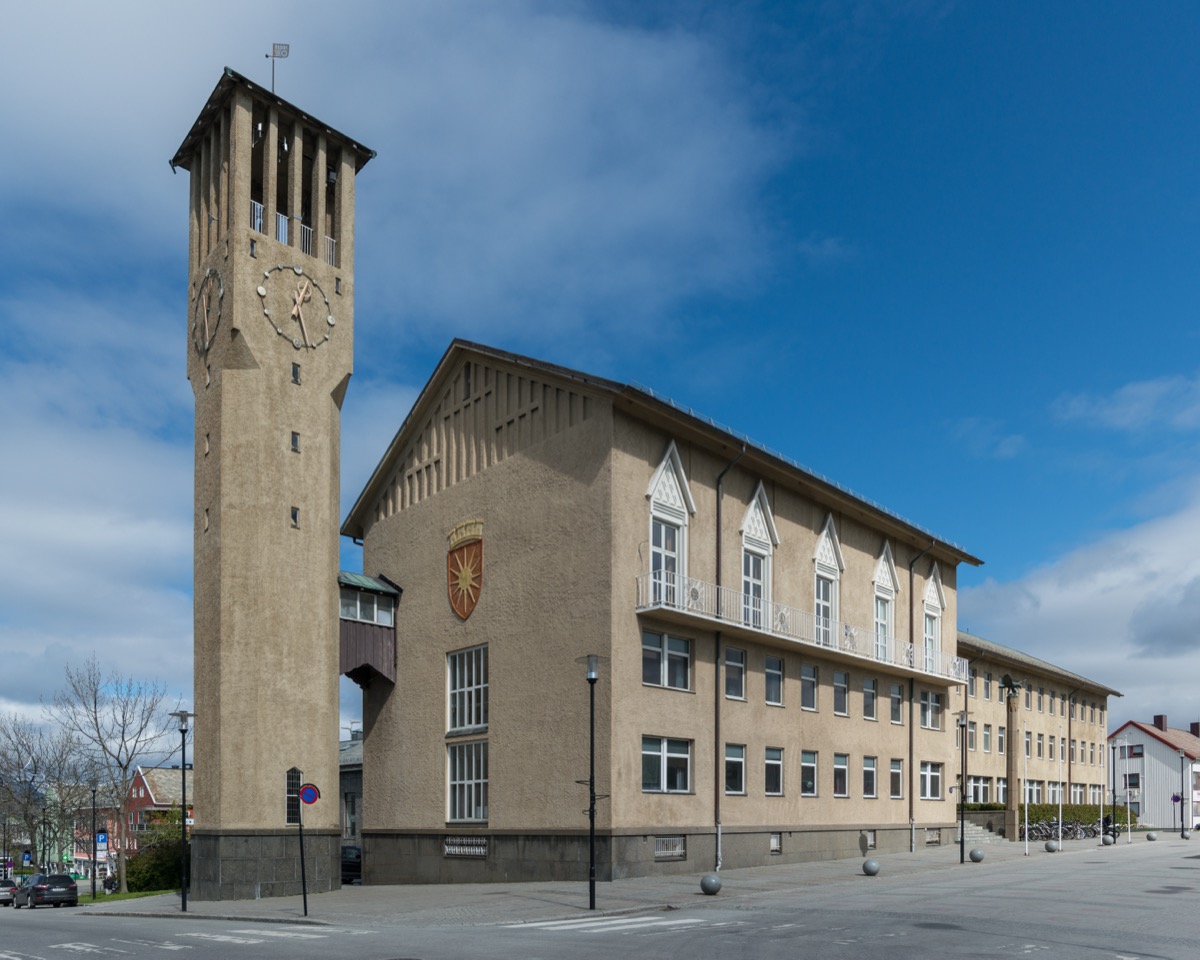
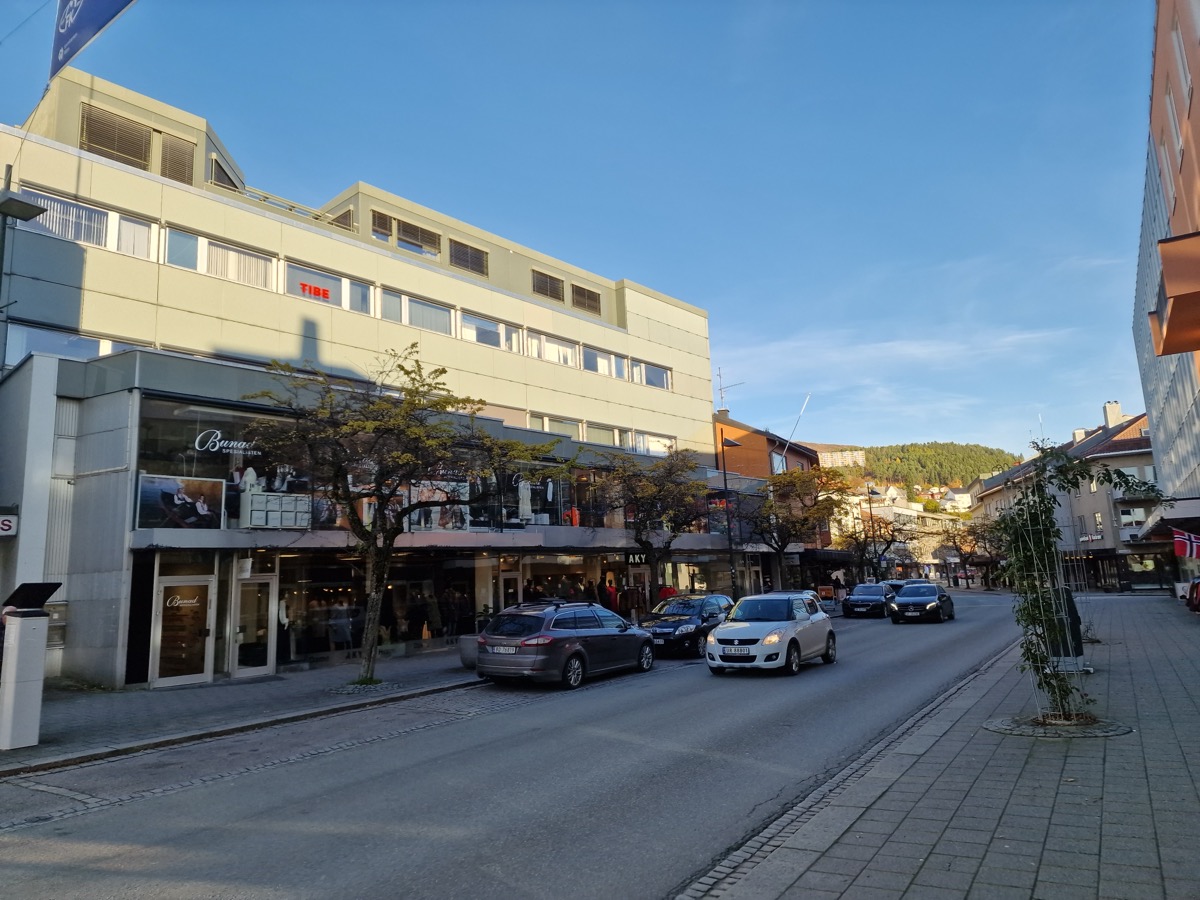
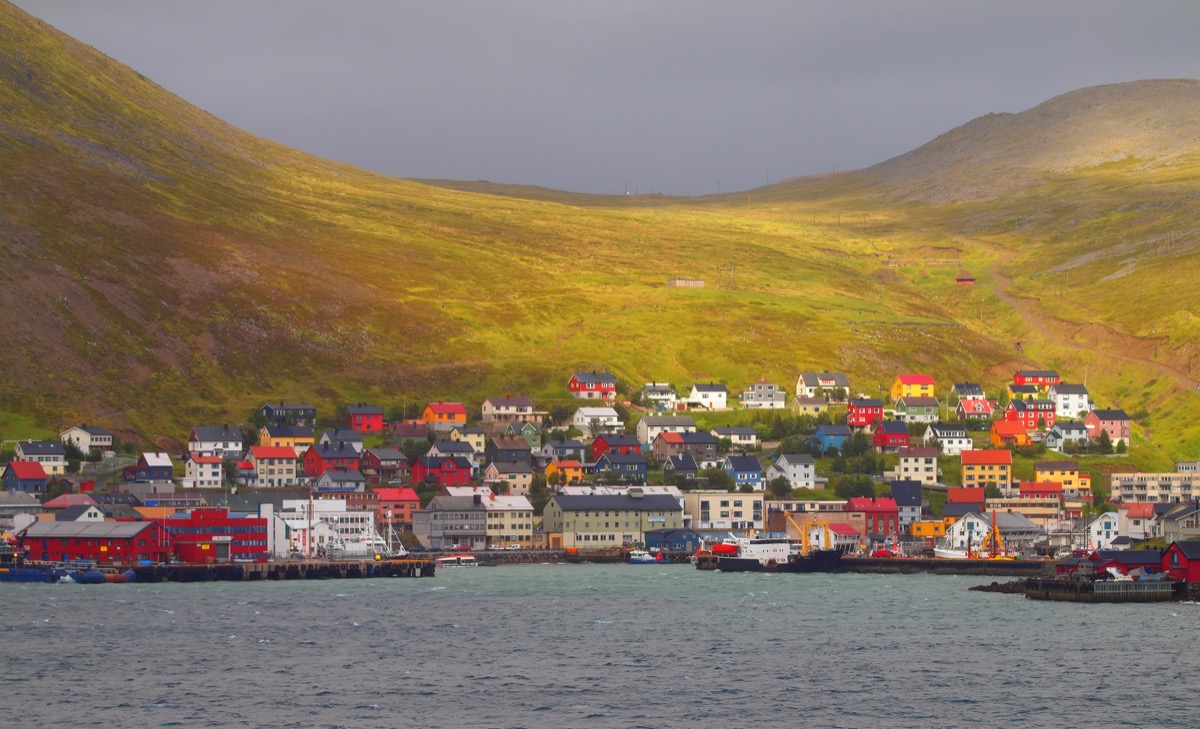
Findus Quay, on the eastern side of the harbour. It's a working pier shared with fishing and supply vessels. The town centre, Meridian Monument, and the trailhead to Salen are all within a ten-minute flat walk.
Last verified 2026-05-13. https://www.visithammerfest.com/
A small stone obelisk on the harbour marking the northern terminus of the Struve Geodetic Arc — a 2,820-km chain of survey points from Hammerfest to the Black Sea, completed in 1855, that first measured the size and shape of Earth. It's UNESCO-listed across ten countries.
Last verified 2026-05-13. https://whc.unesco.org/en/list/1187/
If you can walk an hour uphill on gravel, yes. The path starts behind the church, switches back through birch scrub, and ends at a viewing platform with the whole town and Sørøya beyond. A road also runs to the top for taxi access.
Last verified 2026-05-13. https://www.visithammerfest.com/
Honest answer: only if you've never been and want the bragging right. It's a 2.5-hour bus each way to a cliff with a globe sculpture and a paid visitor centre. Most of the day is spent on coach seats. The Hammerfest–Salen–museum loop is the better use of port time.
Last verified 2026-05-13. https://www.nordkapp.no/
A local museum and members' club at the harbour. For a small fee you can become a lifetime member, get a certificate, and look at exhibits on Arctic hunting history. Yes, it is gently absurd. That is the point.
Last verified 2026-05-13. https://www.isbjornklubben.no/
Possibly. Summer averages 10–13°C with persistent wind and frequent rain; winter brings polar night from mid-November to late January. Bring waterproof layers. The town is built for the weather and keeps moving regardless.
Last verified 2026-05-13. https://en.wikipedia.org/wiki/Hammerfest
Verification — Dock location, walking distances, Meridian Monument UNESCO status, and North Cape pricing cross-checked against Visit Hammerfest, UNESCO World Heritage List, and Nordkapp visitor centre published rates.
Last verified 2026-05-13