Taxi
Taxi rank at the pier; Uber and Lyft both operate; fares in USD
Charley's Taxi and a handful of independent drivers meet ships at the Aloha Tower curb. Uber and Lyft both have full coverage in Honolulu with a dedicated pickup zone on the pier side of Bishop Street. Cab fares are metered: to Waikiki $18–26, to Pearl Harbor $40–55 one way, to Diamond Head trailhead $20–28, to Honolulu International Airport $25–35. Rideshare runs 10–20% cheaper on average outside surge. To the North Shore expect $90–130 one way by cab or $70–100 by rideshare — most visitors take a tour or rent a car for that trip. Cards are accepted in all cabs and rideshare; carry $30–40 in small bills for tips and the occasional cash-only food truck. Cell signal is full LTE/5G across Oʻahu — no dead zones on the urban routes.
Currency
U.S. dollar (USD); cards and contactless work everywhere; 4.712% Honolulu GET added at the register
Currency is U.S. dollars. Tap-to-pay, chip-and-PIN, and Apple Pay/Google Pay work at every restaurant, attraction, taxi, and food truck in Honolulu — Hawaiʻi is one of the most cashless-friendly states. ATMs are plentiful: Bank of Hawaiʻi and First Hawaiian Bank both have branches within a five-minute walk of the pier on Bishop Street, plus a Bank of Hawaiʻi ATM inside the Aloha Tower Marketplace. There is no separate sales tax line; Hawaiʻi General Excise Tax of 4.712% (4% state plus 0.5% Honolulu County surcharge) is added to almost every transaction including restaurant tabs and tour bookings, and is usually shown as a line item. Tipping is standard U.S. practice: 18–20% on restaurant tabs, $5–10 per person on tours, $2–3 per drink at bars. Carry $40–60 in small bills for tour-guide tips, food trucks at Haleʻiwa, and the cash-only flower-lei vendors at the airport and pier.
Day trip
Pearl Harbor (4–6 hrs round trip) or Diamond Head + Waikiki (3–4 hrs) or North Shore circle (8–10 hrs) or ʻIolani Palace + downtown (2–3 hrs)
Pearl Harbor with the USS Arizona Memorial program is the headline day trip — 20 minutes west by cab ($40–55) or 45 minutes on TheBus Route 20 ($3), then 4 hours minimum on site including the Bowfin and Battleship Missouri. Requires a Recreation.gov reservation for the Arizona launch (see FAQ above). Diamond Head State Monument plus a Waikiki swim is the second classic — 15 minutes east, 1.5–2 hours on the trail, then a beach hour and a Kalakaua Avenue lunch; total 3–4 hours. The North Shore circle-island tour is the long option at 8–10 hours and requires either a rental car or a $115–145 booked tour. ʻIolani Palace plus the downtown historic district (Kawaiahaʻo Church, the State Capitol, Honolulu Hale, the Hawaiʻi State Art Museum) is the walk-off option — six minutes from the pier, 2–3 hours, $26.95 entry. Pick one big trip and one walk; an 8am-to-6pm port day fits comfortably.
Dock
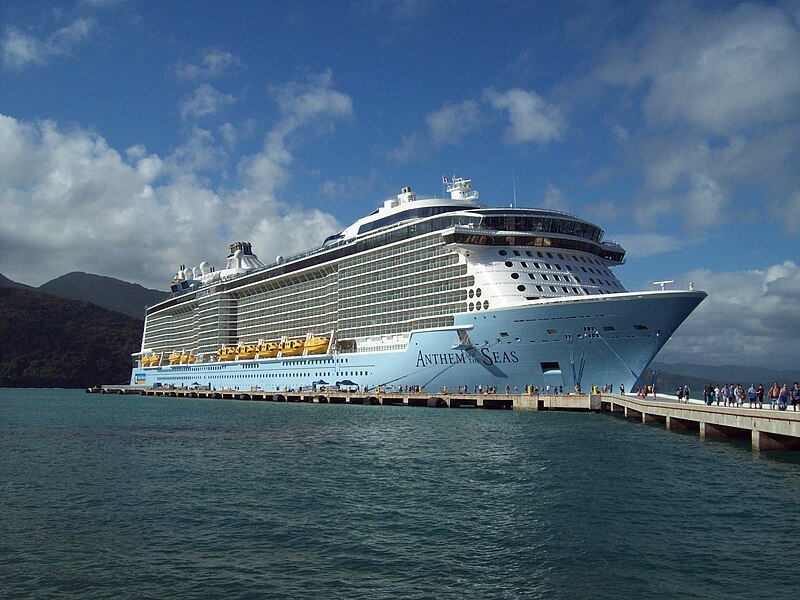
Docked — Aloha Tower Piers 10/11, single berth, 2-minute walk-off to downtown, 15 minutes by cab to Waikiki
Honolulu has a primary cruise berth at Piers 10 and 11 of the Aloha Tower complex on the southwest edge of downtown, with a 1,500-foot face that handles one mid-to-large ship at a time. Walk-off is two minutes flat onto the Aloha Tower Marketplace concourse, with the customs hall and rideshare/taxi curb directly outside. A secondary berth at Pier 2 across the channel takes a second ship on the 15–20 days per season when Pride of America overlaps with another caller — typically a Princess or Holland America itinerary. There is no tender operation. TheBus and Waikiki Trolley stops are within 300 m of the pier gate. ʻIolani Palace is six minutes on foot. The pier and Aloha Tower itself (1926 lighthouse-clock, free observation deck) are walkable for anyone steady on their feet; downtown Honolulu sidewalks are flat and shaded by the Aloha Tower Marketplace canopy for the first block.
Dive sites
Sport diving available off Waikiki and the south shore; Hanauma Bay is snorkel-only
Oʻahu has accessible scuba sites off the south shore — Sea Tiger and YO-257 wrecks (intentionally sunk 1999 and 1989) sit at 80–125 feet off Waikiki, both intermediate-to-advanced dives with reef sharks and resident turtles. Two-tank trips run $165–195 per diver including gear, with morning pickups from Waikiki hotels (the pier itself is not on the pickup list — book a taxi to Waikiki to join the boat). Hanauma Bay is snorkel-only and is the easier reef experience for cruise passengers — calm water, 30-foot maximum depth in the inner bay, 400+ fish species. Reservation required (see beach clubs answer). Reef-safe sunscreen (no oxybenzone, no octinoxate) is mandatory in Hawaiʻi waters by state law since 2021; rangers spot-check at Hanauma. Most cruise passengers without dive certification spend the snorkel day at Hanauma rather than the harder hotel-pool boat dives.
Beach clubs
Waikiki Beach is public and free; no beach clubs in the Caribbean sense — beachfront hotels are the closest equivalent
All Hawaiian beaches are public by state law, including the entire 2-mile Waikiki strand. There is no beach-club model with day passes and cabanas; the closest equivalents are the hotel-run beach setups at the Sheraton Waikiki, Royal Hawaiian, and Hilton Hawaiian Village which rent chairs ($25–40) and umbrellas ($20–30) to non-guests on the public sand fronting their properties. Fort DeRussy Beach Park (military property but open to civilians) is the least crowded section. Hanauma Bay Nature Preserve, 30 minutes east of the pier, is the snorkeling option but requires a reservation booked exactly 48 hours ahead at 7am sharp; it is closed Mondays and Tuesdays for reef recovery and entry is $25 per person plus $3 parking. Most cruise passengers visiting in summer find Kūhiō Beach in central Waikiki the path of least resistance — free, calm water, lifeguards, and within sight of the Duke Kahanamoku statue.