The Small Cruise Hygiene Habits That Actually Move the Needle (Most Aren't What You'd Guess)
Hantavirus on the Hondius made headlines. The real 2026 cruise illness risk stays small — but a few small habits matter more than you'd guess.
Updated9 tháng 5, 2026Đã xác minh
Cách thực hiệnGoCruiseTravel
Hantavirus on the Hondius is the headline. Your odds of catching anything serious on your next cruise are still very low — but a handful of small habits actually move the needle, and most of them aren't what people fixate on.
The MV Hondius is in the headlines because three people died of hantavirus on what was supposed to be an Antarctic expedition cruise. Seven cases, one ship, one season. It is the first hantavirus cluster ever publicly linked to a cruise vessel, and the source of exposure — shipboard or shore — has not been confirmed.
That is the news. Here is the part nobody is saying out loud: your odds of catching anything serious on your next cruise, in 2026, are still small. The norovirus baseline tells the story — roughly 330 reported cases out of an estimated 38.3 million cruise passengers this year. That is well under one in a hundred thousand.
So this isn't a panic piece. It's a short list of small habits that actually move the needle, plus an honest list of the ones that don't. Most cruisers worry about the wrong things.
Where cruise illness actually starts (it's the airport)
The flight to your embarkation port is the highest-density, lowest-ventilation environment in the entire trip. Pressurized cabin, recirculated air, two hundred strangers within two meters of you for six hours. A surprising share of shipboard outbreaks begin with passengers who boarded already incubating something — they didn't catch it on the ship; they brought it on.
The practical move: wear a KN95 on the plane, especially on the leg to the port. That's it. Once you're on the ship, the air-handling environment is genuinely better than most aircraft, and almost nobody around you is masking, so the social cost goes up while the marginal benefit drops.
⚡reported cruise GI cases in 2026
~330
out of an estimated 38.3 million cruise passengers — under one in a hundred thousand
Được nhắc đến trong hướng dẫn này
Cảng tàu du lịch
Singapore, Singapore
Nhấn để khám phá · 8 chuyến đi · từ $632/người
Cảng tàu du lịch
Tokyo, Japan
Nhấn để khám phá · 6 chuyến đi · từ $876/người
Cập nhật9 tháng 5, 2026. Hantavirus and norovirus guidance cross-checked against CDC, WHO, and PAHO advisories within the last 7 days. Hondius case counts via WHO notice (May 4, 2026).
Tiết lộWe don't take cruise-line commissions. This piece is editorial; nothing here is sponsored.
If you're flying long-haul to Singapore, Tokyo, or Buenos Aires for an expedition sailing, the case for masking on the flight is strongest of all. You're going to be on a small ship with a small medical bay for two weeks. Arriving healthy is the entire game.
Pick a balcony you can actually open
The second most useful habit is genuinely embarrassing in how simple it is: if you have a balcony, open the door for ten minutes a day. Once in the morning, once before bed if you want to be thorough.
Here is the catch nobody mentions at booking time. Some newer ships — particularly certain Royal Caribbean and Norwegian classes — have cabin grades with inoperable glass instead of openable balcony doors. The view is the same; the airflow is not. If respiratory hygiene matters to you, ask before you pay. The booking page rarely tells you.
Inside cabins are not a hygiene problem in any practical sense — the ship's HVAC turns over cabin air several times per hour, and modern systems use HEPA-grade filtration on the recirculated portion. But a daily airing-out, when you can do it, is the kind of 30-second habit that costs nothing and earns its space in a routine.
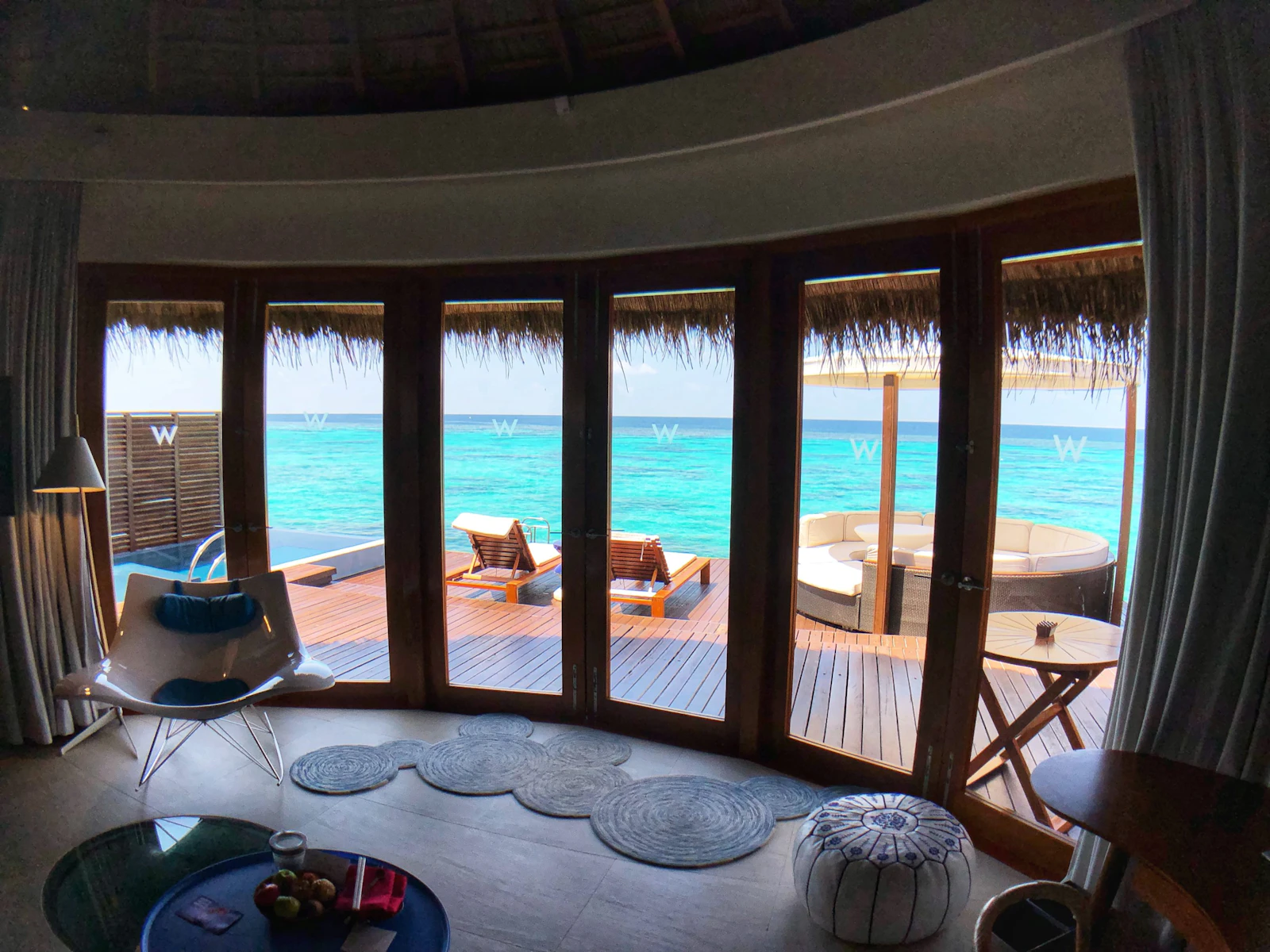
If your balcony door opens, the highest-leverage hygiene habit on a ship takes about ten minutes and zero effort. · Photo via Unsplash
Buffets: timing beats avoidance
A lot of cruise hygiene advice tells people to skip the buffet. Most people will not skip the buffet. It's half the reason they booked the cruise.
What actually works: go at off-peak windows. The buffet at 12:30pm is a contact event. The buffet at 1:30pm, when most of the ship has cleared out, is barely populated. Same food, ten minutes of patience.
The other buffet rule that matters more than most: wash your hands with soap and water before you sit down to eat, not just after the bathroom. Hand sanitizer at the buffet entrance is theater — it's better than nothing, but it's not effective against norovirus, and it doesn't replace soap. Soap before eating is the single most evidence-backed cruise hygiene habit there is.
The buffet isn't the problem. The buffet at peak hour is the problem. · Photo via Unsplash
Shore excursions: the real zoonotic checklist
This is where the Hondius story is genuinely instructive. Hantavirus exposure happens almost entirely in enclosed, dusty, rodent-frequented spaces — abandoned cabins, rustic huts, old barns, refugios in Patagonia, ranch outbuildings in the US Southwest, certain rural rentals in Mexico. Sweeping or vacuuming dry rodent droppings is the textbook bad move. Spray with diluted bleach, wait five minutes, wipe.
For a cruise traveler this translates to a small, specific list. Skip shore excursions that involve abandoned buildings, dusty interiors of disused structures, or overnight stays in rustic accommodation that has been closed up for the off-season. That is a narrow category — most shore excursions are safe.
A different and unrelated category: contact with bats, monkeys, and stray dogs. That's a rabies conversation, not a hantavirus one. Don't feed monkeys at temples. Don't pet beach dogs. Don't enter caves with bat colonies without a guide who knows what they're doing.
The $15 kit that earns its space
A short packing list, all of which fits in a toiletry bag:
A digital thermometer. If you feel off, you want to know your number before the medical bay does — quarantine policies kick in fast, and "I think I might have a fever" is a different conversation than "I have one."
A few KN95s for the flights. Cheap. Compact. Most useful on the way to the cruise, not on it.
Oral rehydration sachets. The single most useful tool against any GI illness — they outperform sports drinks for actual rehydration, weigh nothing, and cost a few dollars.
A travel-sized bar of soap. Cabin bathrooms have liquid soap; the buffet area often has only sanitizer. Bringing your own means you have soap when you actually need it.
Whatever personal medications you take, in original packaging. Customs in some countries ask. The ship's medical bay charges accordingly.
What to skip (because honesty is the brand)
A few things that get recommended a lot and don't actually help much.
Wearing a mask in the buffet line. Almost no one does it; the social cost is high; the marginal benefit in a non-outbreak ship is low. Save the masks for the plane.
Dining in your cabin for every meal. Unrealistic, lonely, and the trip is the trip. Off-peak buffet timing is the better answer.
Obsessive hand-sanitizer use. It's better than nothing. It is not better than soap. The cruise industry leans hard on sanitizer dispensers because they're cheap to install — they're not the high-leverage tool the placement implies.
Avoiding all shore excursions involving wildlife. Most are fine. The specific things to actually avoid are narrow: closed-up rural cabins (hantavirus), unsupervised contact with monkeys/bats/stray dogs (rabies), and uncooked food in places where the water isn't safe (everything else).
Our Verdict
The honest version
Your odds of getting seriously ill on a 2026 cruise are very low, even with hantavirus and norovirus in the headlines. The five habits that matter — masks on the plane, soap before eating, daily balcony airing, off-peak buffet timing, and a $15 kit — take less than ten minutes a day combined. Skip the theater. Compare upcoming sailings at GoCruiseTravel.com, where every itinerary lists the actual ship class and cabin types so you can check whether your balcony door opens before you book.
For more context on the news that prompted this piece, see for the full case picture — see the calibrated read on the Hondius hantavirus cluster (https://www.gocruisetravel.com/en/guides/hantavirus-cruise-what-to-actually-worry-about) and the broader for the actual base rates — see 2026 cruise GI outbreak numbers (https://www.gocruisetravel.com/en/guides/norovirus-cruise-ships-2026).
The news cycle will move on. The habits stay free.
Câu trả lời nhanh
Câu hỏi thường gặp
Should I wear a mask on a cruise ship in 2026?
On the ship, no — almost no one will, and the marginal benefit in non-outbreak conditions is small. On the flight to your port, yes. Most cruise illness starts in airports and aircraft cabins, not on the ship itself.
Kiểm chứng lần cuối 9 tháng 5, 2026.
Are cruise ship buffets actually the main illness risk?
They're a risk, but timing matters more than avoidance. Going at off-peak windows (8:30am, 1:30pm, 7:30pm) and washing hands with soap before you sit down does more than skipping the buffet entirely.
Kiểm chứng lần cuối 9 tháng 5, 2026.
Can hantavirus spread between people on a cruise?
The strains found in the Americas — including the one suspected in the Hondius cluster — are not known to spread person-to-person under normal conditions. Exposure is via rodent droppings, urine, or saliva, almost always in enclosed spaces with poor ventilation.
Kiểm chứng lần cuối 9 tháng 5, 2026.
What should I pack in a small cruise health kit?
A digital thermometer, a few KN95s for the flights, oral rehydration sachets, hand soap (not just sanitizer), and any personal medications in original packaging. Total cost under $20; takes up no real space.
Kiểm chứng lần cuối 9 tháng 5, 2026.
Is a balcony cabin actually healthier than an inside cabin?
Slightly, if the balcony door actually opens. Some newer ships have inoperable glass on certain cabin grades — check before you book if airflow matters to you. Daily airing for ten minutes is the highest-leverage 30-second habit on the ship.
Kiểm chứng lần cuối 9 tháng 5, 2026.
Câu trả lời ngắn
The Small Cruise Hygiene Habits That Actually Move the Needle (Most Aren't What You'd Guess)
The highest-leverage cruise hygiene habits are mostly off-ship: wear a mask on the flight to your port, wash hands with soap before eating, open your balcony door daily for real ventilation, and skip rodent-adjacent shore excursions like rustic huts and abandoned buildings. Your actual illness risk on a 2026 cruise remains very low.
Kiểm chứng lần cuối 9 tháng 5, 2026. GoCruiseTravel editorial, cross-checked against CDC, WHO, and PAHO
The Small Cruise Hygiene Habits That Actually Move the Needle (Most Aren't What You'd Guess) — GoCruiseTravel.com