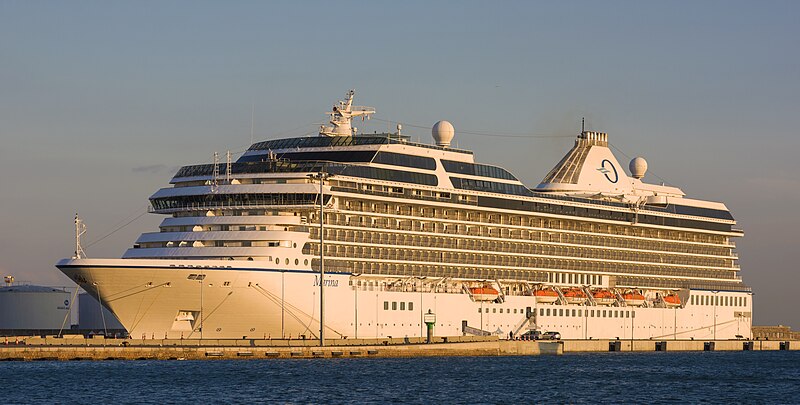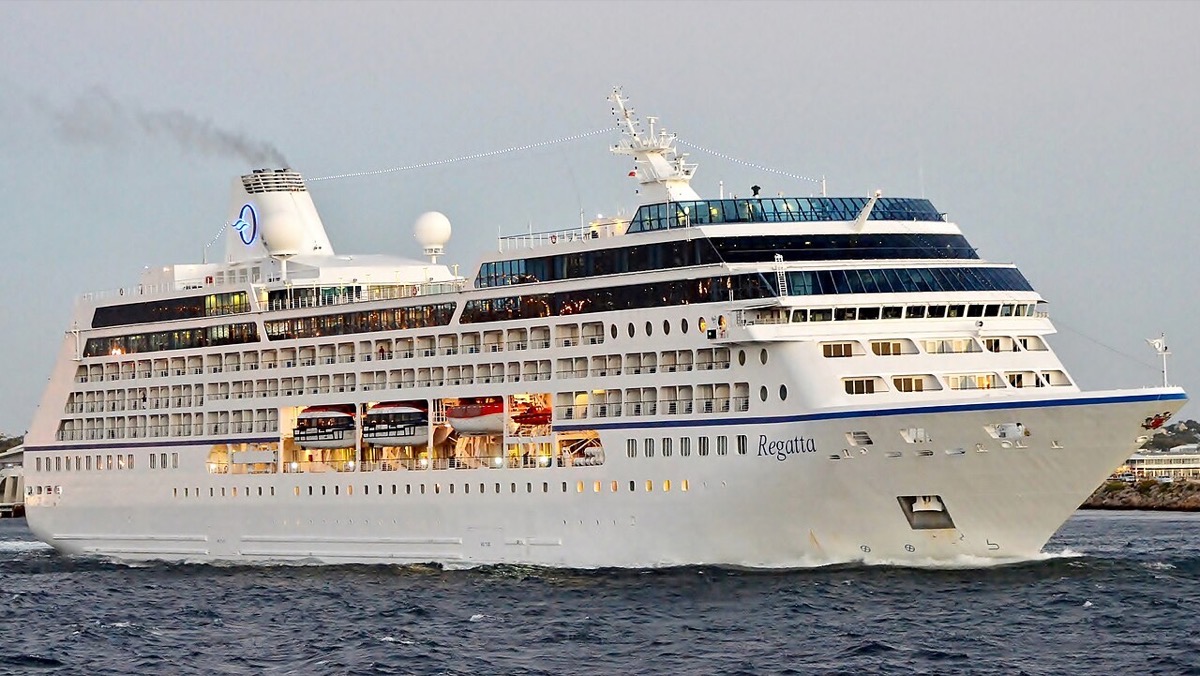
In mid-April 2026, the CDC's Vessel Sanitation Program published a new outbreak report for Oceania Insignia, reported to VSP on April 13 after the ship completed a Panama City to Miami sailing. Around the same window, something similar had already started playing out in the Mediterranean aboard Costa Toscana, though that one took longer to surface publicly.
Together the two events produced the kind of headline that makes cruise-curious travelers pause mid-booking. A second look at the numbers tells a more measured story.
What happened on Oceania Insignia
Insignia is a smaller R-class ship carrying roughly 670 passengers at full occupancy, built in 1998 and most recently refurbished in 2022. The CDC report documents 19 of 633 passengers (3.0%) and 3 of 394 crew reporting gastrointestinal symptoms on the April 7 to 14 voyage from Panama City to Miami, just crossing the 3% threshold that triggers mandatory Vessel Sanitation Program notification.
The predominant symptom reported was diarrhea. The causative agent was listed as unknown at the time of the CDC posting, with stool samples pending confirmatory testing, so while norovirus is the usual suspect on cruise ships, nothing has been confirmed for this event.
The crew did what crews do when the threshold is crossed. Buffet service switched to staff-plated only, public-area disinfection ran every two hours, affected passengers were isolated in their cabins, and the ship notified its next port before arrival.
This is Insignia's second reportable outbreak in roughly six months. The October 2025 event, confirmed as norovirus, occurred on a Montreal-to-Boston sailing and sickened 74 passengers and one crew member, a materially larger incident than this month's filing. Both followed the same trajectory: contain, clean, continue sailing.
Costa Toscana: same week, quieter paper trail
Costa Toscana sailed its usual seven-night western Mediterranean loop, departing Civitavecchia on April 9 with the usual rotation through Genoa, Marseille, and Barcelona. Onboard reports from passengers posting to travel forums described hand-sanitizer stations at every turn, buffet staff serving every dish, and a noticeably quieter ship on day four and five.
There is no CDC filing for this one. There will not be, because CDC jurisdiction applies only to ships that embark or disembark passengers in the United States.
European outbreaks route through SHIPSAN, the EU maritime health network. SHIPSAN collects data and publishes summaries, but its reporting cadence is slower and its outputs less searchable than CDC's week-by-week outbreak page.
The practical consequence: American news outlets covered Insignia within 48 hours, while Costa Toscana surfaced mostly through passenger posts on Reddit and cruise forums.
The reporting gap, and why it matters
If you build your sense of cruise safety from news headlines alone, you will systematically overestimate US-departing cruise risk and underestimate European cruise risk. The ships are not meaningfully different. The reporting regimes are.
CDC's Vessel Sanitation Program runs unannounced twice-yearly inspections, publishes numerical scores, posts every outbreak report to a public page, and has done so consistently since 1975. It is one of the most aggressive public-health transparency programs attached to any travel industry anywhere in the world.
SHIPSAN does real work. It coordinates training, inspection, and response across EU member states. What it does not do is publish a Google-indexable outbreak ledger that US journalists can refresh on a Monday morning.
This is the part of the story that matters more than either individual outbreak. When comparing sailings on GoCruiseTravel.com, we surface CDC VSP inspection scores where available, but for European-only itineraries there is genuinely less public data to work with.
What an outbreak actually feels like onboard
If you have never sailed through a reportable outbreak, the atmosphere is specific and hard to mistake. Hand-sanitizer stations at every restaurant entrance with a crew member stationed beside each one, sometimes verbally confirming you used it.
Buffets revert to plated service. The glossy self-serve tongs vanish and a gloved crew member assembles your plate while you point.
Public elevators get wiped between floors. Casino chips go through UV sterilizers. The library closes, pool towel stations restrict to crew handoff, and the children's club may suspend drop-off service.
The mood shifts too. Fewer people linger in common areas, the theatre runs at half capacity, and the whole ship feels roughly 15 percent quieter than normal.
None of this is enjoyable, but none of it is dangerous to a healthy passenger who washes their hands.
Does this affect your booking?
For almost everyone, no. Here is when it genuinely should:
For healthy travelers, two outbreaks in two ships in one week is statistical noise against a backdrop of thousands of uneventful sailings. The same week those two ships reported, roughly 150 other cruise ships sailed globally without incident.
Cancelling over a two-ship week is like avoiding a restaurant because the one down the street got a health citation. The correlation is zero.
The pre-boarding checklist that actually matters
Skip the theatrical stuff. The small behavioral shifts do most of the work.
Wash your hands before every meal, not just after the bathroom. Norovirus survives alcohol-based sanitizer, which is why every ship with an active outbreak pivots to soap-and-water stations.
If you feel symptoms within 72 hours of boarding, call medical immediately rather than toughing it out. Early isolation protects you, your cabin neighbors, and your refund eligibility.
Pack an over-the-counter electrolyte option and a basic antidiarrheal in your carry-on. Medical center prices on a ship are memorable.
Check your specific ship's VSP score and recent outbreak history before you sail, which you can do directly through the CDC page or via the ship profile pages we maintain on GoCruiseTravel.com.
If you are sailing with non-English-speaking family members, make sure someone in the party can communicate symptoms to medical staff quickly. Our (https://www.gocruisetravel.com/en/guides/non-english-speakers-cruise-guide) covers the phrases that matter.
For deeper context on how norovirus actually spreads onboard and what cleaning protocols look like in practice, our earlier (https://www.gocruisetravel.com/en/guides/norovirus-cruise-ships-2026) breaks it down.
Verdict
Two ships, 48 hours, one CDC filing and one quiet SHIPSAN entry. The outbreaks themselves are small, contained, and historically normal. The reporting gap between US and European systems is the more interesting story, and it is the one that should actually shape how you read cruise news. Keep your booking. Wash your hands. Check the VSP score. Stop refreshing Google News.
The cleanest ship in the world is still a floating small town with a shared buffet. The rest is math.

The Cruise Plague Myth and What Actually Keeps You Safe at Sea
Recent viral rumors tied Russian lab alerts to cruise ships. Here is what really happened and how to avoid the bugs that actually spread at sea.