A cruise has a median price — about $229 a night. It also has a trick hidden in plain sight: the longer sailing is quietly the cheaper one, and the week-long cruise you'd book on instinct is the worst per-night value on the page.
I went looking for a simple number. What does a cruise cost — ballpark, per night, the way you'd quote a hotel? I figured I'd land on something tidy. Two hundred a night, maybe.
So I pulled the real fares: every current sailing we track from Royal Caribbean and Carnival, 806 of them, priced out to what one night actually costs. The tidy number sort of exists. The median night runs $229. Half of everything sits between $198 and $271.
And then, buried in the same spreadsheet, was the thing the booking page is built to keep you from noticing — and it's the opposite of what almost everyone assumes.
A note on what these numbers are, because cruise pricing is a hall of mirrors and I'm not here to add another one. These are the lowest advertised fares per person, divided by nights. They are not the all-in number — gratuities, taxes, port fees and the drink package you'll cave on by day two are not in here. We'll get there, because it's the whole game. But even the bare fare tells a story worth the price of admission.
Half of all cruises we tracked fall between $198 and $271 per person, per night. That's your honest anchor — not the $99 ad, not the $924 outlier.
The honest range, before anyone sells you a "deal"
Here's what 806 real sailings actually look like, ranked by what one night costs.
The median is $229 a night. The middle half — the 25th to 75th percentile, the boring reliable center — runs $198 to $271. Drop below about $150 and you've found something genuinely cheap. Climb past $350 and you're in the top five percent, usually because of the cabin or the calendar, not the cruise.
You'll see a $924 night in the data. Ignore it. It's a single 3-night sailing leaving the day I pulled this, almost certainly down to its last few suites — the cruise equivalent of a $40 airport sandwich. The real ceiling for a normal balcony booking is closer to $350.
So if a friend quotes you "a couple hundred a night" for a mainstream big-ship cruise, they're right. The useful part isn't the anchor, though. It's what makes a sailing land above or below it.

The belief flip: the longer cruise is the cheaper one
Ask most people whether a 9-night cruise costs more per night than a 3-night one, and they'll say yes — longer trip, fancier itinerary, premium price. It's the natural assumption. It's also wrong.
Watch what happens when you hold the ship still and only change the length. Same vessel, same crew, same buffet — just more or fewer nights:
| Same ship, per night | 3–4 nights | 7–8 nights | 9+ nights |
|---|---|---|---|
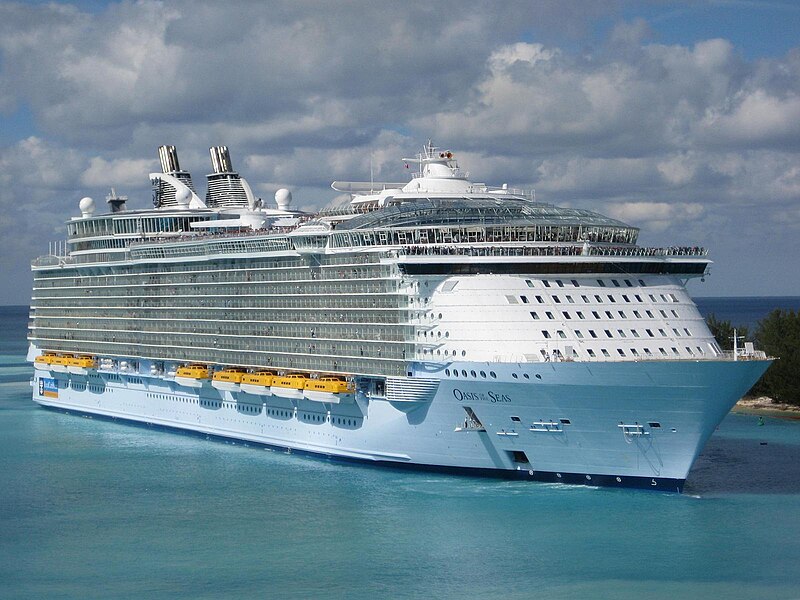
| Oasis of the Seas | $181 | $174 | $149 |
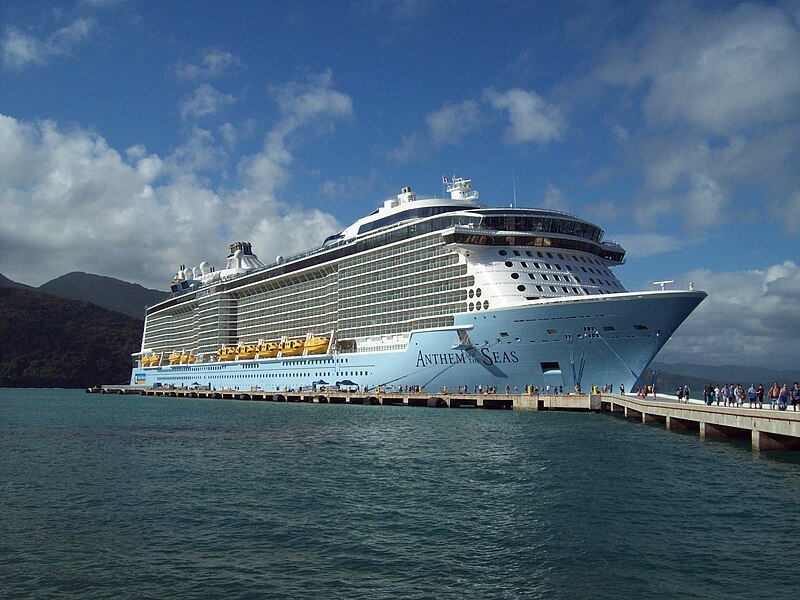
| Anthem of the Seas | $213 | $299 | $206 |
On Oasis, the price per night falls the longer you stay — $181, then $174, then $149. On Anthem the cheapest night is the long sailing too, well under its mid-length fare. It's clearest on the ships that sail enough of each length to compare cleanly, like these two: stretch the trip and each night tends to get cheaper, because the fixed costs of getting you on and off the ship spread across more days.
Which makes the 7-night Caribbean cruise — the default, the one the algorithm shows you first — quietly one of the worst per-night values on the board. Not the most expensive in total. The most expensive per night you're actually on the ship. You book it because it's the obvious length, and obvious is exactly what gets priced at a premium.
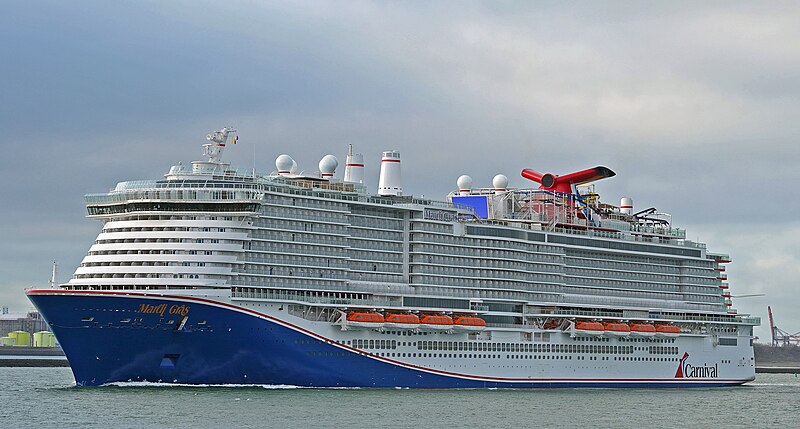
It isn't a perfectly clean law. On Carnival's Mardi Gras the short sailings actually run priciest per night, not the middle ones. But the direction holds where it counts: nine nights almost always beats three on a per-night basis, and the week-long default is rarely the bargain it feels like.
The number on the ad is not the number you pay
Here's the catch I promised. Everything above is the fare — the part designed to be advertised. It is not what leaves your account.
Onboard gratuities on Royal Caribbean and Carnival run about $17 to $18.50 per person, per day for standard cabins — suites pay more — added automatically. Taxes and port fees stack on top of the fare you saw. Then the drink package, the specialty dining, the excursion in every port, the photos you'll inexplicably buy. By the time you're home, the all-in cost of a mainstream cruise can land 30 to 60 percent above that tidy fare — and the gap is widest on short sailings, where the fixed fees don't get diluted across many nights.
That's not a reason to skip the cruise. It's a reason to compare the real number instead of the brochure number. The fare is the lure. The all-in is the bill. The whole reason GoCruiseTravel exists is to show you the second one before you commit to the first.
So what's a good price?
A rule of thumb for mainstream big-ship cruising, straight off the percentiles: under about $200 a night in fare is a good deal — you're beating roughly three-quarters of the market — and under $150 is genuinely cheap. The $200-to-$270 band is the normal middle. North of $300 you're paying for a short getaway, a premium cabin, or a peak-season week, and you should be choosing that on purpose, not by accident.
And to be clear, this whole range is the mass-market floor. We didn't even count the luxury lines — Regent, Silversea, Seabourn — where a single night routinely starts north of $1,000 before anyone says the word "butler." Different article. Different bank account.
What should a cruise actually cost per night?
For mainstream big-ship cruising, under $200 a night is a good deal — it beats about three-quarters of the market — and the normal middle runs $200 to $270 (median $229). The move the booking page hides: within the same ship, the longer sailing is cheaper per night, so the default 7-night week is rarely the value play. And the fare is never the whole bill — add gratuities, drinks, and Wi-Fi for the real all-in cost.
The honest ending
I never did get my one perfect number, and I've made peace with it. A cruise isn't one product — it's a long-weekend impulse buy and a nine-night value play wearing the same logo, sold on the same page, and the page is rooting for the impulse.
What you can have is better than a single number. You can have the median to argue from ($229), the trick the funnel hides (longer is cheaper per night), and the all-in figure underneath the fare. The prices here will drift — fares move weekly, and ours were captured in mid-May. The pattern won't. The week-long default is not the value play. The extra nights are.
Now you know which mirror you're looking into.
Spot something we missed?
We update guides when readers tell us we got it wrong. A misnamed port, a wrong sailing date, a logistics detail — send it our way.

What $5,000 Per Person Actually Buys You on a Cruise in 2026
Three balcony cabins, same week, three cruise lines. We pulled real quotes — the cheapest brochure was the most expensive bill.