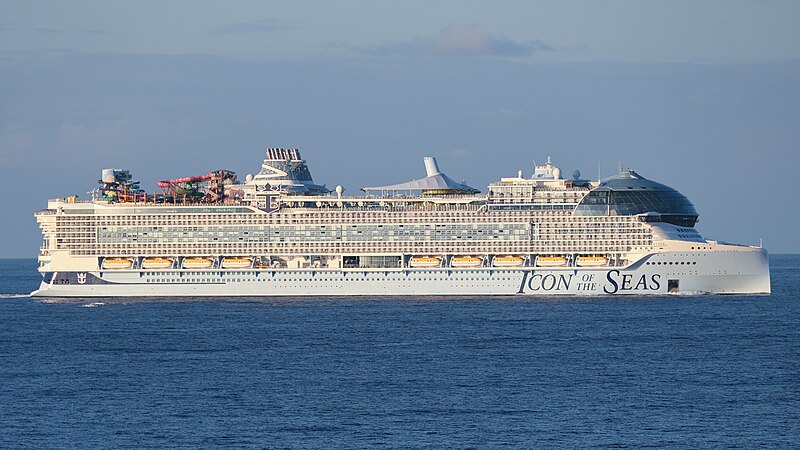
Mexico cut its cruise passenger tax from $42 to $5, the cruise industry called it a win, and almost nobody read the fine print under the headline.
Mexico cut its cruise passenger tax from $42 to $5. The industry called it a win. Almost nobody read the fine print under the headline.
That fine print is a four-year escalator. Five dollars on July 1, 2025. Ten dollars on August 1, 2026 — about nine weeks from now. Fifteen dollars on July 1, 2027. Twenty-one on August 1, 2028.
There's a number I'll come back to at the end. Hold onto it.
The headline everyone read
The number that ran in every cruise outlet last summer was that Mexico had slashed its tax. The original Senate proposal — the one that triggered industry panic — was forty-two dollars per passenger. After months of lobbying from the Florida-Caribbean Cruise Association and a quiet trade for a Made in Mexico purchase commitment, the number came down to five.
Five dollars. On a family-of-four Caribbean cruise that already runs north of $4,000, it was rounding error. Travel agents stopped talking about it. The cruise lines never billed it as a line item — it just appeared inside the port-charge bucket on the booking confirmation.
But the deal everyone praised wasn't a flat $5. It was a $5 starting price.
The 2028 number
Here's the schedule, in writing:
| Period | Tax per passenger, per cruise |
|---|---|
| Jul 1, 2025 – Jul 31, 2026 | $5 |
| Aug 1, 2026 – Jun 30, 2027 | $10 |
| Jul 1, 2027 – Jul 31, 2028 | $15 |
| Aug 1, 2028 onward | $21 |
A family of four on a 7-night Western Caribbean with a Cozumel-and-Costa-Maya double stop pays $20 today. They'll pay $40 next August. They'll pay $84 in 2028. Same itinerary, same ship, four times the tax.
$5 to $21 per passenger, per cruise — locked in by the same legislation that cut it from $42
The phrase "still cheaper than $42" is doing a lot of work in cruise-industry messaging. It is true. It is also not the question. The question is: what's the curve, and where does it stop?
The answer, as currently written into the decree, is that it doesn't stop at $21. There is no statutory ceiling. The 2028 number is just the last one the law explicitly sets.
Per cruise, not per port — the one detail that matters
The single most useful thing to know about this tax: it applies once per passenger, per cruise. Not per Mexican port call.
If your sailing stops in Cozumel and Costa Maya — the most common Western Caribbean pairing — you pay the rate once. Not twice. The tax fires when your ship enters Mexican waters as an international cruise vessel, and the dollar amount attaches to your boarding pass, not to your gangway walk-off.
This matters because some early reporting got it wrong. There was a stretch last summer where you could find numbers floating around online suggesting a four-person Western Caribbean cruise in 2028 would pay $168 in Mexico tax. The math: 4 people times $21 times 2 stops. That math is wrong. The correct number is $84.
Still annoying. Just not catastrophic.
What August 1, 2026 actually changes
Right now you can book a Western Caribbean cruise that departs in late July 2026 and pay $5 per person. Same ship, same itinerary, departing eight days later — pay $10. Which rate you actually pay if your departure straddles the change depends on how your specific line times the tax assessment — some collect at booking, some at final payment, and standard cruise contracts allow pass-through of government tax increases even after final payment.
There are 243 sailings to Cozumel or Costa Maya departing in the next 12 months on GoCruiseTravel.com. Two hundred and ten of them — 86 percent — depart after the August 1 jump. Booking the ones that don't is a real, if small, dollar move.
What it feels like in the field
You're standing at the buffet line on deck 11, two days into a 7-night out of Galveston, and the ship is already pulling into Costa Maya. Your phone tells you it's 81 degrees, the sea is the kind of green that doesn't photograph correctly, and the pier is busy — three other ships in port today.
You'll get off, walk past the same fifty cigar stalls everyone walks past, and pay a beach-club $35 plus tip for the day. None of that is the tax.
The tax was already inside the $1,049 you wired four months ago. You will never see it broken out as its own line item, you will never sign anything that names it, and you will never know it changed from $5 to $10 unless someone tells you.
This is intentional.
Who actually pays, in plain English
Officially, the passenger pays. The cruise line is the collector. In practice, the cruise line bundles the tax into port fees and taxes — the same line that already includes Bahamian head taxes, U.S. APHIS fees, the various Caribbean island levies, and the line's own administrative loading. You see one number. The number quietly gets bigger every August.
For Western Caribbean — historically the cheapest Caribbean variant precisely because Mexico didn't tax cruise tourism — this is the slow correction. Eastern Caribbean has had per-passenger taxes for years. Mexico is just catching up.
What changes in the booking-decision math
If you're a frequent Western Caribbean cruiser — two to three sailings a year — the 2028 number is real. A couple sailing twice a year through 2028 is looking at north of $200 in cumulative Mexico tax across the four years that this escalator runs. Not a vacation-ruining number. Not invisible either.
For a single Western Caribbean cruise in 2026, the tax is one drink at the lobby bar. For a habit, it's a tank of gas every spring.
The decision-useful framing isn't whether to avoid Mexico cruises. It's whether this is the year Western Caribbean stops being the cheap Caribbean. The answer for 2026 is no. For 2027 it's borderline. For 2028 it's genuinely yes — at $21 per passenger, the Bahamas-only itineraries on the budget lines start to undercut Western Caribbean for tax burden alone, and they were already the cheap option to begin with.
What to do
If you have a Western Caribbean booked for summer 2026, pay your final balance before August 1. You'll lock the $5 rate even on an August departure.
If you're shopping now for late 2026 or 2027, run Western Caribbean against Eastern Caribbean head to head. The tax delta is small in 2026, noticeable in 2027, and a real wedge in 2028. You can filter by destination at GoCruiseTravel.com to see what each line is loading into port fees right now.
If you're booking a 2028 sailing, assume the $21 number ships. The escalator has already survived one round of industry pressure. The second round, if it comes, will be quieter.
Should this change your booking
For one 2026 Western Caribbean cruise, no — the tax is a coffee. For habitual Western Caribbean cruisers planning through 2028, yes — book before the August 1, 2026 jump where you can, and start running tax-burden comparisons against Bahamas-only and Eastern Caribbean alternatives for 2027 and 2028.
The number I asked you to hold
Forty-two dollars.
That was the original proposal. The industry called it a death blow. They negotiated it down to five and called the negotiation a victory.
By August 2028, the legal tax will be $21. Exactly halfway back to the number nobody could live with.
Halfway.

Cruise Laundry Decoded: $2 Socks, the $15 Bag, and the Free Machines
What laundry really costs at sea: $2-a-pair socks, $15-to-$60 stuff-a-bag deals, and the seven lines where the washing machines are free.