
July 19
Departure
10
nights
9
ports
$1,020
From
Ask anything about Italian Riviera & France
GoCruiseTravel.com Cruise Data
$102
per night
10
nights
48/100
mainstream — extras sold separately
Estimated starting fare — verify with cruise line
GoCruiseTravel.com prices this MSC Virtuosa Italian Riviera & France sailing from $102/night (inside). 10 nights departing July 19, 2026. Compare 4 cabin categories with real pricing data on GoCruiseTravel.com.
What's Included
Not included
Wi-Fi
All Drinks
All Excursions
Gratuities
Specialty Dining
Room Service
Port Shuttle
Flights
Airport Transfers
Insider Tips
Wi-Fi
The MSC for Me app works on the free ship network, but actual internet for browsing, email, or anything beyond the app requires a paid package.
All Drinks
Alcoholic drinks are capped at 15 per person per day with any drink package (since April 2025). All minors ages 3-20 in the cabin must purchase the Minors Package if adults buy a drink package.
Gratuities
Gratuities cannot be pre-paid online; you must call MSC customer service to pre-pay, or they are charged at the end of your cruise. Children ages 2 and up are charged the full daily gratuity.
Room Service
Unlike some competitors, MSC does not offer free continental breakfast room service for standard cabin guests.
Tipping
Daily gratuities of $17/person/night ($23 for Yacht Club) apply to all guests ages 2 and older on Caribbean & Alaska sailings from May 11, 2026. A family of four with two kids on a 7-night cruise pays $476 in gratuities alone.
Dining
All guests in the same cabin must purchase the same drink package tier, including minors ages 3-20 who must get the Minors Package if adults purchase any drink package.
General
MSC's advertised fares for the North American market are often very low but exclude gratuities, port fees, and government taxes that can add $200+ per person to the total.
Policy Change
Since April 2025, alcoholic drinks are capped at 15 per person per day even with an unlimited drink package. Non-alcoholic drinks remain truly unlimited.
About the Ship
- Hot Tubs
- 10
- Elevators
- 20
- Cabin Voltage
- 110V & 220V
- USB in Cabins
- Yes
- Pets
- Not Allowed
- Service Animals
- Case by Case
- Dress Code
- Smart Casual
- Formal Nights
- Yes
- Balcony Smoking
- Allowed
Accessible Cabins:36
Medical CenterPool LiftWheelchair Rentals
Dietary Options
KosherHalalGluten-FreeVegan
Your Journey
- DAY1
- DAY2
- DAY3
- DAY4
Day 4
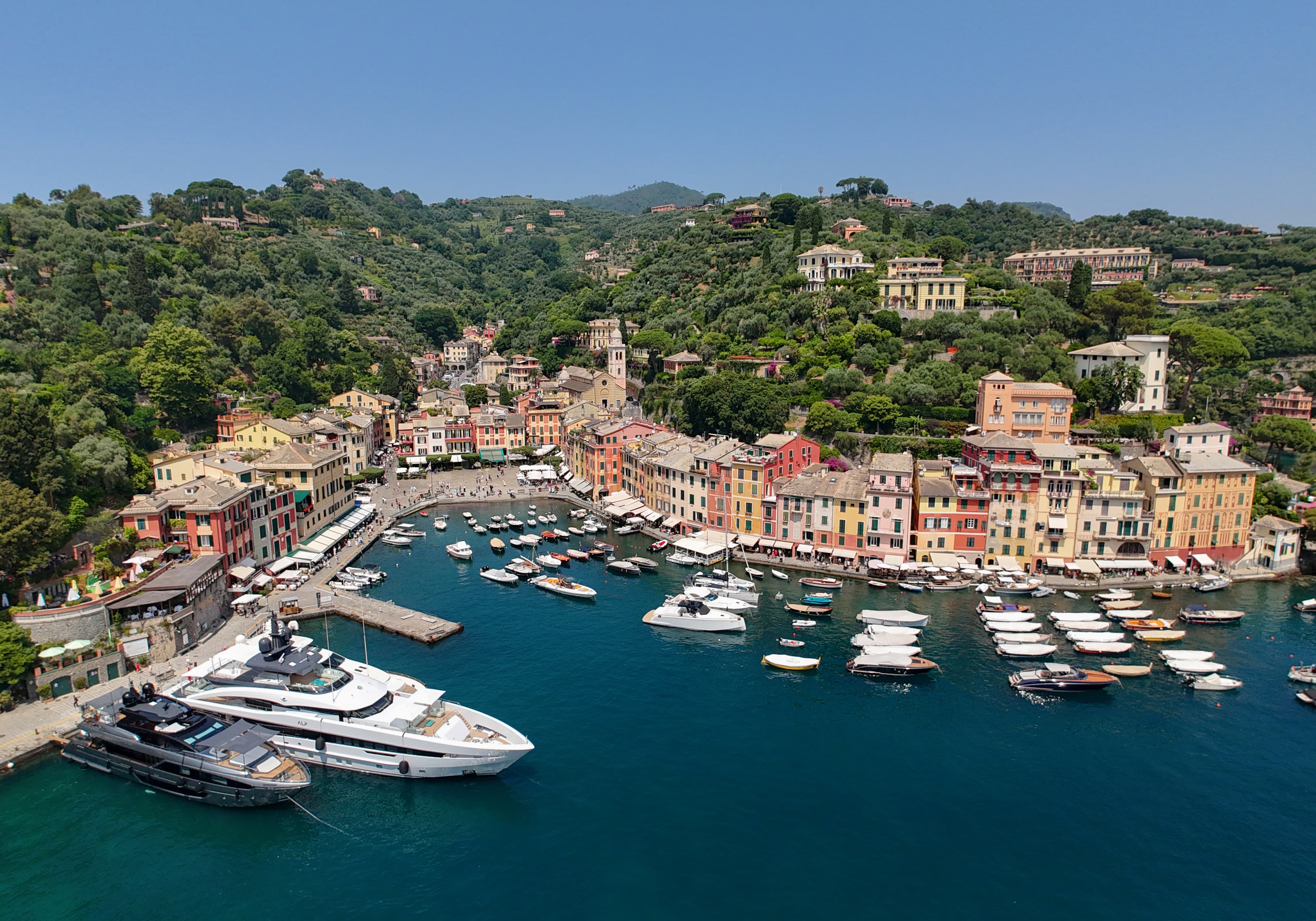
PortofinoItalyOne of Italy's most photogenic harbors: pastel houses reflected in a glassy Ligurian bay.
- DAY5
Day 5
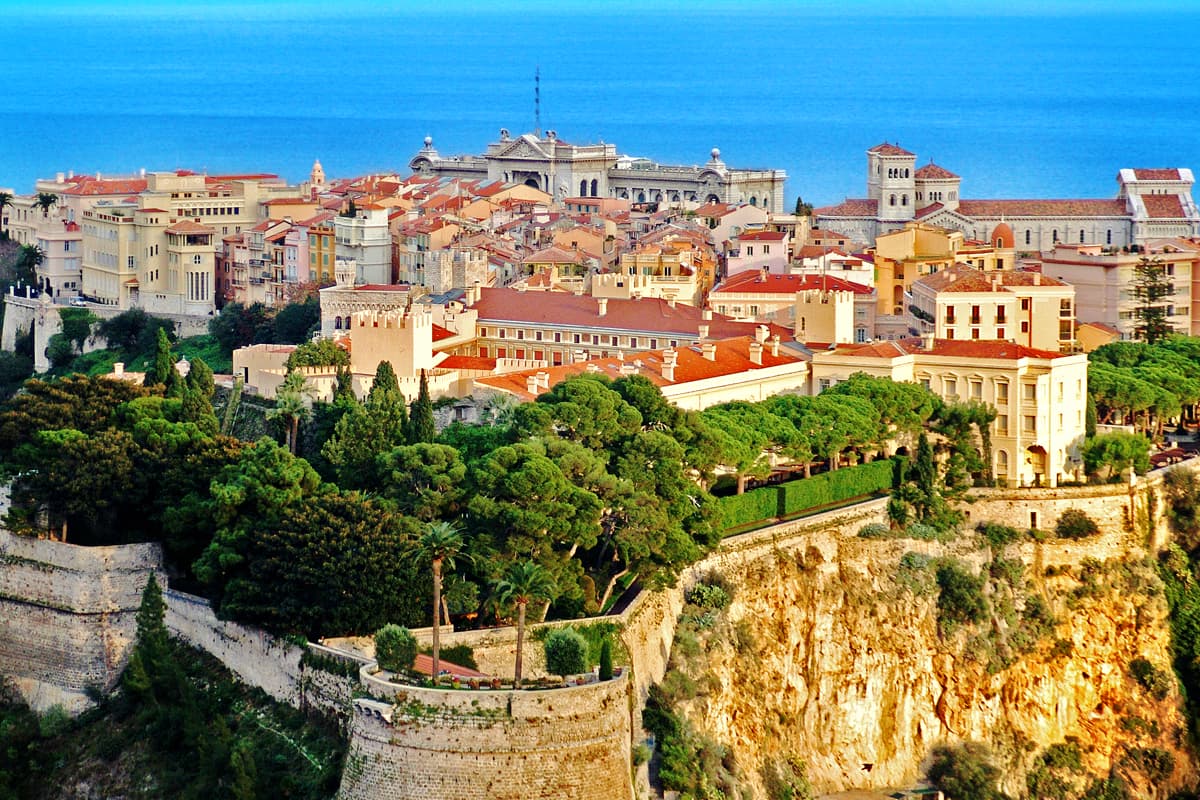
MonacoMonacoThe world's most glamorous small-ship port: Casino Monte-Carlo is a short walk from the pier.
- DAY6

Day 6
ToulonFranceFrance's main naval base offers an authentic, crowd-free Provençal port experience.
- DAY7
Day 7
At Sea
- DAY8

Day 8
AjaccioFranceNapoleon's birthplace: visit his family home and Corsica's mountain-backed capital in one call.
- DAY9
- DAY10
Day 10
At Sea
- DAY11


Plan your days ashore
Day 1 · Sun, Jul 19 · Rome
 Landmark
Photo: Wikimedia Commons (Colosseo 2020.jpg)
Colosseum
Rome's 50,000-seat amphitheatre where emperors distracted citizens for 350 years with a spectacle they couldn't unsee. Book tickets online — the same-day queue is a gladiatorial contest in its own right.
🕒 Daily 9 am – approx. 1 hr before sunset; advance booking essential
~1.4 km away
 MuseumClosed on your visit (Sunday)
Photo: Wikimedia Commons (Mura vaticane - ingresso ai Musei 00410.JPG)
Vatican Museums
A labyrinth of papal acquisitions culminating in the Sistine Chapel — Michelangelo spent four years on scaffolding so you'd spend thirty seconds craning your neck. Book online; the walk-up queue is a penance the Church did not design.
🕒 Mon–Sat 9 am–6 pm (last entry 4 pm); closed all Sundays except last Sunday of month
~3.5 km away
 Landmark
Photo: Wikimedia Commons (Basilica di San Pietro in Vaticano September 2015-1a.jpg)
St. Peter's Basilica
Rome's most famous church, built atop Saint Peter's tomb and scaled to make you feel appropriately small. Entry is free — though the dress code enforcer at the door will turn away bare shoulders without theological debate.
🕒 Daily 7 am–7 pm (summer) / 7 am–6:30 pm (winter); dome climb separately ticketed
~3.6 km away
 Landmark
Photo: Wikimedia Commons (Foro Romano Musei Capitolini Roma.jpg)
Roman Forum
The political heart of ancient Rome, now a wide field of columns, arches, and marble worn by two millennia of weather. Same ticket as the Colosseum and Palatine Hill — three ruins for the price of one existential crisis.
🕒 Daily 9 am – approx. 1 hr before sunset; included with Colosseum/Palatine Hill ticket
~1.5 km away
 Landmark
Photo: Wikimedia Commons (Palatine Hill.Pavement.jpg)
Palatine Hill
The hill where Rome's emperors built their palaces, now offering sweeping views over the Forum below and a welcome excuse to sit down. Covered by the same ticket as the Colosseum and Roman Forum.
🕒 Daily 9 am – approx. 1 hr before sunset; included with Colosseum/Roman Forum ticket
~1.8 km away
 Landmark
Photo: Wikimedia Commons (Pantheon (Rome) - Right side and front.jpg)
Pantheon
A Roman temple from 125 AD in unbroken use for nearly 1,900 years — which predates the Christianity that eventually claimed it. Entry now requires a ticket; locals have opinions about this development.
🕒 Mon–Sat 9 am–7 pm, Sun 9 am–6 pm; entry ticket required
~1.7 km away
 Landmark
Photo: Wikimedia Commons (Trevi Fountain - Roma.jpg)
Trevi Fountain
Baroque Rome's most theatrical plumbing: 26 metres of Neptune, sea horses, and cascading water engineered to make you throw a coin and book a return trip. Arrive before 8 am or after 10 pm for photos without strangers in every frame.
~1.1 km away
 Landmark
Photo: Wikimedia Commons (Castel_Sant'Angelo_at_Night.jpg)
Castel Sant'Angelo
A mausoleum for emperors turned papal refuge turned prison turned museum — Rome's most over-qualified building. The rooftop has sweeping views of the Tiber and St. Peter's dome, which more than justifies the climb.
🕒 Tue–Sun 9 am–7:30 pm
~2.5 km away
 Landmark
Photo: Wikimedia Commons (San Giovanni in Laterano 2021.jpg)
Archbasilica of St. John Lateran
Rome's actual cathedral — not St. Peter's, despite what every tourist assumes — and the oldest public church in Rome still in active use. Free to enter, far fewer crowds than the Vatican, and a nave that makes most European cathedrals feel modest.
🕒 Daily 7 am–7 pm; free entry (cloister separately ticketed)
~2 km away
 Landmark
Photo: Wikimedia Commons (Basilica di Santa Maria Maggiore - Roma.jpg)
Basilica di Santa Maria Maggiore
One of Rome's four great basilicas, with 5th-century mosaics still intact on the triumphal arch — the gift shop outside is a 21st-century addition. Free to enter and reliably less crowded than anything near the Vatican.
🕒 Daily 7 am–7 pm; free entry
~0.6 km away
B
LandmarkBasilica of Saint Paul Outside the Walls
The second largest church in Rome, largely rebuilt after an 1823 fire — so most of what you see is 19th-century, which in Rome counts as practically new. Free entry; the cloister has a separate ticket and earns it.
🕒 Daily 7 am–7 pm; free entry (cloister separately ticketed)
~5.2 km away
Day 2 · Mon, Jul 20 · Florence
 Landmark
Photo: Wikimedia Commons (Florence Duomo from Michelangelo hill.jpg)
Florence Cathedral (Duomo)
Brunelleschi solved the impossible dome problem in 1436 with a technique he invented and then refused to fully explain. Climbing the 463 steps is optional; the view from the piazza is free and nearly as good.
🕒 Mon–Sat (cathedral nave); dome + bell tower by timed Opera del Duomo ticket
~0.4 km away
 MuseumClosed on your visit (Monday)
Photo: Wikimedia Commons (Florence, Italy - panoramio (125).jpg)
Uffizi Gallery
The world's best concentration of Italian Renaissance painting — Botticelli's Birth of Venus, Raphael, Caravaggio — under one roof on the Arno. Book timed-entry tickets weeks ahead or the queue will outlast your port day.
🕒 Tue–Sun 8:15–18:30
~0.1 km away
 MuseumClosed on your visit (Monday)
Photo: Wikimedia Commons (Michelangelo's David - right view 2.jpg)
Galleria dell'Accademia (Michelangelo's David)
The marble original is bigger than you expect — nearly 17 feet tall, carved from a block two sculptors had already abandoned. The rest of the museum is modest; David is the only reason anyone actually buys that ticket.
🕒 Tue–Sun 8:15–18:50
~0.9 km away
 Landmark
Photo: Wikimedia Commons (Ponte Vecchio sobre el río Arno, Florencia, Italia, 2022-09-19, DD 02.jpg)
Ponte Vecchio
Florence's medieval bridge has been lined with goldsmiths since the 1500s, after the Medici banned butchers for ruining the view — and the smell. Walking it costs nothing; resisting the jewelry shops is the hard part.
~0.3 km away
 Landmark
Photo: Wikimedia Commons (Firenze Battistero di San Giovanni Esterno 04.jpg)
Florence Baptistery
Ghiberti's Gates of Paradise — ten gilded bronze panels that took 27 years — are considered the starting pistol of the Renaissance. Note: what's outside are quality casts; the originals moved into the Duomo Museum in the 1990s to stop further weathering.
🕒 Daily; hours vary by season — book via Opera del Duomo
~0.4 km away
 Landmark
Photo: Wikimedia Commons (Piazza della signoria, palazzo vecchio, veduta 01.jpg)
Palazzo Vecchio
Florence's town hall since 1299, the Piazza della Signoria it anchors is a free open-air sculpture gallery with famous works in situ. Pay to go inside for the Medicean ceiling excess — or just stand in the piazza, which costs nothing.
~0 km away
 Nature
Photo: Wikimedia Commons (Jardín de Bóboli, Florencia, Italia, 2022-09-19, DD 12.jpg)
Boboli Gardens
The Medici's 111-acre backyard terraced up the hill behind Palazzo Pitti, with fountains, grottoes, and statues placed wherever the feeling struck. Best visited in the morning before the heat and the tour groups compound each other.
~0.8 km away
 Landmark
Photo: Wikimedia Commons (Basilica di Santa Croce (12437).jpg)
Basilica of Santa Croce
The Franciscan church that became Florence's pantheon: Michelangelo, Galileo, and Machiavelli are buried here; Dante got a cenotaph (he's in Ravenna, and they're still not over it). The leather school in the cloister sells the real thing.
~0.6 km away
 MuseumClosed on your visit (Monday)
Photo: Wikimedia Commons (Palazzo Pitti nel tardo pomeriggio.jpg)
Palazzo Pitti
The Medicis' main residence from 1549 is now a complex of seven separate museums behind one immense façade — more art per square foot than most cities. Choose your gallery before arriving; trying all seven in a port day is a category error.
~0.7 km away
 MuseumClosed on your visit (Monday)
Photo: Wikimedia Commons (Palazzo del bargello visto da piazza san firenze.JPG)
Bargello National Museum
Florence's best sculpture museum occupies a 13th-century fortress that also served as the city prison — Donatello's bronze David, the first freestanding nude since antiquity, has lived here since 1865 when the building became Italy's first national museum. Undervisited by Uffizi standards, which is exactly why you should go.
~0.2 km away
 Landmark
Photo: Wikimedia Commons (Santa Maria Novella (Florence).jpg)
Basilica of Santa Maria Novella
Home to Masaccio's Trinity fresco — painted 1427, the first work to use mathematical perspective correctly, still astonishing to stand in front of. Less crowded than Santa Croce and considerably easier to actually see the art.
~0.7 km away
Day 11 · Wed, Jul 29 · Rome
LandmarkPhoto: Wikimedia Commons (Colosseo 2020.jpg)
Colosseum
Rome's 50,000-seat amphitheatre where emperors distracted citizens for 350 years with a spectacle they couldn't unsee. Book tickets online — the same-day queue is a gladiatorial contest in its own right.
🕒 Daily 9 am – approx. 1 hr before sunset; advance booking essential
~1.4 km away
MuseumPhoto: Wikimedia Commons (Mura vaticane - ingresso ai Musei 00410.JPG)
Vatican Museums
A labyrinth of papal acquisitions culminating in the Sistine Chapel — Michelangelo spent four years on scaffolding so you'd spend thirty seconds craning your neck. Book online; the walk-up queue is a penance the Church did not design.
🕒 Mon–Sat 9 am–6 pm (last entry 4 pm); closed all Sundays except last Sunday of month
~3.5 km away
LandmarkPhoto: Wikimedia Commons (Basilica di San Pietro in Vaticano September 2015-1a.jpg)
St. Peter's Basilica
Rome's most famous church, built atop Saint Peter's tomb and scaled to make you feel appropriately small. Entry is free — though the dress code enforcer at the door will turn away bare shoulders without theological debate.
🕒 Daily 7 am–7 pm (summer) / 7 am–6:30 pm (winter); dome climb separately ticketed
~3.6 km away
LandmarkPhoto: Wikimedia Commons (Foro Romano Musei Capitolini Roma.jpg)
Roman Forum
The political heart of ancient Rome, now a wide field of columns, arches, and marble worn by two millennia of weather. Same ticket as the Colosseum and Palatine Hill — three ruins for the price of one existential crisis.
🕒 Daily 9 am – approx. 1 hr before sunset; included with Colosseum/Palatine Hill ticket
~1.5 km away
LandmarkPhoto: Wikimedia Commons (Palatine Hill.Pavement.jpg)
Palatine Hill
The hill where Rome's emperors built their palaces, now offering sweeping views over the Forum below and a welcome excuse to sit down. Covered by the same ticket as the Colosseum and Roman Forum.
🕒 Daily 9 am – approx. 1 hr before sunset; included with Colosseum/Roman Forum ticket
~1.8 km away
LandmarkPhoto: Wikimedia Commons (Pantheon (Rome) - Right side and front.jpg)
Pantheon
A Roman temple from 125 AD in unbroken use for nearly 1,900 years — which predates the Christianity that eventually claimed it. Entry now requires a ticket; locals have opinions about this development.
🕒 Mon–Sat 9 am–7 pm, Sun 9 am–6 pm; entry ticket required
~1.7 km away
LandmarkPhoto: Wikimedia Commons (Trevi Fountain - Roma.jpg)
Trevi Fountain
Baroque Rome's most theatrical plumbing: 26 metres of Neptune, sea horses, and cascading water engineered to make you throw a coin and book a return trip. Arrive before 8 am or after 10 pm for photos without strangers in every frame.
~1.1 km away
LandmarkPhoto: Wikimedia Commons (Castel_Sant'Angelo_at_Night.jpg)
Castel Sant'Angelo
A mausoleum for emperors turned papal refuge turned prison turned museum — Rome's most over-qualified building. The rooftop has sweeping views of the Tiber and St. Peter's dome, which more than justifies the climb.
🕒 Tue–Sun 9 am–7:30 pm
~2.5 km away
LandmarkPhoto: Wikimedia Commons (San Giovanni in Laterano 2021.jpg)
Archbasilica of St. John Lateran
Rome's actual cathedral — not St. Peter's, despite what every tourist assumes — and the oldest public church in Rome still in active use. Free to enter, far fewer crowds than the Vatican, and a nave that makes most European cathedrals feel modest.
🕒 Daily 7 am–7 pm; free entry (cloister separately ticketed)
~2 km away
LandmarkPhoto: Wikimedia Commons (Basilica di Santa Maria Maggiore - Roma.jpg)
Basilica di Santa Maria Maggiore
One of Rome's four great basilicas, with 5th-century mosaics still intact on the triumphal arch — the gift shop outside is a 21st-century addition. Free to enter and reliably less crowded than anything near the Vatican.
🕒 Daily 7 am–7 pm; free entry
~0.6 km away
B
LandmarkBasilica of Saint Paul Outside the Walls
The second largest church in Rome, largely rebuilt after an 1823 fire — so most of what you see is 19th-century, which in Rome counts as practically new. Free entry; the cloister has a separate ticket and earns it.
🕒 Daily 7 am–7 pm; free entry (cloister separately ticketed)
~5.2 km away
Before you sail — hotels in Rome
Arrive a day early and explore Rome before boarding
Find hotels on Booking.comSponsored
Cabin Pricing
Estimated starting fare — verify with cruise line
At a glance
4.1
Ship rating
Meraviglia-Plus class ship featuring Rob the humanoid robot bartender. 98-meter Mediterranean-themed Galleria promenade, Cirque du Soleil shows, and extensive kids areas. Good value for European-style cruising.
Who sails this line
Typical age
35-65
Primary markets
IT · DE · FR · ES · UK · US
Onboard languages
it · de · fr · es · en
Kids onboard
Common — family-friendly programming
You Might Also Like
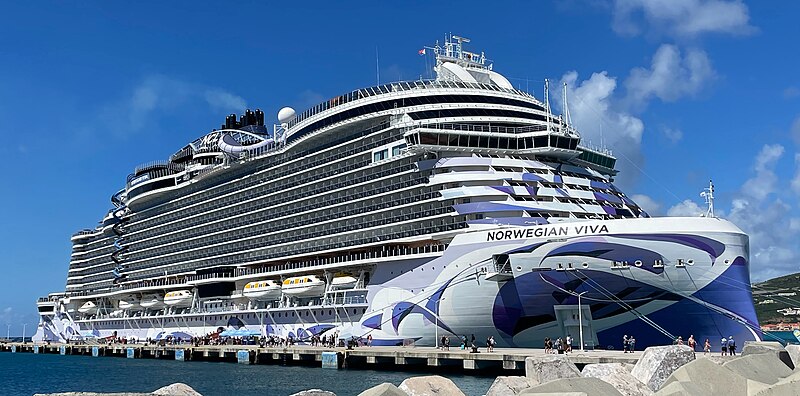
Norwegian Cruise Line
Norwegian Viva
Italian Riviera & France
Jul 30, 202610 nights4.5
per person$1,847
Estimated starting fare — verify with cruise line
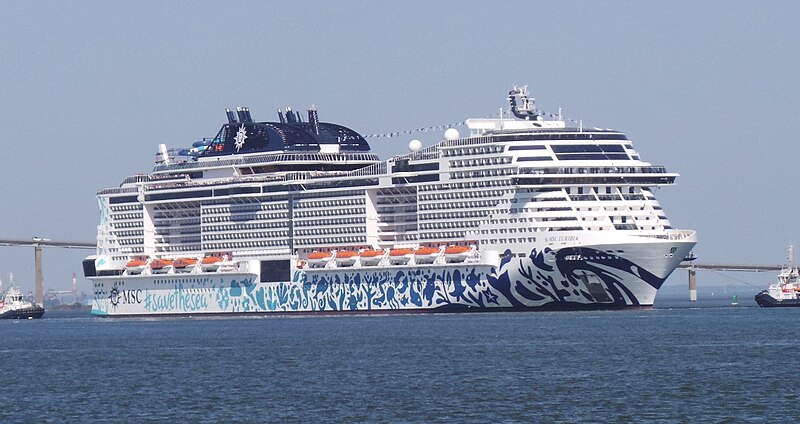
MSC Cruises
MSC Euribia
Italian Riviera & France
Jul 27, 202610 nights4.2
per person$1,767
Estimated starting fare — verify with cruise line
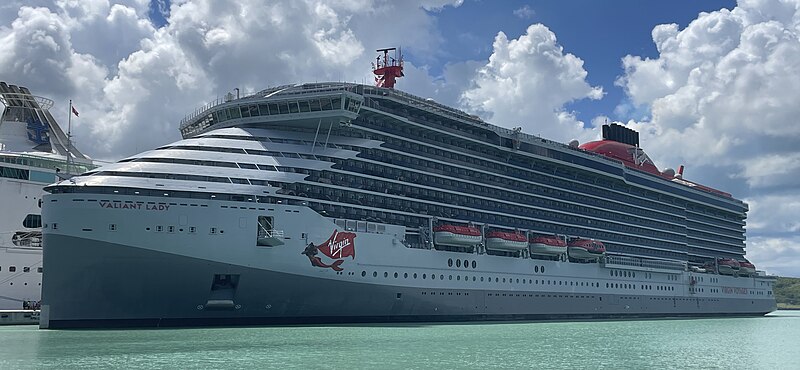
Virgin Voyages
Valiant Lady
Italian Riviera & France
Jul 27, 202610 nights4.3
per person$3,074
Estimated starting fare — verify with cruise line


