
June 1
Departure
10
nights
9
ports
$2,975
From
This cruise sailed on June 1, 2026
The itinerary below is preserved for reference. Looking for something similar? Browse current sailings from the same ship or line.
Ask anything about Rome to Athens Mediterranean
GoCruiseTravel.com Cruise Data
$298
per night
10
nights
82/100
luxury with nearly everything included
Estimated starting fare — verify with cruise line
GoCruiseTravel.com prices this Aurelia Rome to Athens Mediterranean sailing from $298/night (inside). 10 nights departing June 1, 2026. Oceania Cruises Perk Score: 82/100 — Wi-Fi, gratuities, specialty dining, room service. Compare 4 cabin categories with real pricing data on GoCruiseTravel.com.
What's Included
Wi-Fi
Beer & Wine
1 Excursion/Port
Gratuities
Specialty Dining
Room Service
Not included
Port Shuttle
Flights
Airport Transfers
Insider Tips
Wi-Fi
Streaming (Netflix, YouTube, etc.) is not included — upgrade costs ~$35-40/day. Third and fourth guests must purchase separate logins.
All Drinks
Both guests in the same stateroom must choose the same amenity. The choice must be made by final payment and cannot be changed. Cocktails and spirits are never included — only wine and beer.
Gratuities
A 20% gratuity is automatically added to all bar purchases, spa services, and other onboard extras. Pre-Oct 2024 bookings may not include gratuities.
Room Service
Continental breakfast can be delivered on a set schedule, but hot items and full meals may have longer wait times during peak hours.
Specialty Dining
Reservations fill up quickly on popular itineraries — book early through the app or risk limited availability, especially at Jacques.
Cancellation
Cancellation 60 days or less before departure forfeits 100% of cruise fare. As of July 2024, government taxes and fees are also non-refundable at 100% penalty.
Policy Change
Oceania removed the automatic beverage package and shore excursion credit in late 2024 when switching to 'Your World Included.' Older promotions no longer apply to new bookings.
Tipping
While base gratuities are included, a 20% service charge is automatically added to spa treatments, bar tabs, and mini-bar purchases.
Booking
Unused shipboard credits and spa credits are non-transferable and non-refundable — they expire at the end of the voyage.
About the Ship
- Hot Tubs
- 2
- Elevators
- 4
- Cabin Voltage
- 110V & 220V
- Pets
- Not Allowed
- Service Animals
- Case by Case
- Dress Code
- Smart Casual
- Formal Nights
- No
- Balcony Smoking
- Not Allowed
Accessible Cabins:4
Self-Service LaundryMedical Center
Dietary Options
Gluten-FreeVegan
Your Journey
- DAY1
- DAY2
- DAY3
- DAY4
Day 4
At Sea
- DAY5
- DAY6

Day 6
KotorMontenegroA medieval walled city at the foot of dramatic mountains in Europe's southernmost fjord.
- DAY7

- DAY8
Day 8
At Sea
- DAY9
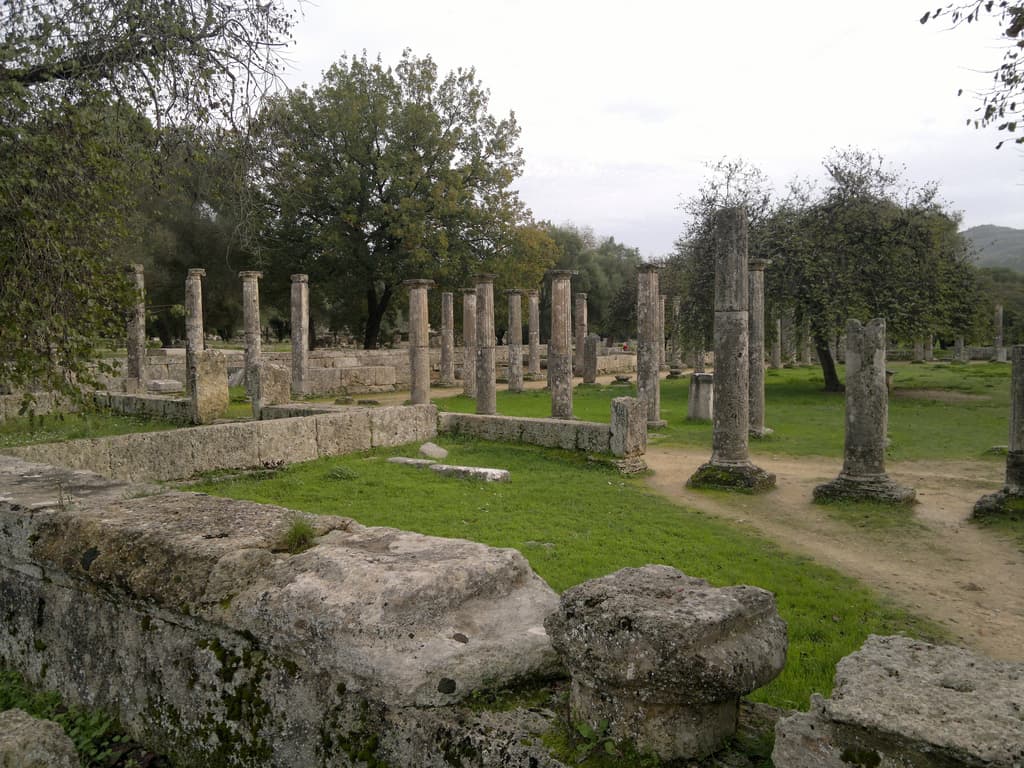
Day 9
OlympiaGreeceBirthplace of the ancient Olympic Games, with a stadium still intact after 2,700 years.
- DAY10
- DAY11


Plan your days ashore
Day 1 · Mon, Jun 1 · Rome
 Landmark
Photo: Wikimedia Commons (Colosseo 2020.jpg)
Colosseum
Rome's 50,000-seat amphitheatre where emperors distracted citizens for 350 years with a spectacle they couldn't unsee. Book tickets online — the same-day queue is a gladiatorial contest in its own right.
🕒 Daily 9 am – approx. 1 hr before sunset; advance booking essential
~1.4 km away
 Museum
Photo: Wikimedia Commons (Mura vaticane - ingresso ai Musei 00410.JPG)
Vatican Museums
A labyrinth of papal acquisitions culminating in the Sistine Chapel — Michelangelo spent four years on scaffolding so you'd spend thirty seconds craning your neck. Book online; the walk-up queue is a penance the Church did not design.
🕒 Mon–Sat 9 am–6 pm (last entry 4 pm); closed all Sundays except last Sunday of month
~3.5 km away
 Landmark
Photo: Wikimedia Commons (Basilica di San Pietro in Vaticano September 2015-1a.jpg)
St. Peter's Basilica
Rome's most famous church, built atop Saint Peter's tomb and scaled to make you feel appropriately small. Entry is free — though the dress code enforcer at the door will turn away bare shoulders without theological debate.
🕒 Daily 7 am–7 pm (summer) / 7 am–6:30 pm (winter); dome climb separately ticketed
~3.6 km away
 Landmark
Photo: Wikimedia Commons (Foro Romano Musei Capitolini Roma.jpg)
Roman Forum
The political heart of ancient Rome, now a wide field of columns, arches, and marble worn by two millennia of weather. Same ticket as the Colosseum and Palatine Hill — three ruins for the price of one existential crisis.
🕒 Daily 9 am – approx. 1 hr before sunset; included with Colosseum/Palatine Hill ticket
~1.5 km away
 Landmark
Photo: Wikimedia Commons (Palatine Hill.Pavement.jpg)
Palatine Hill
The hill where Rome's emperors built their palaces, now offering sweeping views over the Forum below and a welcome excuse to sit down. Covered by the same ticket as the Colosseum and Roman Forum.
🕒 Daily 9 am – approx. 1 hr before sunset; included with Colosseum/Roman Forum ticket
~1.8 km away
 Landmark
Photo: Wikimedia Commons (Pantheon (Rome) - Right side and front.jpg)
Pantheon
A Roman temple from 125 AD in unbroken use for nearly 1,900 years — which predates the Christianity that eventually claimed it. Entry now requires a ticket; locals have opinions about this development.
🕒 Mon–Sat 9 am–7 pm, Sun 9 am–6 pm; entry ticket required
~1.7 km away
 Landmark
Photo: Wikimedia Commons (Trevi Fountain - Roma.jpg)
Trevi Fountain
Baroque Rome's most theatrical plumbing: 26 metres of Neptune, sea horses, and cascading water engineered to make you throw a coin and book a return trip. Arrive before 8 am or after 10 pm for photos without strangers in every frame.
~1.1 km away
 LandmarkClosed on your visit (Monday)
Photo: Wikimedia Commons (Castel_Sant'Angelo_at_Night.jpg)
Castel Sant'Angelo
A mausoleum for emperors turned papal refuge turned prison turned museum — Rome's most over-qualified building. The rooftop has sweeping views of the Tiber and St. Peter's dome, which more than justifies the climb.
🕒 Tue–Sun 9 am–7:30 pm
~2.5 km away
 Landmark
Photo: Wikimedia Commons (San Giovanni in Laterano 2021.jpg)
Archbasilica of St. John Lateran
Rome's actual cathedral — not St. Peter's, despite what every tourist assumes — and the oldest public church in Rome still in active use. Free to enter, far fewer crowds than the Vatican, and a nave that makes most European cathedrals feel modest.
🕒 Daily 7 am–7 pm; free entry (cloister separately ticketed)
~2 km away
 Landmark
Photo: Wikimedia Commons (Basilica di Santa Maria Maggiore - Roma.jpg)
Basilica di Santa Maria Maggiore
One of Rome's four great basilicas, with 5th-century mosaics still intact on the triumphal arch — the gift shop outside is a 21st-century addition. Free to enter and reliably less crowded than anything near the Vatican.
🕒 Daily 7 am–7 pm; free entry
~0.6 km away
B
LandmarkBasilica of Saint Paul Outside the Walls
The second largest church in Rome, largely rebuilt after an 1823 fire — so most of what you see is 19th-century, which in Rome counts as practically new. Free entry; the cloister has a separate ticket and earns it.
🕒 Daily 7 am–7 pm; free entry (cloister separately ticketed)
~5.2 km away
Day 6 · Sat, Jun 6 · Kotor
 Viewpoint
Photo: Wikimedia Commons (Old Kotor.jpg)
Fortress of San Giovanni
Medieval walls zigzag 4.5 km up the cliff behind the Old Town, ending at the Castle of San Giovanni roughly 260 m above sea level — reached by some 1,350 stone steps. On a clear day you see the whole Bay of Kotor, and how far your knees still had to go.
🕒 Open daily approx. 08:00–sunset (ticketed; shorter hours Oct–Apr)
~0 km away
 Landmark
Photo: Wikimedia Commons (Kotor - Cathédrale St Tryphon.JPG)
Cathedral of Saint Tryphon
Romanesque twin-towered cathedral from 1166, where St. Tryphon's relics have outlasted earthquakes and plagues. The Treasury's Venetian goldsmithery is worth the modest entrance fee.
🕒 Approx. 09:00–17:00 daily (hours vary; may close briefly for services)
~0 km away
 Landmark
Photo: Wikimedia Commons (Cattaro, porta del mare, 1555, 01.JPG)
Sea Gate
The 1555 stone arch most cruise passengers walk through to enter the Old Town. The lion of St. Mark above it is a polite reminder that Venice ran things here for four centuries.
~0.1 km away
 Landmark
Photo: Wikimedia Commons (Church of Our Lady of the Rocks 3.jpg)
Our Lady of the Rocks
A church on a man-made island built by sailors who dumped rocks overboard every time they survived a storm. Short boat ride from Perast (~15 min drive from Kotor); the ceiling frescoes were painted by Tripo Kokolja over roughly 25 years.
🕒 Boat from Perast waterfront (approx. May–Oct); church open approx. 09:00–18:00
~9.7 km away
 Museum
Photo: Wikimedia Commons (Pomorski muzej Crne Gore.jpg)
Maritime Museum of Montenegro
Three floors of Adriatic naval history inside a Baroque palace in the Old Town, from Venetian galleys to 20th-century trade routes. Small, well-curated, and mercifully air-conditioned on a hot port day.
🕒 Approx. 09:00–18:00 (Tue–Sun; reduced hours in low season)
~0.1 km away
 Nature
Photo: Wikimedia Commons (Lovcen-011-p1010050.jpg)
Lovćen National Park
The karst mountain rising behind Kotor, reached by a serpentine road of 25 hairpin bends with panoramic views of the entire Bay. Budget a half-day from port; most cruise excursions pair it with the Njegoš Mausoleum at the summit.
🕒 Open year-round; park entrance fee applies
~4.4 km away
 Landmark
Photo: Wikimedia Commons (Lovcen.jpg)
Mausoleum of Njegoš
Montenegro's poet-prince is entombed in a granite temple on the summit of Jezerski vrh (1,657 m), reached by 461 steps from the car park. Designed by Ivan Meštrović; on a clear day you can see as far as Albania. Typically visited as part of a Lovćen half-day excursion from Kotor.
🕒 Approx. 09:00–17:00 (May–Oct); closed or limited access in winter
~6.1 km away
 Landmark
Photo: Wikimedia Commons (Clock Tower in Kotor (1).JPG)
Clock Tower
The 17th-century tower at the centre of Arms Square, Kotor's main piazza, next to the stone pillar where the town once chained its wrongdoers. The square is now mostly cats and espresso — the wrongdoers moved on.
~0.1 km away
 Beach
BeachPhoto: Wikimedia Commons (Jaz beach 11.jpg)
Jaz Beach
A 900-metre arc of sand and pebble between Budva and Tivat, one of Montenegro's largest beaches and a former Rolling Stones concert venue. About 40 minutes by road from Kotor; come here if you'd rather swim than climb 1,350 steps.
~16 km away
 Landmark
Photo: Wikimedia Commons (Lipci rock art1.jpg)
Lipci Rock Art
Bronze Age petroglyphs carved into the hillside above the coastal road, believed to date to around 1000 BC. The deer-hunting scenes are accessible from the road and read as surprisingly legible three millennia later.
~12.5 km away
Day 7 · Sun, Jun 7 · Dubrovnik
 Landmark
Photo: Wikimedia Commons (Dubrovnik Stadtmauer.jpg)
Walls of Dubrovnik
The 2km walk atop Dubrovnik's medieval walls is the must-do first stop — Adriatic views on one side, terracotta rooftops on the other. Go early or late; midday in summer is a stairclimber class in a slow-cooker with queues.
🕒 daily; summer approx. 08:00–19:30, winter approx. 09:00–15:00
~1.6 km away
 Landmark
Photo: Wikimedia Commons (Fort Lovrijenac,Dubrovnik,Croatia.jpg)
Fort Lovrijenac
A fortress on a 37-metre cliff just outside the city walls with 'Freedom cannot be sold for all the gold in the world' carved above the gate. GoT fans know it as the Red Keep's exterior — the inscription aged particularly well.
🕒 daily; summer approx. 08:00–19:30, winter approx. 09:00–15:00
~1.4 km away
 Museum
Photo: Wikimedia Commons (Rector's palace.jpg)
Rector's Palace
Gothic-Renaissance palace where the republic's rector served his one-month term without leaving — essentially a very ornate prison. Now a museum of Ragusan history; the atrium hosts summer concerts genuinely worth planning around.
~1.8 km away
 Museum
Photo: Wikimedia Commons (Dubrovnik (57).JPG)
Franciscan Monastery
The monastery pharmacy has operated since 1317 — one of the oldest in the world, and still selling lotions today. The Romanesque cloister is the quiet escape tourists keep walking past on Stradun.
~1.5 km away
 Landmark
Photo: Wikimedia Commons (Vrata od Pila-Dubrovnik.JPG)
Pile Gate
The 15th-century double drawbridge gate everyone walks through to enter the Old Town — pause at the niche above for St Blaise's statue, then keep moving or you'll block 47 people's photos. Free to walk through.
~1.4 km away
 Landmark
Photo: Wikimedia Commons (Big Onofrios Fountain (4059901219).jpg)
Onofrio's Fountain
The 1438 sixteen-spouted fountain just inside Pile Gate was built to deliver fresh water to a medieval city — and the water still runs, which surprises most visitors. The large version; there's also a small one at the other end of Stradun.
~1.5 km away
 Landmark
Photo: Wikimedia Commons (Cattedrale Dubrovnik.JPG)
Dubrovnik Cathedral
The baroque cathedral's real draw is the treasury — a golden reliquary holding St Blaise's skull, among other relics the Ragusans deemed worth preserving for 900 years. Free to enter the church; the treasury charges a small fee.
~1.8 km away
 Beach
BeachPhoto: Wikimedia Commons (Banje Beach.jpg)
Banje Beach
The nearest proper beach to the Old Town offers arguably the best view of the city walls from water level. Sun loungers will cost you; the Adriatic won't — wade in and you'll understand why everyone who swam here remembers it.
~2 km away
 Viewpoint
Photo: Wikimedia Commons (Fort Imperial.JPG)
Fort Imperial
Cable car to Mount Srđ's summit delivers the panorama that makes Dubrovnik's layout finally click — walls, harbor, and islands in one frame. Fort Imperial at the top houses the War of Independence Museum, a sobering counterpoint.
~1.3 km away
 Nature
Photo: Wikimedia Commons (Lokrom-bs-14.jpg)
Lokrum Island
Ten minutes by ferry from Old Town harbor, Lokrum is a nature reserve with free-roaming peacocks, a ruined Benedictine monastery, and a salt lagoon locals call the Dead Sea. The shade alone is worth the ticket in summer.
~3.3 km away
 Nature
Photo: Wikimedia Commons (Arboretum Trsteno (by Pudelek).JPG)
Trsteno Arboretum
A Renaissance garden 12km up the coast with ancient plane trees and the fountain courtyard used as King's Landing gardens in Game of Thrones seasons 1–4. Worth the bus ride if Westeros was your actual reason for booking this cruise.
~11.8 km away
 Museum
Photo: Wikimedia Commons (Dubrovnik-dominics1.png)
Dominican Monastery
The 14th-century Dominican monastery at the east end of Stradun hides Dubrovnik's best Renaissance paintings — including a Titian — and a cloister measurably quieter than the main drag. Easy to miss; unreasonably worth the detour.
~1.7 km away
Day 10 · Wed, Jun 10 · Santorini
 Sightseeing
Photo: Wikimedia Commons (Oia_sunset_-_panoramio_(2).jpg)
Oia
The village that made Santorini famous. Arrive by 3 p.m. — sunset crowds are 300 deep by 6. Worth every tourist.
~10.8 km away
 Culture
Photo: Wikimedia Commons (Akrotiri minoan town.jpg)
Akrotiri
A Minoan city buried by the 1600 BCE volcanic eruption — better preserved than Pompeii, and 1,600 years older.
🕒 08:00–20:00 (May–Oct); 08:00–15:00 (Nov–Apr); closed Mon year-round — verify on culture.gr
~7 km away
 Sightseeing
Photo: Wikimedia Commons (Fira, Greece (Unsplash 0PaCPIKmXgs).jpg)
Three Bells of Fira
Three stacked bell towers, cobalt domes, and a 300 m caldera drop below your feet — the most copied photo in Greece.
~4.5 km away
 Culture
Photo: Wikimedia Commons (Prähistorisches Museum Thira 01.jpg)
Museum of Prehistoric Thera
The original Akrotiri frescoes live here, mineral-bright after 3,600 years. Best 45 minutes in Fira.
🕒 08:00–20:00 (summer); 08:00–15:00 (winter); closed Tue
~3.7 km away
 Beach
BeachPhoto: Wikimedia Commons (Red Beach - Panorama - Santorini - Grecia - agosto 2018.jpg)
Red Beach
Ochre-red volcanic cliffs soar above a black-sand shore near Akrotiri. No shade, no facilities, no equal.
~7.9 km away
S
NatureSantorini Caldera Rim
The flooded volcanic crater your ship anchored inside. Walk the rim from Fira toward Imerovigli for the full perspective.
~4 km away
S
Food & DrinkSanto Wines
Winery overlooking the caldera near Pyrgos — Santorini's Assyrtiko white served with one of the great vineyard sunset views in Europe.
🕒 11:00–22:00 daily (seasonal); sunset tasting slots book out — reserve ahead
~4 km away
 CultureClosed on your visit (Wednesday)
Photo: Wikimedia Commons (Ancient Thera 1.jpg)
Ancient Thera
Dorian city ruins on a knife-edge ridge 360 m above the sea — street mosaics, a gymnasium, and temples to Apollo and Zeus.
🕒 08:30–15:30 daily; closed Wed; €10 entry; check culture.gr for current hours
~3.6 km away
 Sightseeing
Photo: Wikimedia Commons (Santorini Blue Church.JPG)
Anastasi Church (Oia)
The cobalt-blue dome on every Santorini postcard — tucked inside Oia's white-washed alley maze. Wander until you find it.
~10.8 km away
A
NatureAmoudi Bay
300 steps below Oia's clifftop: a tiny harbour, octopus drying on the line, and the freshest seafood on the island.
~11.3 km away
P
SightseeingPyrgos
Santorini's highest village — no cruise-crowd swarms, 360° island views, and intact Venetian-era lanes. The island locals actually live in.
~1.5 km away
 Nature
Photo: Wikimedia Commons (Skaros Rock.jpg)
Skaros Rock
Medieval fortress promontory jutting from Imerovigli into the caldera — 30-min hike to sea-level ruins, 360° caldera views.
~5.8 km away
We take no cruise-line commissions — nobody pays us to rank their ship. A few tour links are affiliate links: book through one and we earn a little, but it never buys a kinder word from us.
Before you sail — hotels in Rome
Arrive a day early and explore Rome before boarding
Find hotels on Booking.comSponsored
Cabin Pricing
Estimated starting fare — verify with cruise line
At a glance
4.5
Ship rating
Oceania Aurelia is the post-refit identity of Oceania Nautica, announced April 2026 and debuting late 2027 after a comprehensive transformation at Fincantieri. The reimagined ship will host fewer than 500 guests, with 179 of 238 accommodations configured as suites, and is purpose-built for the 2028 and 2029 World Cruises and Grand Voyages. Nautica continues to sail under its current name through 2026 and into 2027 until it enters dry dock for the conversion.
Who sails this line
Typical age
55+
Primary markets
US · UK · AU · CA
Onboard languages
en
Kids onboard
Uncommon — adult-leaning atmosphere
You Might Also Like
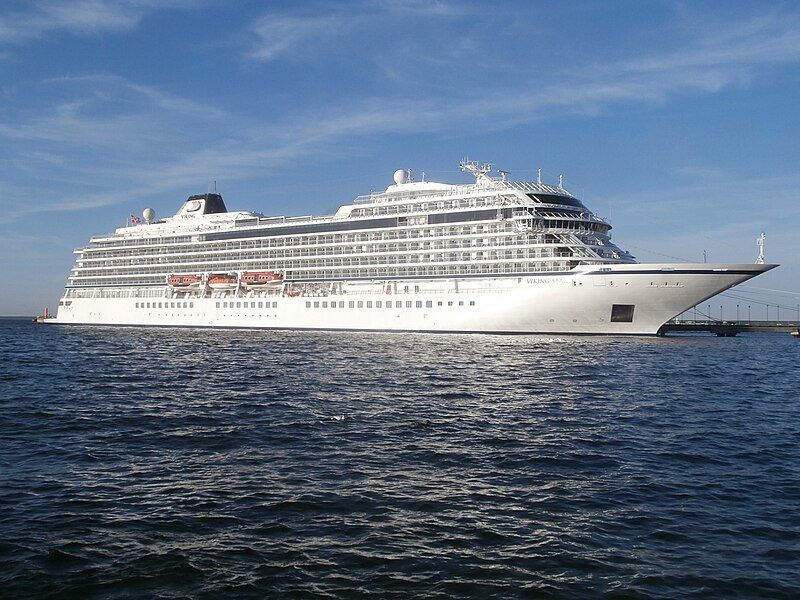
Viking Ocean Cruises
Viking Libra
Greek Odyssey
Dec 3, 202610 nights
per person$3,999
Estimated starting fare — verify with cruise line
Viking Ocean Cruises
Viking Libra
Greek Odyssey
Jan 14, 202710 nights
per person$3,999
Estimated starting fare — verify with cruise line

Carnival Cruise Line
Carnival Miracle
Croatia, Greece & Italy
Oct 8, 20278 nights
Related Guides

destination
Filmed Here: The Korea Cruise for Squid Game, BTS, and K-Drama Fans

destination
Filmed Here: White Lotus Thailand — Your Cruise Gets Within 700km

destination