October 4
Departure
7
nights
5
ports
$2,799
From
Ask anything about 7 Night Iconic Western Mediterranean
GoCruiseTravel.com Cruise Data
$400
per night
7
nights
85/100
luxury with nearly everything included
Verified Sep 21, 2026 — check current price at Viking Ocean Cruises
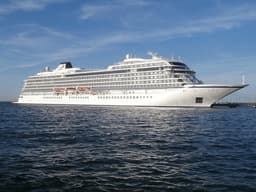
GoCruiseTravel.com prices this Viking Star 7 Night Iconic Western Mediterranean sailing from $400/night (balcony). 7 nights departing October 4, 2026. Viking Ocean Cruises Perk Score: 85/100 — beer & wine with meals, one excursion per port, Wi-Fi, specialty dining, room service, port shuttles. Compare 7 cabin categories with real pricing data on GoCruiseTravel.com.
What's Included
Wi-Fi
Beer & Wine
1 Excursion/Port
Specialty Dining
Room Service
Port Shuttle
Not included
Gratuities
Flights
Airport Transfers
Insider Tips
Wi-Fi
Speeds can be inconsistent in remote areas. No streaming-tier Wi-Fi is included — you get basic browsing-level connectivity.
All Drinks
Cocktails, spirits, and drinks outside meal times are NOT included. The Silver Spirits upgrade ($27/day + 15% service charge) is required for all-day drinking, and both guests in a stateroom must purchase it.
Port Shuttle
Shuttle availability depends on the port — not all ports have shuttle service. In ports where the dock is close to town, no shuttle is provided.
All Excursions
The included excursion is from a curated list — premium or extended tours cost extra. Popular free excursions sell out quickly, so book early through My Viking Journey.
Gratuities
Viking adds $20/person/day to your shipboard account (for 2026 sailings), plus 15% is automatically added to all bar and beverage tabs. Budget an extra $280/person for a 14-day cruise.
Specialty Dining
The Chef's Table requires advance reservations and has very limited seating (often only one seating per evening). Book immediately upon opening or you may miss out entirely.
Age
All guests must be 18 years or older on embarkation day. No exceptions — Viking will deny boarding to anyone under 18.
General
Viking ships have no casino, no kids' club, and no main-stage production shows. The focus is on cultural enrichment, lectures, and destination immersion.
Tipping
Despite premium positioning, gratuities are not included. The $20/day auto-charge surprises many first-time Viking guests who expect an all-inclusive experience.
Dining
Viking has no formal night dress code, but The Chef's Table and Manfredi's suggest smart casual. No shorts or flip-flops at dinner in any restaurant.
About the Ship
- Hot Tubs
- 2
- Elevators
- 6
- Cabin Voltage
- 110V & 220V
- USB in Cabins
- Yes
- Pets
- Not Allowed
- Service Animals
- Case by Case
- Dress Code
- Smart Casual
- Formal Nights
- No
- Balcony Smoking
- Not Allowed
Accessible Cabins:5
Self-Service LaundryMedical CenterPool Lift
Dietary Options
Gluten-FreeVegan
Your Journey
- DAY1

- DAY2

Day 2
MarseilleFranceFrance's oldest city serves legendary bouillabaisse by a vibrant, working Old Port.
- DAY3
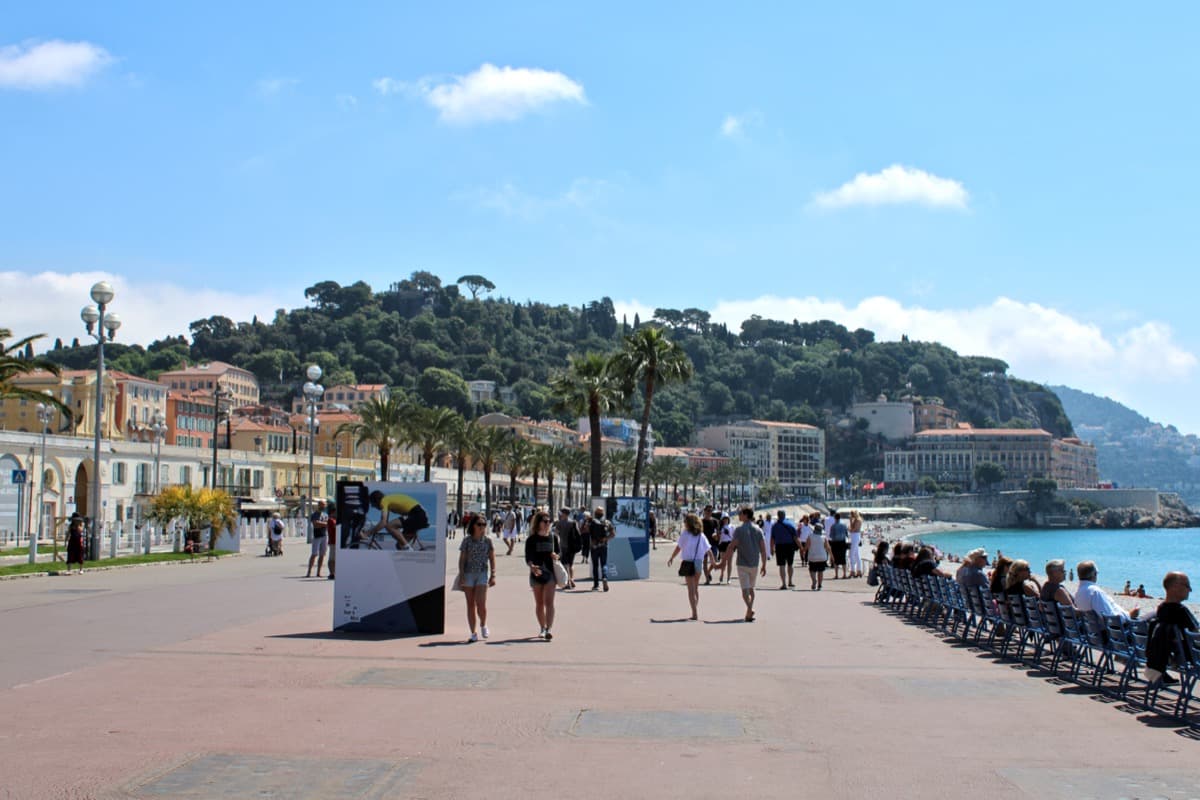
Day 3
NiceFranceTenders into Villefranche put the French Riviera, Nice, and Monaco all within easy reach.
- DAY4
- DAY5


Plan your days ashore
Day 1 · Sun, Oct 4 · Barcelona
S
 Landmark
Photo: Wikimedia Commons (SF maig 2026.jpg)
Sagrada Família
Construction started in 1882; Gaudí took over in 1883 and redirected it entirely — it has now been under construction for over 140 years and still isn't finished. Inside, the stained glass turns sunlight into something that makes atheists go quiet.
🕒 9:00–20:00 (summer); hours vary by season — book timed-entry tickets at sagradafamilia.org
~2.1 km away
P
 Landmark
Photo: Wikimedia Commons (Güell BCN edited.jpg)
Park Güell
The ticketed monumental zone is Gaudí's fever dream in broken ceramic, with city views that make the climb worthwhile. Skip the free outer park unless you want a photo with a costumed dragon.
🕒 9:30–19:30 (varies seasonally); timed-entry tickets required — book at parkguell.barcelona
~3.6 km away
L
 Landmark
Photo: Wikimedia Commons (15-10-27-Vista des de l'estàtua de Colom a Barcelona-WMA 2791.jpg)
La Rambla
A 1.2-kilometre promenade where the city goes to watch tourists watch back — human statues, flower stalls, overpriced coffee. Keep a hand on your wallet and enjoy it anyway; the energy is real.
~0.4 km away
B
 Landmark
Photo: Wikimedia Commons (Barcelona Cathedral Saint Eulalia.jpg)
Barcelona Cathedral
Free to enter in the early morning, ticketed after noon; the cloister houses 13 geese that nobody can satisfactorily explain. The surrounding Gothic Quarter lanes are better walked than read about.
🕒 Daily; free until ~12:30, paid admission 12:30–17:30 (check cathedral website for current times)
~0.3 km away
S
 Landmark
Photo: Wikimedia Commons (Santa Maria del Mar, Barcelona 05.jpg)
Santa Maria del Mar
Built in 54 years by the dock workers of the neighbourhood — unusually fast for Gothic at that scale, and many argue more beautiful than the Cathedral across town. El Born around it is the most rewarding hour you can spend off the ship.
🕒 Mon–Sat 9:00–20:30, Sun 10:00–20:00 (may close briefly for services; check santamariadelmarbarcelona.org)
~0.7 km away
M
 Museum
Photo: Wikimedia Commons (Palau Berenguer d'Aguilar.jpg)
Museu Picasso
Five medieval palaces stitched together hold 4,000 works that prove Picasso could draw normally before he decided not to. Book ahead; it closes Mondays, which is inconvenient if that's your port day.
🕒 Tue–Sun 10:00–19:00; closed Mon (check museupicasso.bcn.cat for current hours)
~0.6 km away
B
 Beach
BeachPhoto: Wikimedia Commons (Barcelona (16877599244).jpg)
Barceloneta Beach
Barcelona's main city beach is a 15-minute walk from the Gothic Quarter, backed by restaurants that will charge you €18 for paella without apology. The water is clean; the crowds are honest.
~1.8 km away
M
 Museum
Photo: Wikimedia Commons (WLM14ES - Palau Nacional i seu del MNAC de Barcelona - MARIA ROSA FERRE.jpg)
Museu Nacional d'Art de Catalunya
The domed palace atop Montjuïc was built for the 1929 World Expo and now holds what many consider Europe's finest Romanesque art collection, rescued from crumbling Pyrenean chapels. The view from the steps is free.
🕒 Tue–Sat 10:00–18:00, Sun 10:00–15:00; closed Mon
~2.5 km away
F
 Museum
Photo: Wikimedia Commons (Fundació Miró.JPG)
Fundació Joan Miró
Architect Josep Lluís Sert designed this bright white building specifically to house Miró's work — natural light falls exactly where Miró wanted it. Primary colors, bold shapes, and a courtyard that rewards those who skip the audio guide.
🕒 Tue–Sun 10:00–18:00 (until 20:00 Jul–Sep); closed Mon
~2.1 km away
M
 Viewpoint
Photo: Wikimedia Commons (Κάστρο Μονζουίκ 3231 - 3233.jpg)
Montjuïc Castle
A 17th-century fortress that spent most of its history being used against the city it overlooks; Barcelona has since repurposed it as the best viewpoint for the harbour and sea. A certain irony, done correctly.
🕒 Daily ~10:00–18:00 (extended summer hours; check bcn.cat for current times)
~2.5 km away
P
 Nature
Photo: Wikimedia Commons (Vista aèria Ciutadella 1960.jpg)
Parc de la Ciutadella
Barcelona's main city park and site of the 1888 Universal Exposition; the young Gaudí helped design the cascade fountain here before mosaics became his entire personality. A good bridge between the waterfront and El Born.
~1.2 km away
M
 Museum
Photo: Wikimedia Commons (Drassanes barcelona.jpg)
Museu Marítim de Barcelona
Housed in the city's original 14th-century royal shipyards — vast Gothic stone halls where full-size war galleys were actually built. Arriving by cruise ship and walking into a medieval shipyard has an accidental poetry to it.
🕒 Tue–Sun 10:00–20:00; closed Mon
~1.1 km away
Day 4 · Wed, Oct 7 · Florence
F
 Landmark
Photo: Wikimedia Commons (Florence Duomo from Michelangelo hill.jpg)
Florence Cathedral (Duomo)
Brunelleschi solved the impossible dome problem in 1436 with a technique he invented and then refused to fully explain. Climbing the 463 steps is optional; the view from the piazza is free and nearly as good.
🕒 Mon–Sat (cathedral nave); dome + bell tower by timed Opera del Duomo ticket
~0.4 km away
U
 Museum
Photo: Wikimedia Commons (Florence, Italy - panoramio (125).jpg)
Uffizi Gallery
The world's best concentration of Italian Renaissance painting — Botticelli's Birth of Venus, Raphael, Caravaggio — under one roof on the Arno. Book timed-entry tickets weeks ahead or the queue will outlast your port day.
🕒 Tue–Sun 8:15–18:30
~0.1 km away
G
 Museum
Photo: Wikimedia Commons (Michelangelo's David - right view 2.jpg)
Galleria dell'Accademia (Michelangelo's David)
The marble original is bigger than you expect — nearly 17 feet tall, carved from a block two sculptors had already abandoned. The rest of the museum is modest; David is the only reason anyone actually buys that ticket.
🕒 Tue–Sun 8:15–18:50
~0.9 km away
P
 Landmark
Photo: Wikimedia Commons (Ponte Vecchio sobre el río Arno, Florencia, Italia, 2022-09-19, DD 02.jpg)
Ponte Vecchio
Florence's medieval bridge has been lined with goldsmiths since the 1500s, after the Medici banned butchers for ruining the view — and the smell. Walking it costs nothing; resisting the jewelry shops is the hard part.
~0.3 km away
F
 Landmark
Photo: Wikimedia Commons (Firenze Battistero di San Giovanni Esterno 04.jpg)
Florence Baptistery
Ghiberti's Gates of Paradise — ten gilded bronze panels that took 27 years — are considered the starting pistol of the Renaissance. Note: what's outside are quality casts; the originals moved into the Duomo Museum in the 1990s to stop further weathering.
🕒 Daily; hours vary by season — book via Opera del Duomo
~0.4 km away
P
 Landmark
Photo: Wikimedia Commons (Piazza della signoria, palazzo vecchio, veduta 01.jpg)
Palazzo Vecchio
Florence's town hall since 1299, the Piazza della Signoria it anchors is a free open-air sculpture gallery with famous works in situ. Pay to go inside for the Medicean ceiling excess — or just stand in the piazza, which costs nothing.
~0 km away
B
 Nature
Photo: Wikimedia Commons (Jardín de Bóboli, Florencia, Italia, 2022-09-19, DD 12.jpg)
Boboli Gardens
The Medici's 111-acre backyard terraced up the hill behind Palazzo Pitti, with fountains, grottoes, and statues placed wherever the feeling struck. Best visited in the morning before the heat and the tour groups compound each other.
~0.8 km away
B
 Landmark
Photo: Wikimedia Commons (Basilica di Santa Croce (12437).jpg)
Basilica of Santa Croce
The Franciscan church that became Florence's pantheon: Michelangelo, Galileo, and Machiavelli are buried here; Dante got a cenotaph (he's in Ravenna, and they're still not over it). The leather school in the cloister sells the real thing.
~0.6 km away
P
 Museum
Photo: Wikimedia Commons (Palazzo Pitti nel tardo pomeriggio.jpg)
Palazzo Pitti
The Medicis' main residence from 1549 is now a complex of seven separate museums behind one immense façade — more art per square foot than most cities. Choose your gallery before arriving; trying all seven in a port day is a category error.
~0.7 km away
B
 Museum
Photo: Wikimedia Commons (Palazzo del bargello visto da piazza san firenze.JPG)
Bargello National Museum
Florence's best sculpture museum occupies a 13th-century fortress that also served as the city prison — Donatello's bronze David, the first freestanding nude since antiquity, has lived here since 1865 when the building became Italy's first national museum. Undervisited by Uffizi standards, which is exactly why you should go.
~0.2 km away
B
 Landmark
Photo: Wikimedia Commons (Santa Maria Novella (Florence).jpg)
Basilica of Santa Maria Novella
Home to Masaccio's Trinity fresco — painted 1427, the first work to use mathematical perspective correctly, still astonishing to stand in front of. Less crowded than Santa Croce and considerably easier to actually see the art.
~0.7 km away
Day 5 · Thu, Oct 8 · Rome
C
 Landmark
Photo: Wikimedia Commons (Colosseo 2020.jpg)
Colosseum
Rome's 50,000-seat amphitheatre where emperors distracted citizens for 350 years with a spectacle they couldn't unsee. Book tickets online — the same-day queue is a gladiatorial contest in its own right.
🕒 Daily 9 am – approx. 1 hr before sunset; advance booking essential
~1.4 km away
V
 Museum
Photo: Wikimedia Commons (Mura vaticane - ingresso ai Musei 00410.JPG)
Vatican Museums
A labyrinth of papal acquisitions culminating in the Sistine Chapel — Michelangelo spent four years on scaffolding so you'd spend thirty seconds craning your neck. Book online; the walk-up queue is a penance the Church did not design.
🕒 Mon–Sat 9 am–6 pm (last entry 4 pm); closed all Sundays except last Sunday of month
~3.5 km away
S
 Landmark
Photo: Wikimedia Commons (Basilica di San Pietro in Vaticano September 2015-1a.jpg)
St. Peter's Basilica
Rome's most famous church, built atop Saint Peter's tomb and scaled to make you feel appropriately small. Entry is free — though the dress code enforcer at the door will turn away bare shoulders without theological debate.
🕒 Daily 7 am–7 pm (summer) / 7 am–6:30 pm (winter); dome climb separately ticketed
~3.6 km away
R
 Landmark
Photo: Wikimedia Commons (Foro Romano Musei Capitolini Roma.jpg)
Roman Forum
The political heart of ancient Rome, now a wide field of columns, arches, and marble worn by two millennia of weather. Same ticket as the Colosseum and Palatine Hill — three ruins for the price of one existential crisis.
🕒 Daily 9 am – approx. 1 hr before sunset; included with Colosseum/Palatine Hill ticket
~1.5 km away
P
 Landmark
Photo: Wikimedia Commons (Palatine Hill.Pavement.jpg)
Palatine Hill
The hill where Rome's emperors built their palaces, now offering sweeping views over the Forum below and a welcome excuse to sit down. Covered by the same ticket as the Colosseum and Roman Forum.
🕒 Daily 9 am – approx. 1 hr before sunset; included with Colosseum/Roman Forum ticket
~1.8 km away
P
 Landmark
Photo: Wikimedia Commons (Pantheon (Rome) - Right side and front.jpg)
Pantheon
A Roman temple from 125 AD in unbroken use for nearly 1,900 years — which predates the Christianity that eventually claimed it. Entry now requires a ticket; locals have opinions about this development.
🕒 Mon–Sat 9 am–7 pm, Sun 9 am–6 pm; entry ticket required
~1.7 km away
T
 Landmark
Photo: Wikimedia Commons (Trevi Fountain - Roma.jpg)
Trevi Fountain
Baroque Rome's most theatrical plumbing: 26 metres of Neptune, sea horses, and cascading water engineered to make you throw a coin and book a return trip. Arrive before 8 am or after 10 pm for photos without strangers in every frame.
~1.1 km away
C
 Landmark
Photo: Wikimedia Commons (Castel_Sant'Angelo_at_Night.jpg)
Castel Sant'Angelo
A mausoleum for emperors turned papal refuge turned prison turned museum — Rome's most over-qualified building. The rooftop has sweeping views of the Tiber and St. Peter's dome, which more than justifies the climb.
🕒 Tue–Sun 9 am–7:30 pm
~2.5 km away
A
 Landmark
Photo: Wikimedia Commons (San Giovanni in Laterano 2021.jpg)
Archbasilica of St. John Lateran
Rome's actual cathedral — not St. Peter's, despite what every tourist assumes — and the oldest public church in Rome still in active use. Free to enter, far fewer crowds than the Vatican, and a nave that makes most European cathedrals feel modest.
🕒 Daily 7 am–7 pm; free entry (cloister separately ticketed)
~2 km away
B
 Landmark
Photo: Wikimedia Commons (Basilica di Santa Maria Maggiore - Roma.jpg)
Basilica di Santa Maria Maggiore
One of Rome's four great basilicas, with 5th-century mosaics still intact on the triumphal arch — the gift shop outside is a 21st-century addition. Free to enter and reliably less crowded than anything near the Vatican.
🕒 Daily 7 am–7 pm; free entry
~0.6 km away
B
LandmarkBasilica of Saint Paul Outside the Walls
The second largest church in Rome, largely rebuilt after an 1823 fire — so most of what you see is 19th-century, which in Rome counts as practically new. Free entry; the cloister has a separate ticket and earns it.
🕒 Daily 7 am–7 pm; free entry (cloister separately ticketed)
~5.2 km away
Before you sail — hotels in Barcelona
Arrive a day early and explore Barcelona before boarding
Find hotels on Booking.comSponsored
Cabin Pricing
Verified Sep 21, 2026 — check current price at Viking Ocean Cruises
True All-In Cost Breakdown
Cruise fares only advertise the cabin. We calculate what this voyage actually costs once mandatory gratuities, drinks, Wi-Fi, and port excursions are included.
Viking Inclusive Value: Beer/Wine with Lunch & Dinner + Wi-Fi + Shore Excursion in Every Port:free_wifi
Headline Fare
$2,799per person
$400/night base fare
True All-In Cost7 7 nights
$2,918per person
$417/night true cost
The All-In Gap:+$119 in onboard extras (+4%)
7 nights · 5 portsTrue All-In Cost Breakdown
Crew Appreciation & GratuitiesLine-cited policy
Daily mandatory service charge added to onboard folio
$17/day × 7 nights
+$119
Beverage Package Allowance
Standard all-inclusive drinks package (cocktails, wine, coffee)
Included in Fare
Included
Wi-Fi Internet Access
Single-device satellite internet connection
Included in Fare
Included
Shore Excursions (1 per port)
One classic guided excursion per port of call
Included in Fare
Included
At a glance
4.8
Ship rating
Award-winning small ship with Scandinavian design excellence. All staterooms have balconies. Includes shore excursion in every port, complimentary WiFi, and specialty dining. The Spa is world-class with a snow grotto and thermal pool.
Who sails this line
Typical age
55+
Primary markets
US · UK · CA · AU
Onboard languages
en
Kids onboard
Uncommon — adult-leaning atmosphere
You Might Also Like
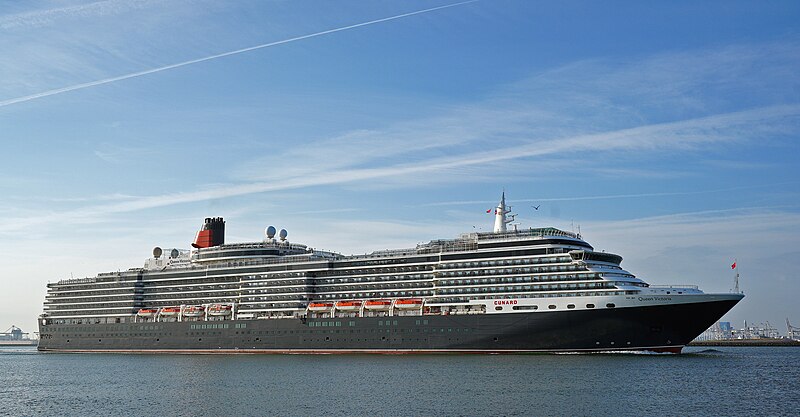
Cunard
Queen Victoria
Mediterranean Legends: Rome to Barcelona
Oct 4, 20267 nights4.2
per person$2,399
IncludedEstimated starting fare — verify with cruise line
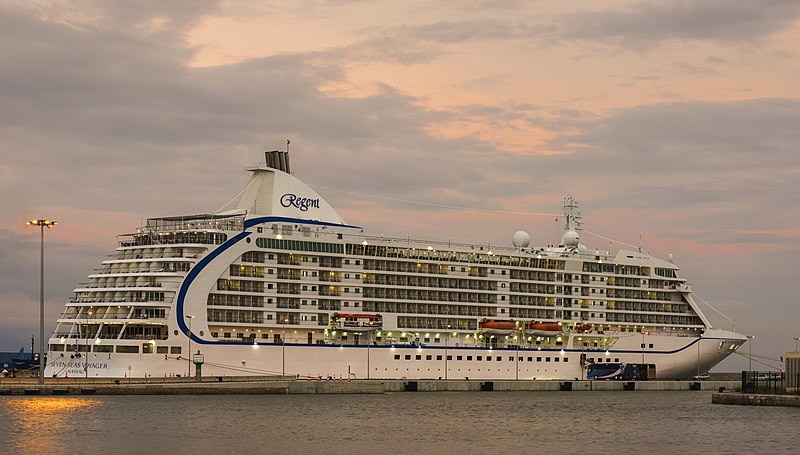
Regent Seven Seas
Seven Seas Voyager
Rivieras, Liguria & Spanish Shores
Oct 5, 20267 nights4.6
per person$5,199
IncludedEstimated starting fare — verify with cruise line
Related Guides

destination
Filmed Here: The Korea Cruise for Squid Game, BTS, and K-Drama Fans

destination
Filmed Here: White Lotus Thailand — Your Cruise Gets Within 700km

destination