Check live 7-day offshore wave height, wind-gust tender risk, daily passenger caps, and real transfer times across 12 high-friction ports.
Cruise ships cure ocean jet lag across five time zones, then invent a one-to-two-hour clock trap 200 yards down the pier. One silent phone update ashore can leave you waving from the taxi stand while the gangway pulls up.
Ocean liners once cured jet lag smoothly by nudging wall clocks an hour overnight across five time zones. Modern seven-night cruises do the opposite, holding Miami or Los Angeles time at the pier and inventing a two-hour gap 200 yards down the gangway.
When local cell towers, GPS pings, and private tour docks pull against your ship's clock, an automatic smartphone update becomes a trap. One quiet hour change can cost you a private catamaran or leave you sprinting toward an already lifted gangway.
Across 1,686 upcoming voyages and 269 ships departing November 21, 2026 onward, 510 sailings call at clock-split ports, based on GoCruiseTravel.com data.
Why Ship Time Breaks From Port Time—and the Cozumel Flip
One rule outranks every pier sign: Ship Time governs all-aboard cutoffs, dining seatings, and ship-sold excursions. Independent shore operators quote Local Port Time unless they confirm Ship Time in writing.
Captains avoid resetting ship clocks for single-day calls because shifting 4,500 guests and 1,600 crew twice in 24 hours scrambles kitchen prep, show times, and regulated crew rest. That policy hits hardest in Cozumel (387 upcoming sailings on GoCruiseTravel.com) and neighboring Costa Maya (58 sailings).
Both ports sit in Quintana Roo (America/Cancun), which moved to UTC-5 year-round in 2015 with zero Daylight Saving Time. That fixed offset creates opposite seasonal traps for Florida versus Texas departures.
From Miami, Fort Lauderdale, or Port Canaveral (EST UTC-5 winter, EDT UTC-4 summer), Ship Time matches Cozumel all winter. Between March and November, Cozumel drops 1 hour behind Ship Time—so a 4:30 PM Ship Time cutoff arrives when waterfront bars read 3:30 PM.
From Galveston or New Orleans (CST UTC-6 winter, CDT UTC-5 summer), the trap flips. Ships match Cozumel in summer, then run 1 hour behind local time in winter—meaning a 9:00 AM private snorkel charter departs while a Galveston-locked watch still says 8:00 AM.
See the passport rules, port-agent bills, and catch-up flights waiting on the pier when a clock slip strands you. — see What Really Happens If You Miss the Cruise Ship — With Receipts (https://www.gocruisetravel.com/en/guides/what-happens-if-you-miss-cruise-ship)Ordering another drink in Cozumel because your lock screen says 3:30 PM is how cruisers audition for viral pier-runner footage at 4:31 PM.

The Two-Hour Trap in Roatán, Belize, and the Eastern Caribbean
The biggest routine split on seven-night routes hits Roatán (217 upcoming sailings, America/Tegucigalpa) and Belize City (86 sailings, America/Belize). Both stay on UTC-6 year-round without Daylight Saving Time.
When a Florida ship keeps Eastern Time, Roatán and Belize sit 1 hour behind Ship Time in winter and 2 full hours behind from March to November. On a summer voyage, a 4:30 PM EDT gangway cutoff strikes at 2:30 PM local beach time.
Reached between Miami EDT (UTC-4) and Roatán/Belize (UTC-6) from March to November, and between Los Angeles PST (UTC-8) and Puerto Vallarta (UTC-6) from November to March, based on GoCruiseTravel.com data.
Belize City doubles that risk with shallow coral reefs that keep ships anchored miles offshore. A mandatory 15-to-25-minute high-speed tender ride—plus afternoon dock lines that double total transit—erases any cushion you thought you saved.
East of Florida, the clock tilts the other way. St. Thomas (106 sailings), San Juan (83 sailings), St. Maarten (51 sailings), Tortola, St. Kitts, and Barbados run on Atlantic Standard Time (America/Puerto_Rico and America/Barbados, UTC-4) year-round.
Those islands match Miami EDT all summer, then sit 1 hour ahead of Miami EST all winter—sending morning private tours out an hour before a Florida watch expects. Grand Turk (America/Grand_Turk) is the sneaky exception, following US Daylight Saving dates to match Miami all year.
Compare cruise-line return guarantees against independent tour math when port clocks split. — see The Shore Excursion Rule 4,000 Cruisers Just Learned the Hard Way (https://www.gocruisetravel.com/en/guides/shore-excursions-ship-vs-diy-2026)Same sun, same turquoise bay, two hours of drift—and only the ship's clock holds the gangway.

Mexican Riviera Bridge Myths and the European Time Split
West Coast itineraries lost their predictable clock math in October 2022, when Mexico abolished Daylight Saving Time across almost the entire country. Cabo San Lucas and Mazatlán (America/Mazatlan) now stay on UTC-7 year-round—matching Los Angeles PDT in summer, yet jumping 1 hour ahead of Los Angeles PST in winter.
Puerto Vallarta (America/Mexico_City) sits on UTC-6 year-round, putting it 1 hour ahead of California PDT in summer and 2 hours ahead of PST in winter. Even when captains nudge ship clocks 1 hour to UTC-7 for Cabo, many skip a second jump for one day in Vallarta, leaving shore clocks 1 hour ahead.
That split fuels the Ameca River bridge myth eight miles north of the cruise terminal. Crossing the river enters Nayarit state (mostly UTC-7), tricking resort-bound cruisers into setting watches back an hour.
Legally, the entire Bahía de Banderas municipality—Nuevo Nayarit, Bucerías, and Sayulita up to Lo de Marcos—shares Puerto Vallarta's UTC-6 tourism zone. Riding a cab over that bridge for lunch never buys back an hour.
Europe hides a similar quirk on Atlantic sailings. Tenerife and the Canary Islands (Atlantic/Canary, UTC+0 winter and UTC+1 summer), alongside Lisbon and Madeira, sit 1 hour behind Barcelona, Málaga, and Rome (Europe/Madrid and Europe/Rome) all year despite the Canaries belonging to Spain.
Crossing a concrete river bridge in Mexico or docking in Spain's Atlantic islands still crosses an invisible line on the clock.

How Cruise Lines Handle Clocks—and Why Phones Fail
No industry standard governs onboard clocks, and cruise contracts give captains full discretion while leaving punctuality on passengers. Even sister ships shift clocks differently by itinerary.
Carnival Cruise Line most consistently holds homeport time on short and seven-night Caribbean cruises, posting reminders in the Carnival HUB app and paper FunTimes. Royal Caribbean, Norwegian (NCL), MSC Cruises, and Virgin Voyages frequently freeze homeport time for one-day Western Caribbean hops, yet shift overnight on multi-zone, European, and transoceanic runs—with Virgin's Sailor App tripping guests whose phones pull shore time.
Princess Cruises, Celebrity Cruises, and Disney Cruise Line more often adjust clocks overnight to local time on Alaska, European, and multi-day zone itineraries via pillow cards and app banners, while still holding ship time on select single-port hops. Check the evening schedule every night instead of guessing.
Putting a smartphone in Airplane Mode will not save you. Cellular NITZ pier signals—like Telcel towers in Cozumel—only hit when cellular wakes up, yet GPS stays active inside Airplane Mode and lets Location Services flip your time zone offline on the beach or the second you join port Wi-Fi.
On iPhone, open Settings, General, and Date & Time, toggle off Set Automatically, and pick the ship's current time-zone city; then open Settings, Privacy & Security, Location Services, and System Services and toggle off Setting Time Zone. On Android, open Settings, System, and Date & time (or General management and Date and time on Samsung) and disable Set time automatically, Set time zone automatically, and Use location to set time zone.
Do not assume an Apple Watch will follow that lock ashore. An Apple Watch mirrors your iPhone's manual time only while tethered via Bluetooth—leave the phone in your cabin safe or stroll out of range at a beach club, and the watch can snap straight to local time, which is why bridge officers still pack a $15 to $25 dumb quartz watch like a Casio F-91W.
A $15 Casio tracks zero calories on the walking track and will never strand you on a foreign pier.
Port-by-Port Clock Trap Cheat Sheet
Cross-check your sailing on GoCruiseTravel.com against this table mapping the highest-volume split ports, their UTC offsets, and which way the clock gap bites by season.
| Port (IANA Zone) | Local UTC Offset | Gap vs. Winter Homeport | Gap vs. Summer Homeport | Which Way the Trap Bites |
|---|---|---|---|---|
| Cozumel & Costa Maya (America/Cancun) | UTC-5 year-round (no DST) | 0 hrs vs. Miami; +1 hr vs. Galveston | -1 hr vs. Miami; 0 hrs vs. Galveston | Miss ship from Miami in summer; miss private tour from Galveston in winter |
| Roatán & Belize City (Tegucigalpa / Belize) | UTC-6 year-round (no DST) | -1 hr vs. Miami (EST) | -2 hrs vs. Miami (EDT) | Shore clocks sit 2 hrs behind in summer; 15-25 min Belize tender cuts margin |
| San Juan, St. Thomas & St. Maarten | UTC-4 year-round (no DST) | +1 hr vs. Miami (EST) | 0 hrs vs. Miami (EDT) | Independent winter tours leave 1 hr before a Miami-locked ship watch |
| Grand Turk (America/Grand_Turk) | UTC-5 winter / UTC-4 summer | 0 hrs vs. Miami (EST) | 0 hrs vs. Miami (EDT) | Observes US DST—matches Miami year-round unlike Eastern Caribbean neighbors |
| Cabo San Lucas & Mazatlán (America/Mazatlan) | UTC-7 year-round (no DST) | +1 hr vs. Los Angeles (PST) | 0 hrs vs. Los Angeles (PDT) | Winter third-party tours start 1 hr early if ship stays on California PST |
| Puerto Vallarta & Nuevo Nayarit (Bahia_Banderas) | UTC-6 year-round (no DST) | +2 hrs vs. LA (PST); +1 hr if shifted | +1 hr vs. LA (PDT) | Cab ride over Ameca bridge stays UTC-6; ships often skip a second 1-hr jump |
| Canary Islands (Atlantic/Canary) | UTC+0 winter / UTC+1 summer | -1 hr vs. Barcelona / Rome | -1 hr vs. Barcelona / Rome | Part of Spain, yet sits 1 hr behind mainland Spanish and Italian homeports |
Screenshot your homeport's trap direction before sailaway, because beachfront Wi-Fi will quietly rewrite your lock screen without asking.
The Three-Minute Clock Protocol Before Every Port Day
Verify the printed daily program or ship intranet clock banner every night, because captains change rules by itinerary even on the same ship. Disable both automatic time zones and Location Services Setting Time Zone on iOS or Android, or wear a $15 quartz watch set strictly to Ship Time.
Get written email confirmation from every independent tour operator stating whether their meeting time uses Local Port Time or Ship Time, and start heading back to the pier 60 minutes before ship all-aboard—or 90 minutes at tender ports like Belize City.
Trust the dumb wristwatch you set at embarkation, never the smartphone waking up on a foreign pier.
GoCruiseTravel compares 269 ships across 33 lines, minus the brochure nonsense. Three hulls tied to what you just read:
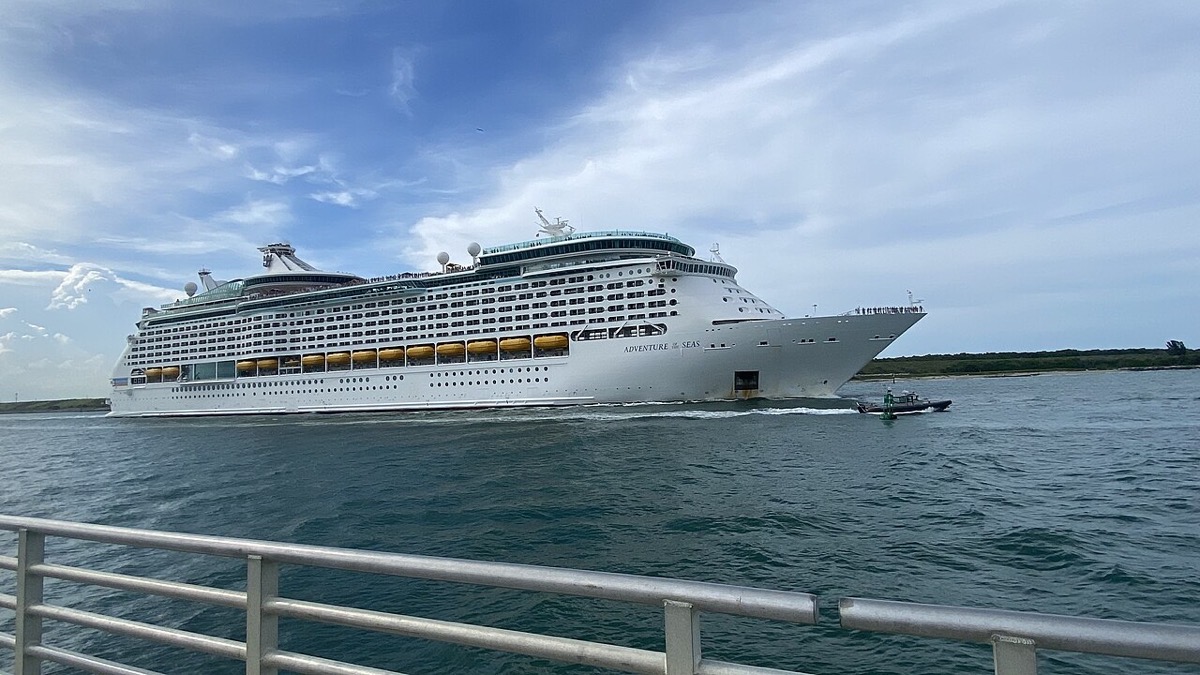
Royal Caribbean International · 3,114 guests · 2001
Adventure of the Seas
This classic Voyager-class ship still packs a punch with waterslides, a FlowRider, and ice-skating, proving a good time doesn't always need to be brand new.

Virgin Voyages · 2,770 guests · 2025
Brilliant Lady
Brings Virgin's 18-plus food-hall formula and included tips to Alaska and the West Coast, though her open-air Miami pool decks meet chilly glacier winds.
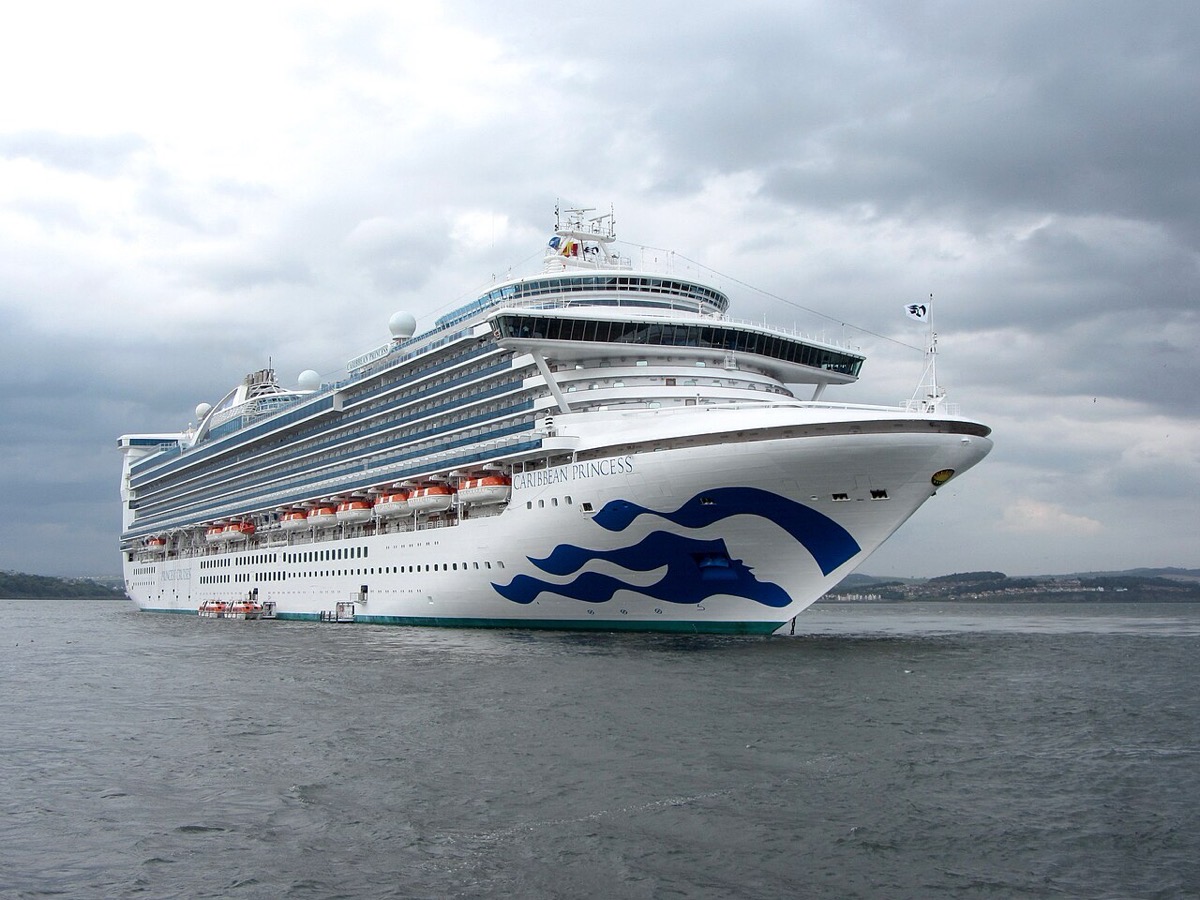
Princess Cruises · 3,140 guests · 2004
Caribbean Princess
This is the ship that started the whole Movies Under the Stars thing, so expect comfy loungers and a giant screen for that al fresco cinema vibe.

Mexico's $5 Cruise Tax Is Sticking Around. The 2028 Number Is $21.
Mexico cut the cruise tax from $42 to $5 last year. The fine print: it climbs to $21 by August 2028. Here's the math.